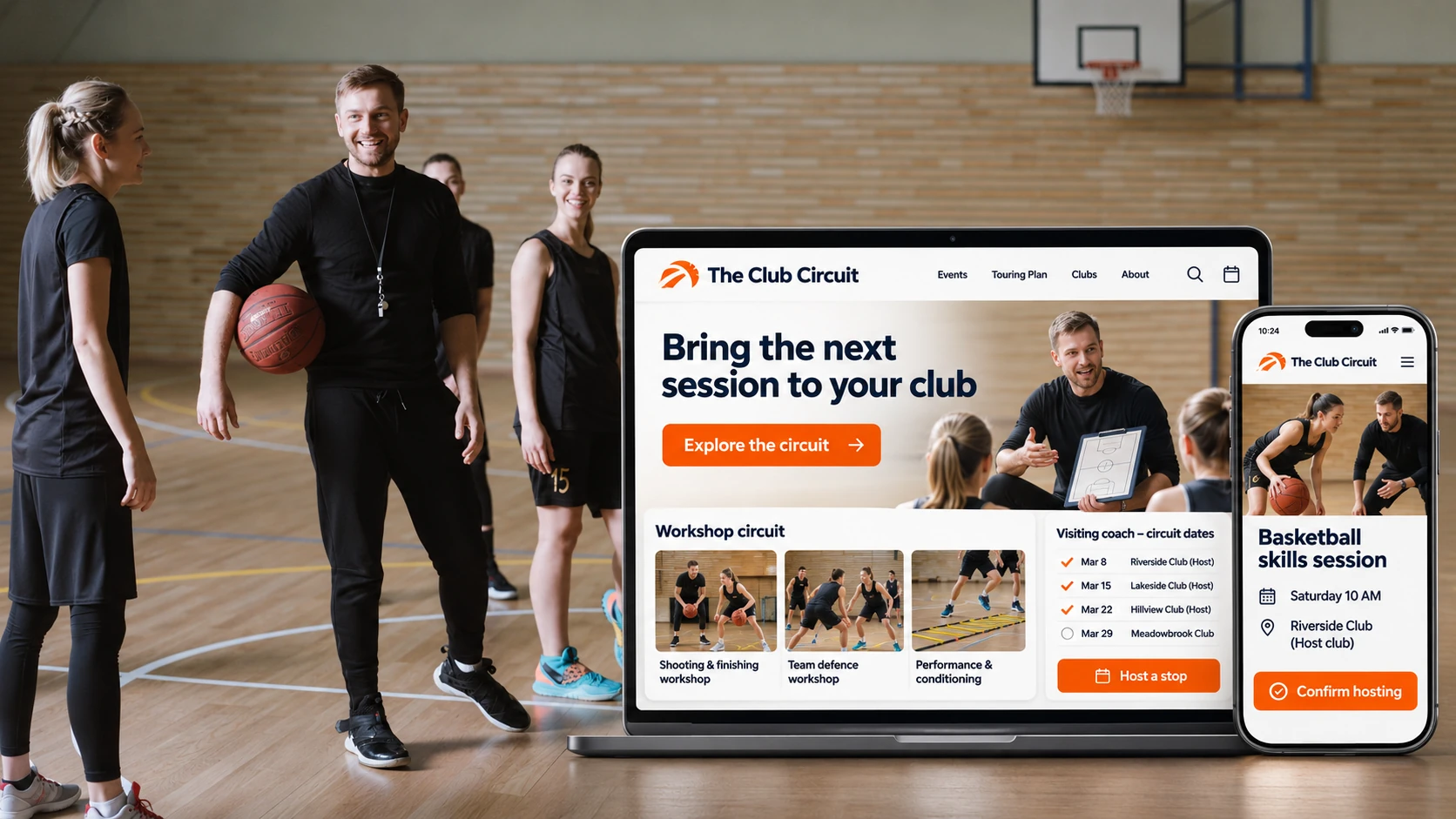
A club would love to host a particular speaker or performer but cannot justify the whole trip alone. Nearby clubs have similar interest, yet no one has time to connect the dates and practical details. Your service could turn those separate wishes into an agreed route, with each host’s part clearly understood.
A business you can
picture.
Begin with one kind of programme and a small host group. Clubs describe their interest and capacity, the guest proposes a workable circuit and each appearance is confirmed under agreed arrangements.
Who would be glad
you built it?
Small clubs and societies
Access to a guest through coordinated hosting
Speakers and performers
A coherent programme with clear arrangements
Club members
Relevant events their own group can confidently host
Where the money
could come from.
Participating clubs could pay an agreed coordination fee as part of the confirmed programme budget. The fee covers planning, scheduling and guest liaison; guest payment, travel and production costs should remain visible. Keep deposits and cancellation terms clear, and do not treat an expression of interest as permission to commit a club financially.
The part you could
make your own.
Your proposed advantage is joining the practical arrangements across hosts. A shared technical brief and realistic travel gaps could make the programme more workable than each club negotiating an isolated appearance.
An angle to test with the people you want to serve.Start with something
worth using.
Choose one guest type and a small group of clubs. Collect provisional interest, build a feasible route and obtain explicit commitments. Share a practical host checklist and a single current programme record.
- Match programme interests with suitable guest proposals.
- Coordinate dates, venue needs and travel responsibilities.
- Confirm each host's commitment before publishing the circuit.
Give the promise
something to stand on.
You need club relationships, programme coordination and a clear agreement with the guest. Venues, equipment, travel, rights and cancellation responsibilities must be confirmed before provisional interest becomes a public event.
Keep provisional interest separate from confirmed commitments. Agree rights, equipment, guest support and cancellation responsibilities, with suitable review of venue and activity requirements.
Let a small beginning
teach you something.
Invite a few clubs with a common interest and one suitable guest to plan a short circuit. Review the full route before confirmation, then ask hosts and the guest where coordination proved useful or still broke down.
Can every host and the guest explain their commitment, practical requirements and next contact from the same programme record?
Look for these signs
- Provisional interest stays separate from confirmation
- Hosts understand technical and venue needs
- Programme changes reach every affected party
A little more
clarity.
Can clubs choose different event formats?
They can if the guest and programme can support them. Record the format, rights and technical needs for each appearance so a shared circuit does not imply identical arrangements.
What if one club withdraws?
Agree the effect on costs and the remaining route before commitments are made. The coordination service needs a clear change process rather than assuming other clubs will absorb the difference.
What should my first version focus on?
Start with the first test described here, then build around the part people actually use and would pay to keep.
Now picture it
with your name on it.
Your people. Your priorities. The version you keep thinking about. Answer a few questions and leave with a starting plan you can keep.
Free to explore. No account or email needed for your starting plan.