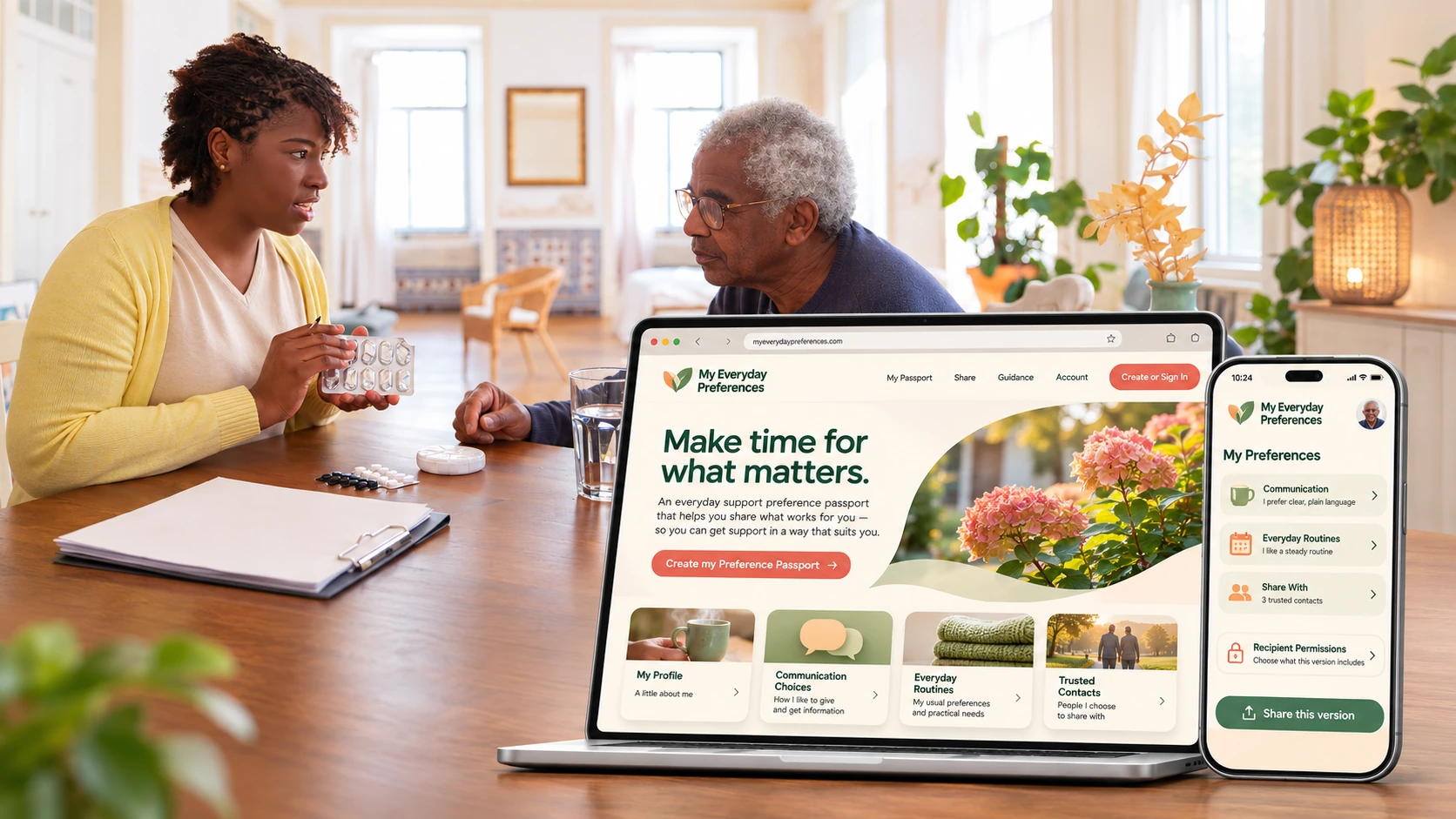
A person has explained how they like to be addressed and what makes a morning feel comfortable, then a new support worker asks everything again. Your service could carry selected preferences forward without taking over the person’s voice, giving the next conversation a more thoughtful starting point.
A business you can
picture.
Build a person-controlled profile for nonclinical preferences. It can include communication choices, daily routines and practical requests, with clear permissions and a review date for each shared view.
Who would be glad
you built it?
People receiving everyday support
Control over how relevant preferences are shared
Support workers
Person-approved context before an ordinary interaction
Support organisations
A careful way to maintain continuity between authorised staff
Where the money
could come from.
A support organisation could pay for the workspace and assisted onboarding, while the individual retains appropriate control over their information. The fee supports setup, access management and ongoing assistance. The offer should sell continuity of everyday understanding, not clinical decision-making or a claim that an old preference always describes what the person wants today.
The part you could
make your own.
Your proposed edge is preserving expression as well as facts. A short recording in the person’s own voice could communicate a preference more respectfully than a generic tick box, if they choose to use it.
An angle to test with the people you want to serve.Start with something
worth using.
Begin with a short, person-reviewed profile using text or optional audio. Let the person choose recipients and topics, record when preferences were confirmed and provide a clear way to update or revoke access.
- Record preferences in text, audio or pictures.
- Choose what each trusted person can see.
- Review and change shared information easily.
Give the promise
something to stand on.
You need experience with consent and supported decision-making. Information must be easy to correct or withdraw, and preferences should remain distinct from clinical instructions held in appropriate professional systems.
Consent, supported decision-making and access changes need careful design. Keep clinical instructions in appropriate professional systems and make clear that preferences may change or need direct confirmation.
Let a small beginning
teach you something.
Work with a suitable support organisation and consenting individuals on a small profile trial. Ask the person what they want shared, then check whether new authorised staff use it as a conversation starter rather than a fixed instruction.
Does the person understand and control the shared profile, and does a new supporter confirm preferences rather than assume them?
Look for these signs
- People can review and change their preferences
- Access matches the agreed recipients
- Supporters confirm information in the current interaction
A little more
clarity.
Can the organisation control the profile because it pays?
Funding should not erase the person’s appropriate choices and rights. Define consent, supported decision-making and access arrangements clearly with suitable expertise before the service is used.
What if a recorded preference changes?
Make updates straightforward and display when information was last confirmed. The profile should encourage direct confirmation where needed, not make an earlier statement an unchangeable instruction.
What should my first version focus on?
Start with the first test described here, then build around the part people actually use and would pay to keep.
Now picture it
with your name on it.
Your people. Your priorities. The version you keep thinking about. Answer a few questions and leave with a starting plan you can keep.
Free to explore. No account or email needed for your starting plan.