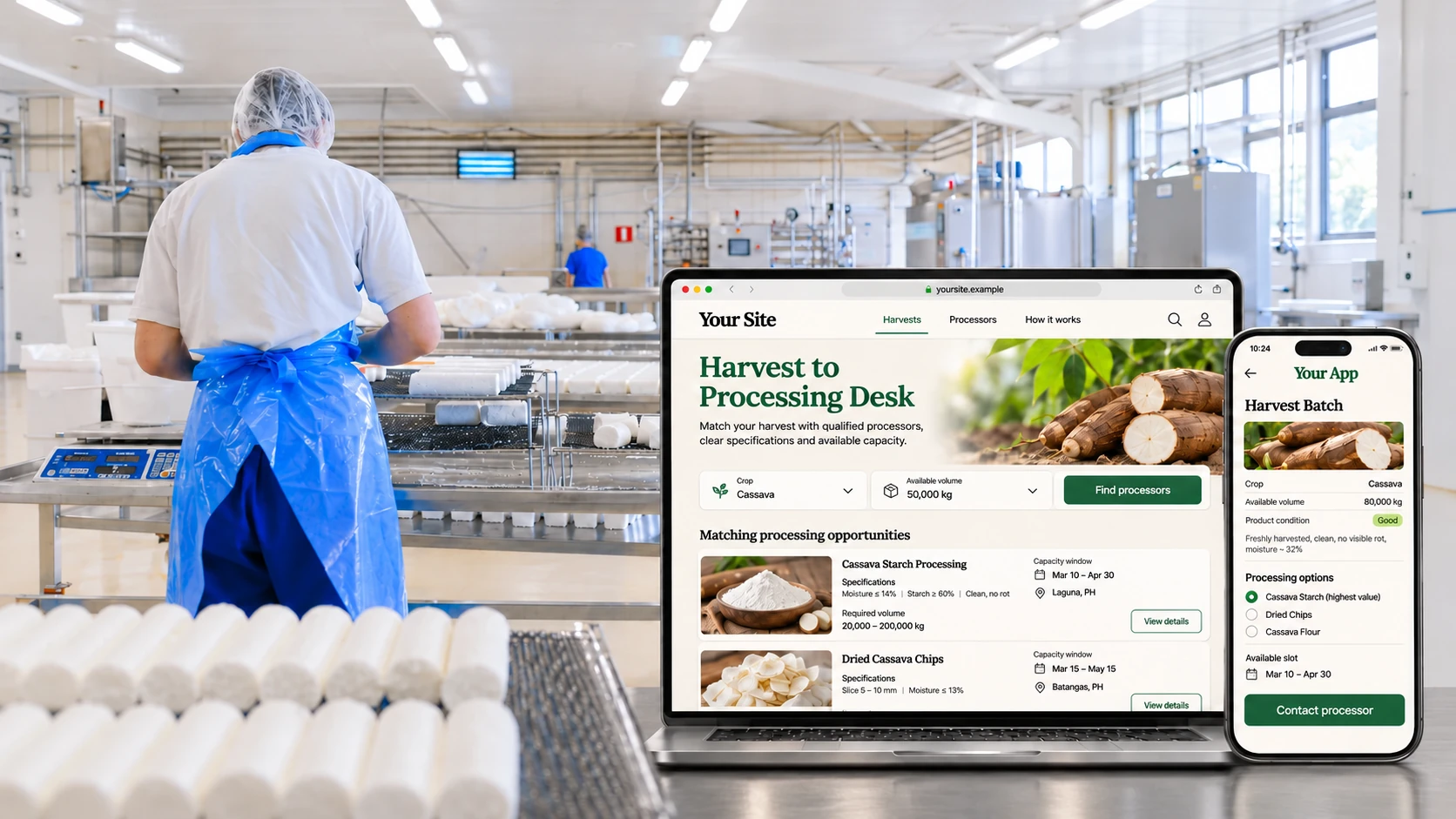
A grower has produce without a ready fresh-market buyer. A processor may use a different grade, but needs precise information quickly. Your desk could organise that time-sensitive conversation, helping both sides decide whether the batch deserves further assessment and making an unsuitable match clear before transport is arranged.
A business you can
picture.
Start with one crop and experienced processors. Growers describe an actual batch, qualified buyers review its suitability and the coordinator helps resolve sampling, quantity and collection details.
Who would be glad
you built it?
Growers seeking another route for a batch
A structured conversation with relevant processors
Processors with defined input needs
Current, specific information about available produce
Grower-group coordinators
A manageable record of enquiries and responses
Where the money
could come from.
A disclosed coordination fee on an accepted, completed transaction could support the desk. The fee covers enquiry preparation, matching and handover coordination. Include the cost of unsuccessful enquiries in the business test. The service should not promise to recover value from every surplus batch or imply that processor interest makes unsuitable produce usable.
The part you could
make your own.
Your proposed difference is translating between the grower’s available batch and the processor’s actual specification. A clear early rejection can be useful too, preventing a costly journey built on hopeful assumptions.
An angle to test with the people you want to serve.Start with something
worth using.
Focus on one crop and processor group. Capture the batch’s current condition, quantity and location, compare it with stated processor requirements and arrange the next appropriate check. Keep interest distinct from acceptance.
- Publish actual availability and relevant batch details.
- Request buyer review before confirming suitability.
- Coordinate agreed sampling and collection steps.
Give the promise
something to stand on.
You need product-chain knowledge and competent assessment partners. Quality, handling and suitability must be reviewed, with availability and condition updates kept current rather than assuming a listing remains accurate.
Quality, handling and suitability require competent assessment. Avoid presenting every surplus batch as recoverable value, and keep time-sensitive information updated rather than assuming a listing remains accurate.
Let a small beginning
teach you something.
Work with a grower group and processors in one product chain. Trial a small number of current batches, recording which facts led to further review, acceptance or rejection and whether the information stayed accurate until handover.
Can both sides decide whether a batch fits the processor’s requirements before committing to transport or a purchase?
Look for these signs
- Batch information has a current timestamp
- Processor responses address stated requirements
- Acceptance follows appropriate assessment
A little more
clarity.
Can all surplus produce be processed?
No. Condition, handling and intended use matter. Competent people must assess suitability, and the platform should make a declined match clear rather than imply every batch has recoverable value.
What if the batch changes while listed?
Require timely updates and reconfirm important details before a commitment. A time-sensitive listing should expire or be marked uncertain when its condition and availability can no longer be relied on.
What should my first version focus on?
Start with the first test described here, then build around the part people actually use and would pay to keep.
Now picture it
with your name on it.
Your people. Your priorities. The version you keep thinking about. Answer a few questions and leave with a starting plan you can keep.
Free to explore. No account or email needed for your starting plan.