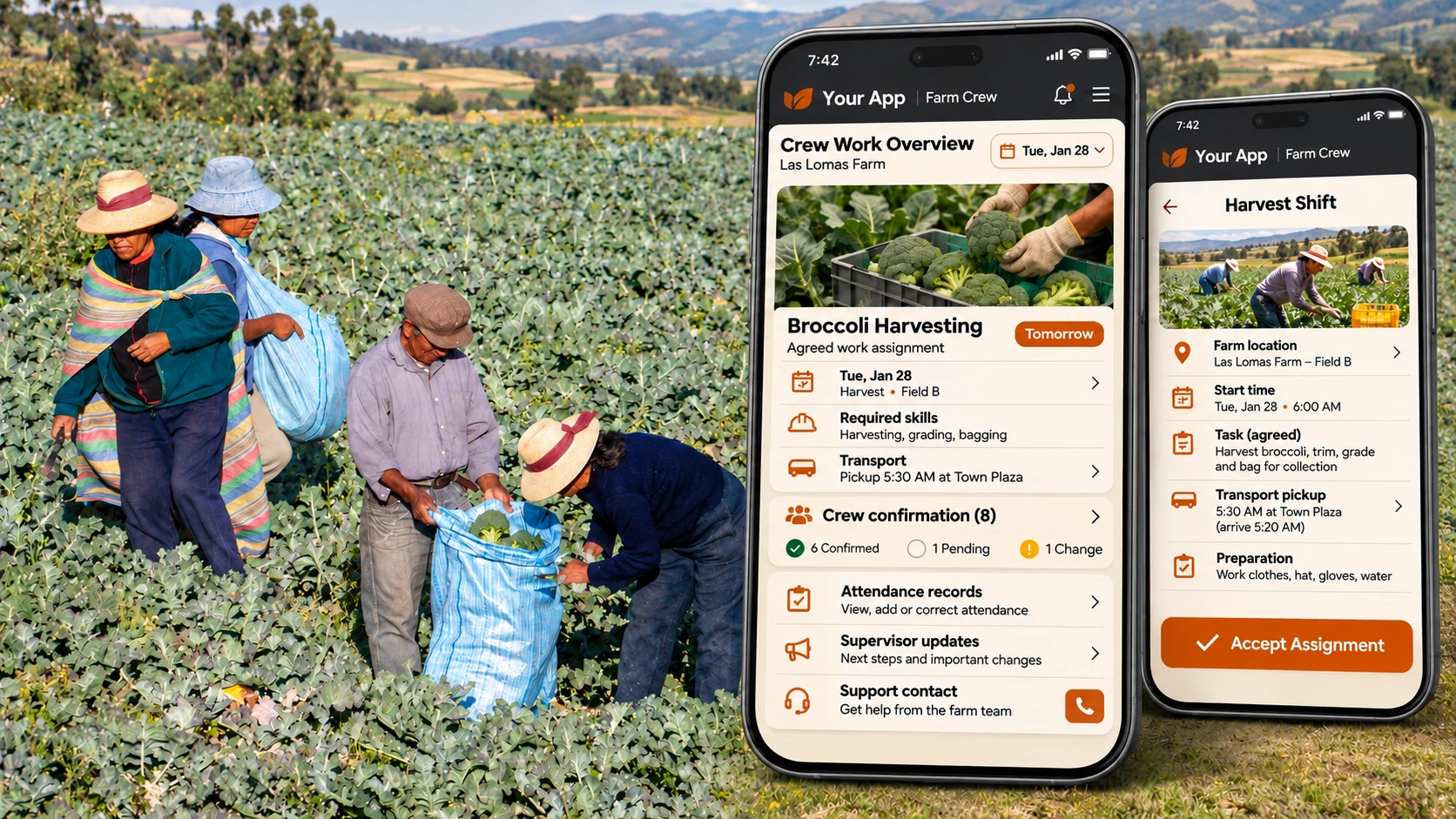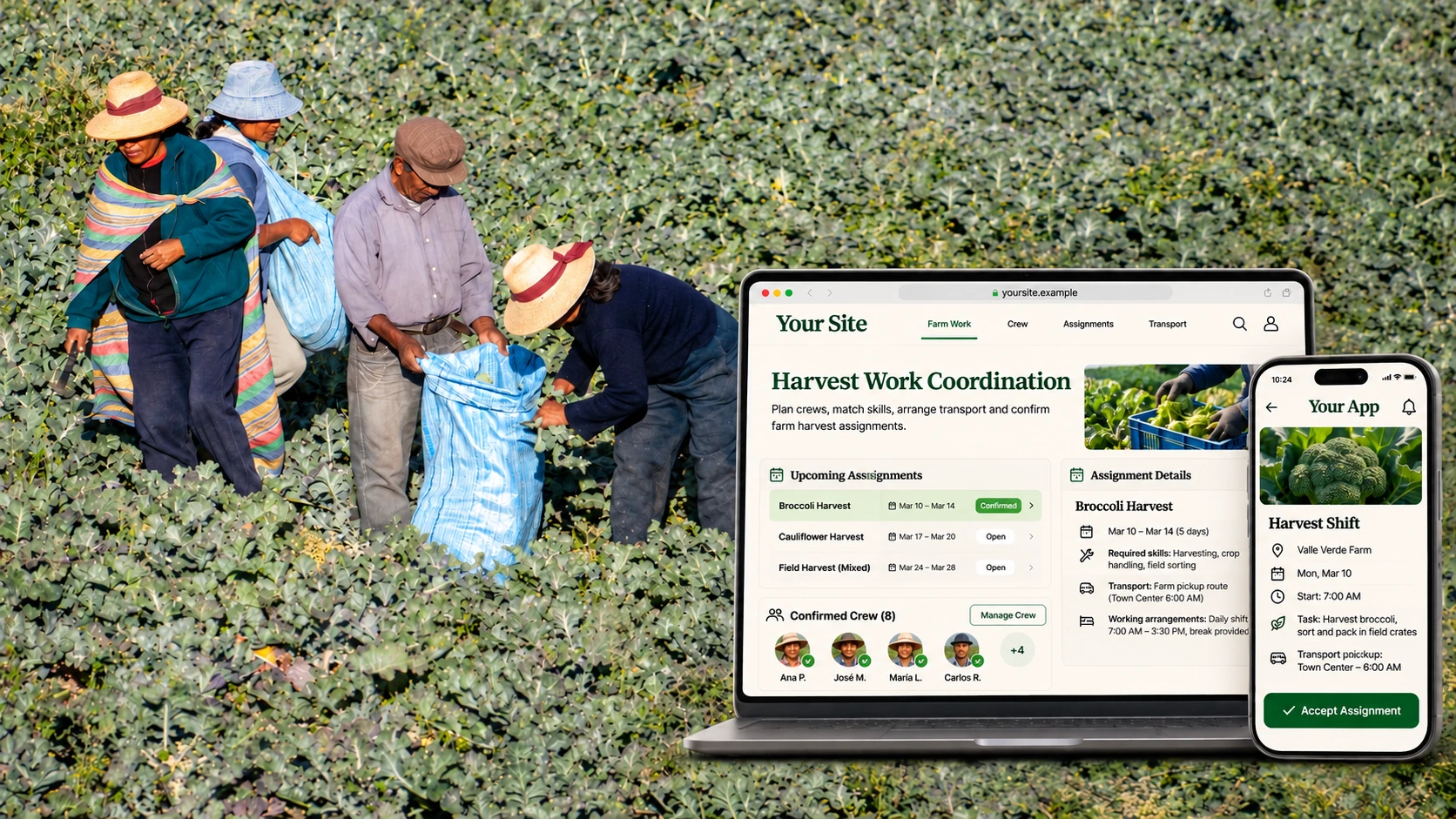
A harvest date is approaching and a farm needs people, transport and tools to line up. Workers hear there may be a job but do not know the hours or what happens if rain changes the plan. Your service could bring those practical commitments into one understandable arrangement before the urgent morning arrives.
A business you can
picture.
Create a workforce service around a defined farm task. Gather skill requirements, dates, transport and working arrangements, then coordinate suitable people and confirmed assignments.
Who would be glad
you built it?
Farms planning seasonal work
A coordinated crew with clear task expectations
Farm workers
Understandable pay, hours, location and travel arrangements
Crew coordinators
A visible record of availability and changes
Where the money
could come from.
Farms could pay a disclosed coordination fee for a defined hiring or scheduling service. The fee supports matching, communication and administration; it should not obscure or reduce agreed worker pay through unexplained deductions. Establish who employs, supervises and pays workers, and price the actual coordination work rather than promising a guaranteed crew in every circumstance.
The part you could
make your own.
Your difference could be preparation for weather and travel changes. A clear evening confirmation and a shared change process may help both farms and workers avoid arriving with different expectations.
An angle to test with the people you want to serve.Start with something
worth using.
Choose one seasonal task in a defined area. Publish clear job conditions, collect suitable availability, confirm accepted assignments and communicate changes. Keep worker pay distinct from your service charges.
- Farm task briefs and worker experience
- Availability and crew assignments
- Attendance and agreed payment records
Give the promise
something to stand on.
You need farm and worker relationships, local employment expertise and a fair communication process. Coordinating people requires clarity about responsibilities, conditions, cancellations and payment beyond collecting profile names.
Employment rules, worker welfare and competency checks require local review. Plan for cancellations and changes without leaving workers uncertain about travel or payment. A profile alone does not establish readiness for every task.
Let a small beginning
teach you something.
Work with a small farm group and willing workers on one task type. Review the assignment details together before the workday, then ask each side which practical questions remained unresolved.
Do workers and the farm understand the same task, conditions, pay arrangement and change process before anyone travels?
Look for these signs
- Assignments contain agreed working conditions
- Changes reach affected workers in time
- Payment responsibilities are clearly understood
A little more
clarity.
Does a worker profile prove competence?
A profile describes experience; it is not automatic proof of suitability for every task. Use an appropriate review process and explain which checks have actually been made.
What if the farm cancels because of weather?
Set a clear change process before the assignment. The parties need to understand travel, notice and payment arrangements, with local employment requirements reviewed by someone qualified.
AgHires is a related reference for agricultural recruiting.
Now picture it
with your name on it.
Your people. Your priorities. The version you keep thinking about. Answer a few questions and leave with a starting plan you can keep.
Free to explore. No account or email needed for your starting plan.