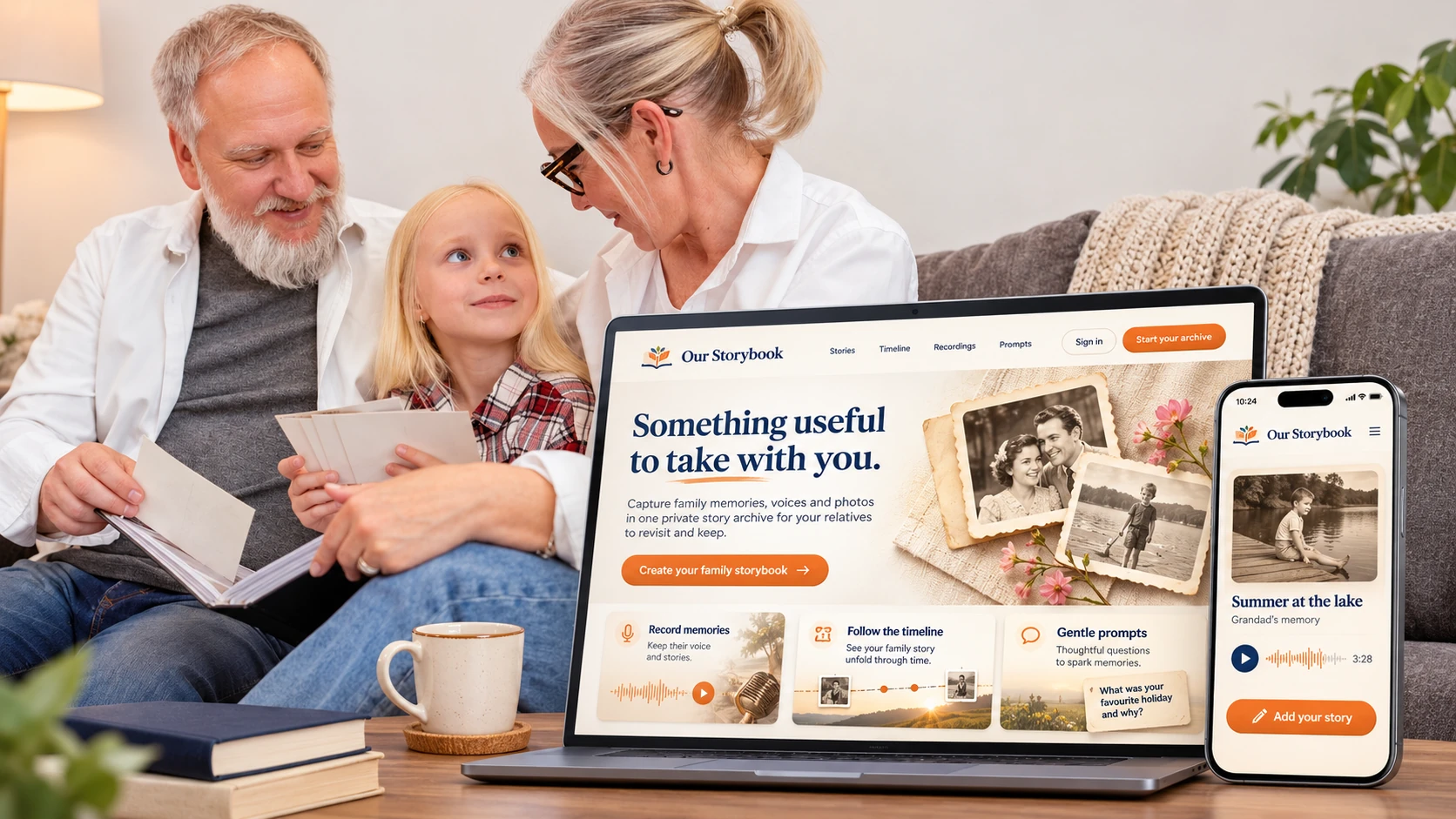
A family photograph comes out at a gathering and an older relative remembers the small story behind it. By the next visit, nobody can recall every detail. Your archive could make that moment easy to capture, letting relatives add context while keeping the collection within the family's chosen circle.
A business you can
picture.
Build a private storytelling service with gentle prompts, recordings and family contributions. Help an organiser turn scattered memories into a collection that relatives can revisit and keep.
Who would be glad
you built it?
Family memory organisers
Gather scattered photographs and stories.
Relatives contributing memories
Record details in an approachable format.
Future family readers
Revisit an understandable shared collection.
Where the money
could come from.
Families could buy a defined story package with an agreed storage period and optional renewal. Printed keepsakes can be separately priced. Recording support, storage, exports and fulfilment all cost money; the offer should explain the continuing commitment clearly rather than treating permanent preservation as an unlimited promise.
The part you could
make your own.
Gentle participation could be the distinction. Short prompts, simple recording and clear family permissions may help relatives contribute more naturally than a complex archive system. Test whether the experience captures the small stories people actually want to remember.
An angle to test with the people you want to serve.Start with something
worth using.
Start with one private family collection, gentle story prompts, audio or photo uploads and invitations. Include a practical export from the beginning. Keep ownership and access choices clear before adding public sharing or elaborate family-tree features.
- Story prompts and private invitations
- Audio, text and photograph contributions
- Family collections and export options
Give the promise
something to stand on.
You need an inviting recording experience and dependable stewardship of personal material. Storage, permissions, export and what happens when a subscription ends are central to the promise, not hidden technical details.
Get permission for shared stories and photographs. Family members may disagree about what should be public or private; provide clear ownership, visibility and removal choices from the beginning.
Let a small beginning
teach you something.
Invite a willing family to capture a few stories around actual photographs. Observe where contributors struggle and ask the organiser to export and share the collection within agreed boundaries before expanding the service.
Can relatives contribute a meaningful memory and later find it without depending on one person's technical confidence?
Look for these signs
- Contributors finish short story entries
- Permissions reflect the family's choices
- Exports preserve usable stories and files
A little more
clarity.
Who owns the stories and photographs?
Explain that in clear service terms and honour contributors' rights and permissions. Families should understand who can edit, download or share each item, especially when several relatives contribute material.
What happens if the family stops paying?
Publish the storage, access and export arrangements before purchase. Give families a reasonable way to keep their material, and avoid using an emotional attachment to memories as a surprise barrier to leaving.
Storyworth is a reference for collecting family stories.
Now picture it
with your name on it.
Your people. Your priorities. The version you keep thinking about. Answer a few questions and leave with a starting plan you can keep.
Free to explore. No account or email needed for your starting plan.