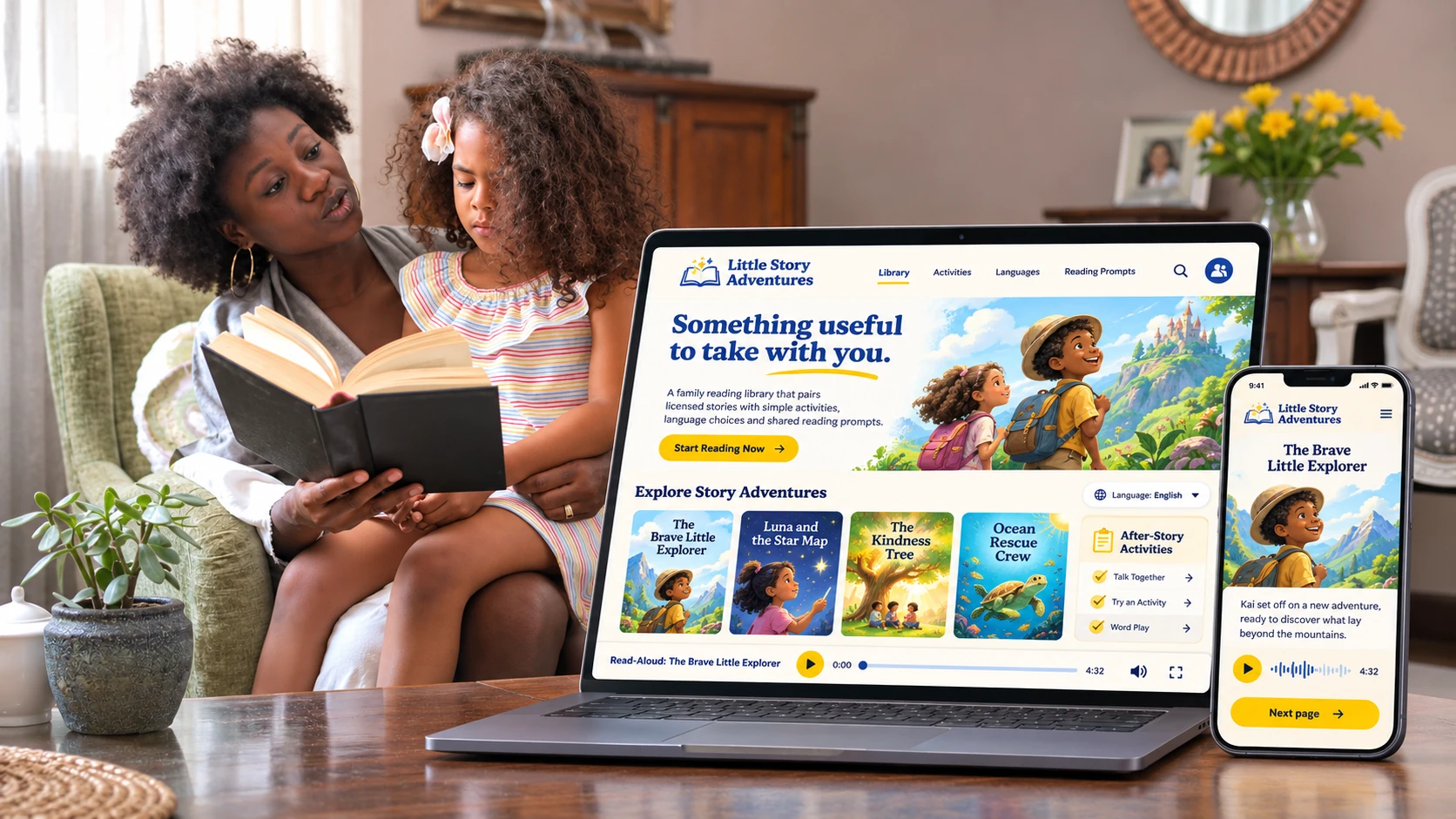
A parent wants to read with a child but has little energy left for planning an activity. One short story and a playful question could be enough. Your library could make that shared moment easier to begin, with stories and simple extensions that invite conversation rather than another demanding task list.
A business you can
picture.
Develop a small collection for a defined age range. Each licensed story includes an optional audio reading, conversation prompts and a simple activity using familiar materials.
Who would be glad
you built it?
Parents and carers
Ready-to-share stories with manageable activities
Community reading groups
Suitable material for a small shared session
Schools offering family reading support
A clear collection families can use at home
Where the money
could come from.
Families could buy a themed pack as the first offer. Its price supports writing or licensing, illustration, editorial review and delivery. A subscription can follow when you can sustain a clear release promise. Keep the paid value in the shared reading experience, without claiming that a few stories guarantee a particular educational outcome.
The part you could
make your own.
Your proposed difference is what happens just beyond the final page. A tiny map, a question for a grandparent or a scene to act out could help families connect the story to their own lives.
An angle to test with the people you want to serve.Start with something
worth using.
Create one themed pack with a small set of licensed stories, read-aloud guidance and optional activities. Provide a clear age description and printable alternatives before expanding into a large subscription library.
- Choose by age, reading time and language.
- Listen or read together at a comfortable pace.
- Save a favourite story and its activity.
Give the promise
something to stand on.
You need thoughtful story selection, appropriate rights and reviewers who understand the intended age range. Activities should be simple, optional and possible without collecting detailed information about children.
Secure the rights to text, audio and illustrations. Review age suitability, protect family information and make optional activities manageable without collecting unnecessary details about children.
Let a small beginning
teach you something.
Invite families with children in the intended age group to try a complete sample pack. Ask which activities they actually chose, how much preparation they needed and what made them want another story.
Can a tired adult choose and share a story comfortably, and does the optional activity invite a useful moment together?
Look for these signs
- Families begin without extensive preparation
- Activities remain optional and manageable
- Readers return for specific stories or themes
A little more
clarity.
Does every story need an activity?
No. Reading together can be enough. Offer a small extension for families who want it, while keeping the story complete and enjoyable without extra tasks.
Can we personalise stories with children’s details?
Only add personalisation when it offers a clear benefit and appropriate controls. The first version can work well without names, photographs or detailed child profiles, reducing unnecessary information collection.
What should my first version focus on?
Start with the first test described here, then build around the part people actually use and would pay to keep.
Now picture it
with your name on it.
Your people. Your priorities. The version you keep thinking about. Answer a few questions and leave with a starting plan you can keep.
Free to explore. No account or email needed for your starting plan.