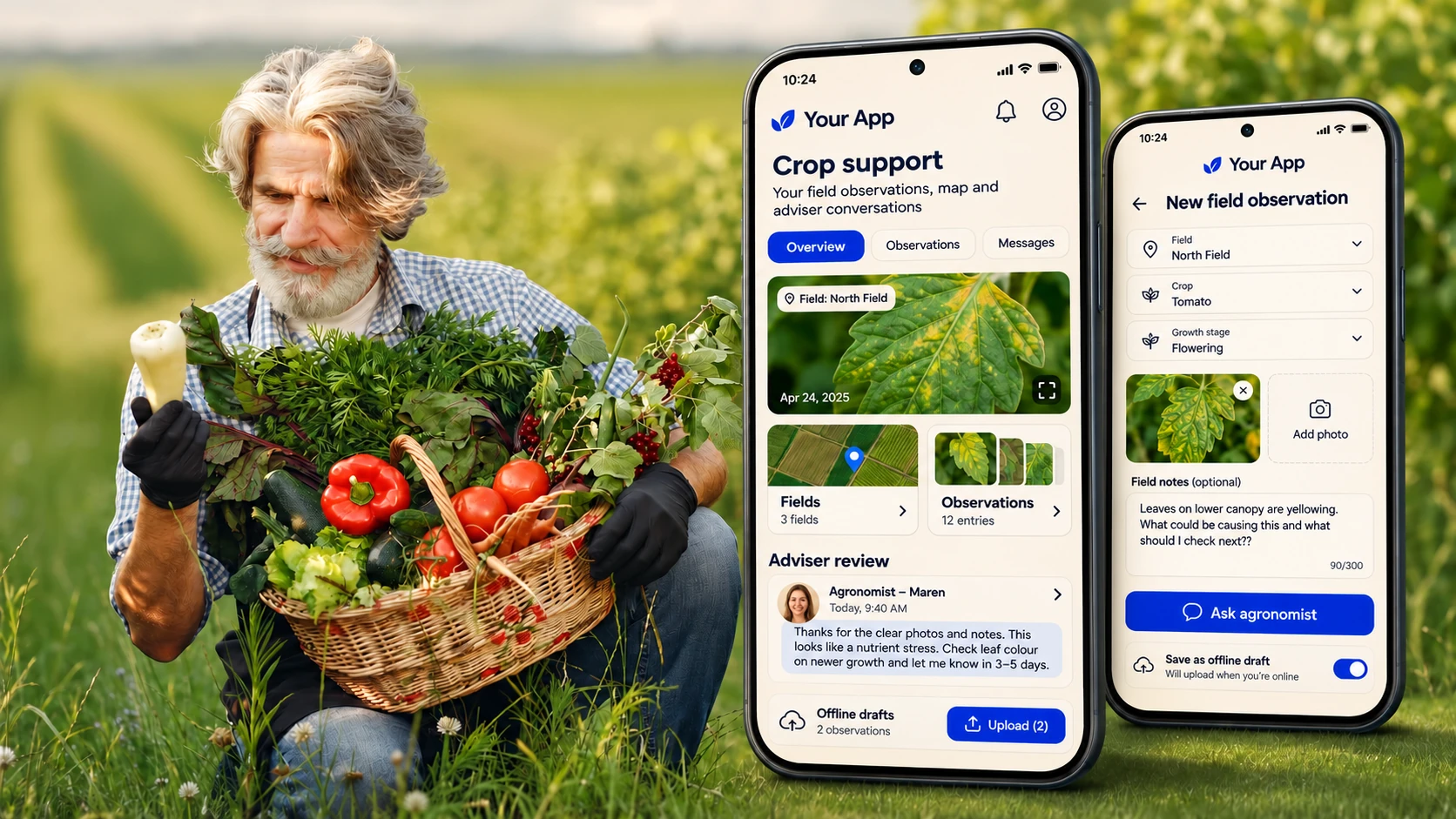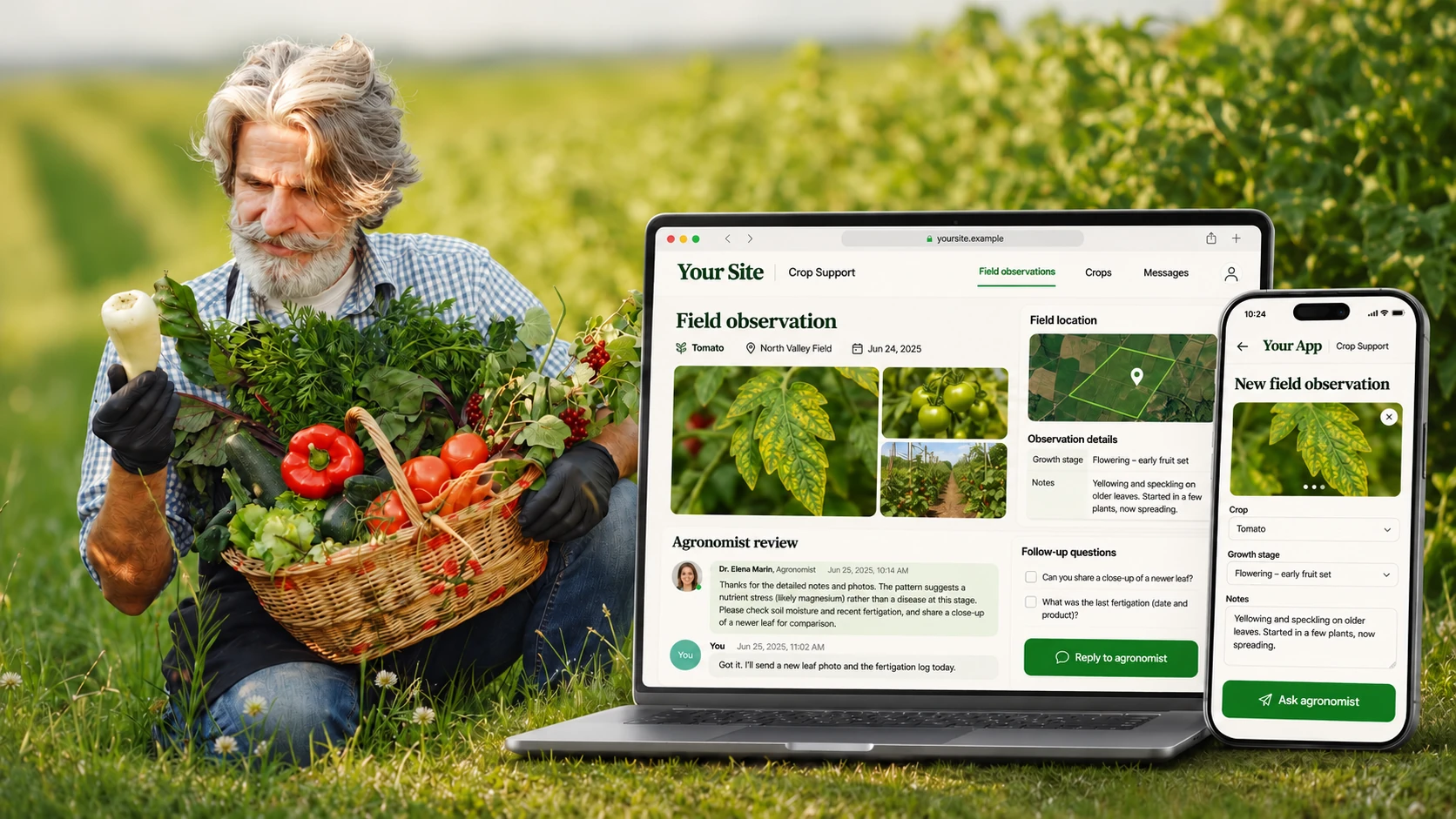
A grower notices leaves changing in one corner of a field and sends a hurried photograph to several people. The replies ask for different missing details. Your service could help gather the crop history, location and observations together, so qualified advice begins with a clearer picture of what has changed.
A business you can
picture.
Create a professional crop-support platform for a defined crop group. Organise field notes, photographs and follow-up questions so an agronomist can review the situation in context.
Who would be glad
you built it?
Growers facing an unfamiliar crop issue
A structured route to appropriate advice
Agricultural advisers
Relevant observations and a traceable case history
Cooperatives
A manageable way to coordinate member support
Where the money
could come from.
A cooperative could pay for a defined advisory support package covering specified members and case handling. Price adviser time, travel where required, record storage and follow-up work. The paid promise should describe access and process rather than guaranteed crop recovery, and any visit or specialist work outside the package should be agreed separately.
The part you could
make your own.
Your possible advantage is continuity across the season. Keeping earlier observations and actions visible could help an adviser ask better follow-up questions than a new message thread for every photograph.
An angle to test with the people you want to serve.Start with something
worth using.
Focus on one crop and a defined advisory area. Collect observations, images and recent actions, assign a qualified reviewer and retain follow-up notes. Explain which cases require a visit and the service’s response terms.
- Field observations and image records
- Qualified adviser review and questions
- Dated advice and follow-up notes
Give the promise
something to stand on.
You need qualified advisers, local crop knowledge and a realistic response process. The platform’s role is to organise information and access; it must not turn a photograph into an unsupported diagnosis.
Qualified oversight and local crop knowledge are essential. Image-based AI may assist triage but should not be presented as infallible diagnosis. Product recommendations require current, appropriate professional review.
Let a small beginning
teach you something.
Work with an adviser and a small consenting grower group on actual non-emergency cases. Compare the information requested before and after your structured intake, then review whether follow-up records remain useful.
Does the intake give the qualified adviser enough relevant context to choose the appropriate next assessment step?
Look for these signs
- Cases include useful crop history
- Growers understand the adviser’s next step
- Follow-up observations remain connected to the case
A little more
clarity.
Can AI identify the crop problem?
An image tool may help organise observations or flag missing information, but an uncertain result must not become definitive advice. Keep assessment and recommendations under appropriate qualified review.
What if a field visit is needed?
Explain how visits are arranged and charged before the grower commits. The service should make that next step clear rather than implying every issue can be resolved remotely.
Agrio is a related reference for digital crop-support tools.
Now picture it
with your name on it.
Your people. Your priorities. The version you keep thinking about. Answer a few questions and leave with a starting plan you can keep.
Free to explore. No account or email needed for your starting plan.