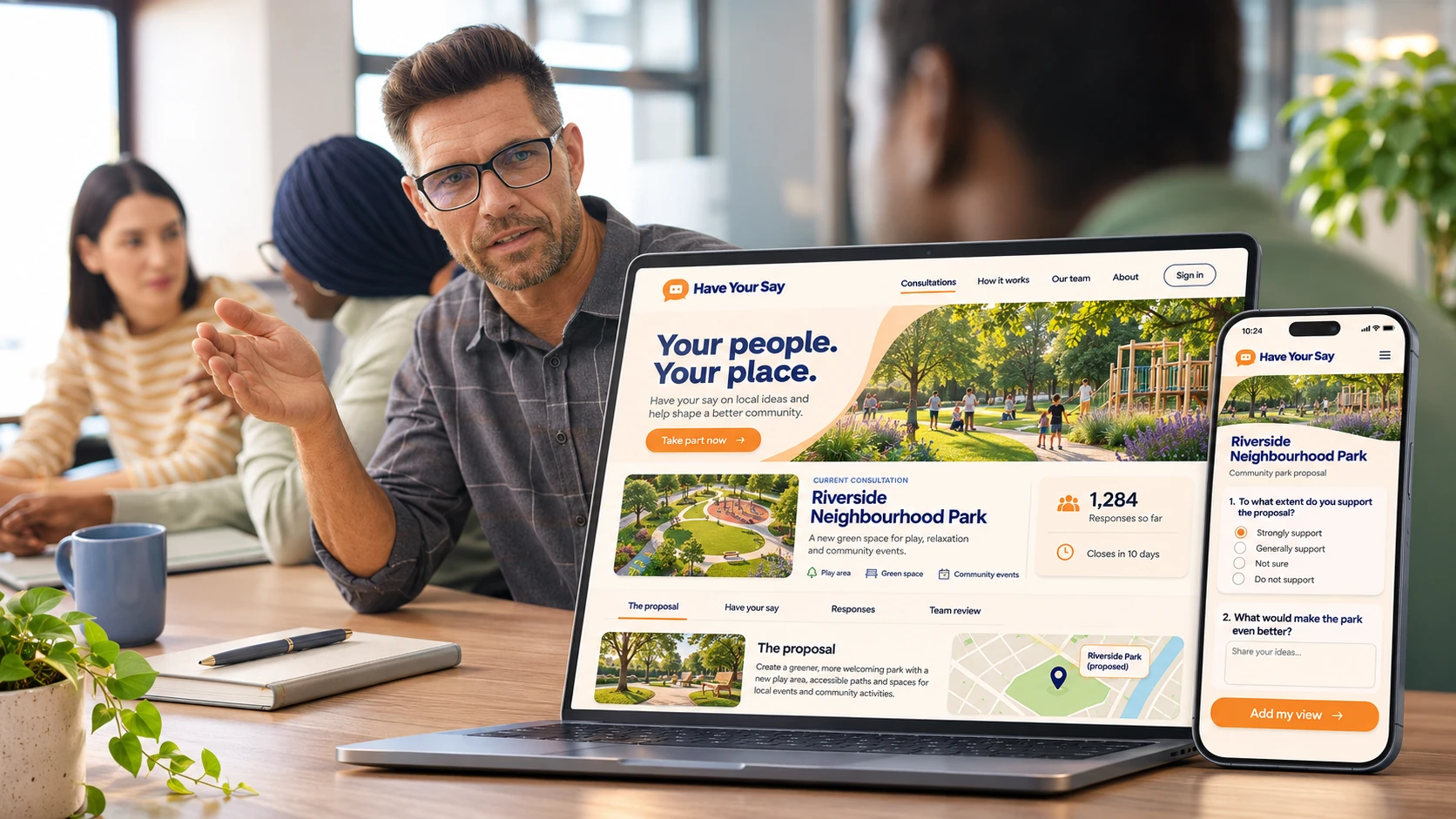
Residents are invited to comment on a proposed community space, but the question is vague and nobody knows what influence the feedback will have. Your platform could explain the choices, gather structured responses and show the responsible team's next step, making participation feel more purposeful and accountable.
A business you can
picture.
Offer a consultation platform to associations, civic groups or public-interest organisations. Publish a clear proposal, gather structured responses and show how the responsible team reviews what it hears.
Who would be glad
you built it?
Participating residents or members
Understand the question and response process.
Consultation organisers
Collect and review structured input.
Decision-making teams
Explain how feedback informed their choices.
Where the money
could come from.
Organisations could pay for a consultation workspace and a defined setup or facilitation service. The fee covers preparing questions, handling responses and supporting a clear reporting process. It should never buy preferred opinions or influence over outcomes; moderation, accessibility and follow-up work need to be included in the scope.
The part you could
make your own.
Visible follow-through could make the service distinctive. A clear account of what people said, what changed and what could not change may matter more than collecting a large response total. Test whether participants understand that account.
An angle to test with the people you want to serve.Start with something
worth using.
Start with one proposal, a plain-language briefing, structured questions and a response summary. State who decides, what can change and when participants will hear back. Include alternative participation routes where the audience needs them.
- Proposal pages and supporting material
- Comments, surveys and meeting records
- Decision updates and response summaries
Give the promise
something to stand on.
You need facilitation skills and a clear agreement about the decision process. The tool cannot create trust by itself; organisers must explain what is open to influence and follow through on how responses will be reviewed.
Moderation, accessibility and transparent participation rules are essential. Identity requirements should suit the purpose. A poll result should not be presented as representative of a whole population without supporting evidence.
Let a small beginning
teach you something.
Work with an organisation preparing a real bounded consultation. Ask participants to explain the decision scope in their own words, then test whether responses produce useful considerations the responsible team can address publicly.
Do participants understand what their input can influence and receive a clear explanation of the resulting decision?
Look for these signs
- Questions match the actual decision scope
- Responses are reviewed transparently
- Organisers publish a meaningful follow-up
A little more
clarity.
Does a popular response automatically become the decision?
Only if that is the stated process. Explain how input is weighed, who decides and any constraints. A consultation should not look like a binding vote when the organisation is actually gathering advice.
Can participants remain anonymous?
That depends on the consultation's purpose and participation rules. Make identity, visibility and moderation choices clear before collecting responses, and avoid promising anonymity while retaining or displaying identifying information unexpectedly.
Decidim is a reference for digital participation platforms.
Now picture it
with your name on it.
Your people. Your priorities. The version you keep thinking about. Answer a few questions and leave with a starting plan you can keep.
Free to explore. No account or email needed for your starting plan.