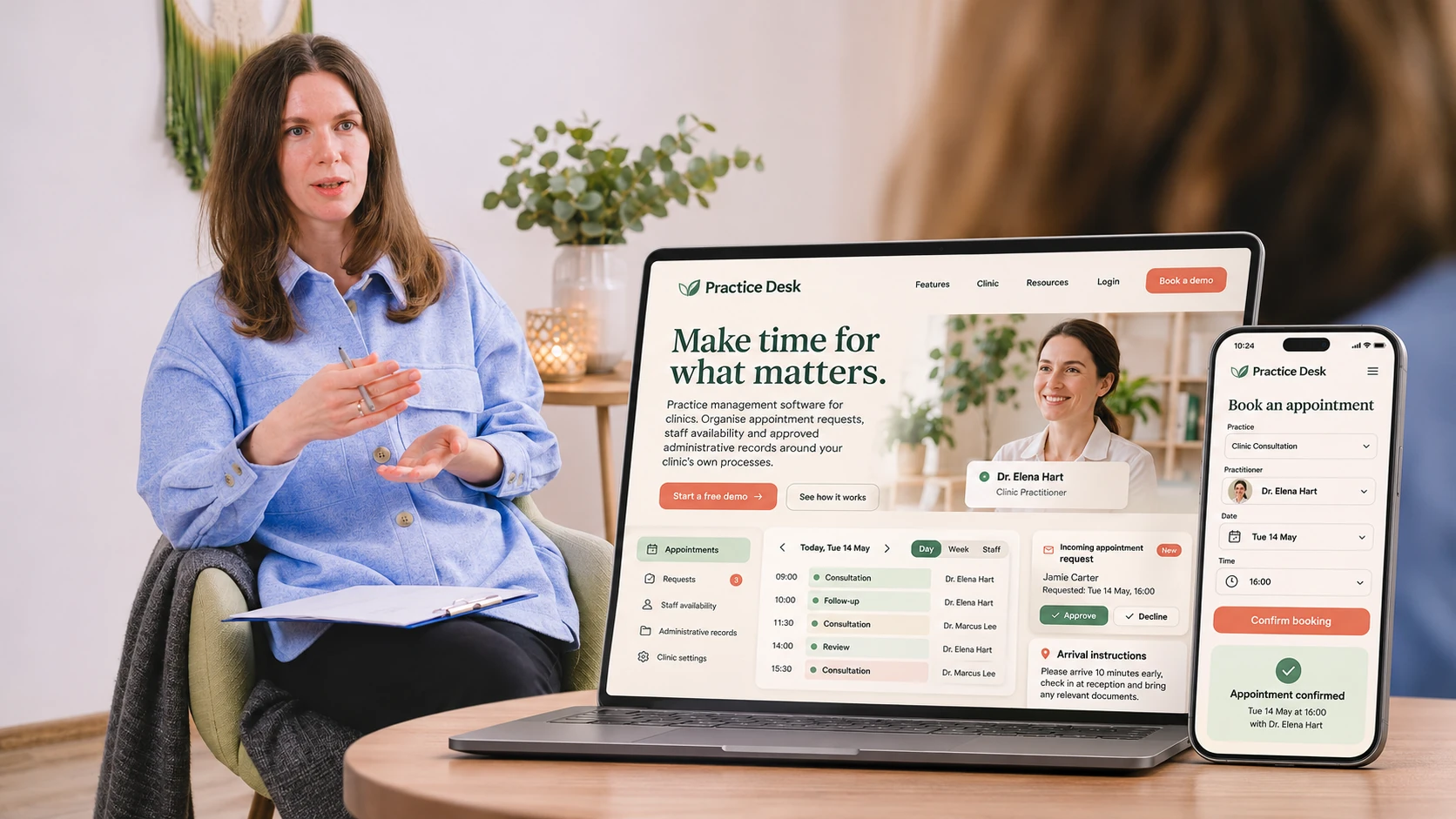
A patient calls to confirm a visit while reception is checking a clinician's availability and looking for the latest administrative note. Your workspace could connect those details so staff can give a clear answer, while clinical decisions and sensitive records remain within the clinic's properly governed processes.
A business you can
picture.
Create practice management software for a defined clinic type. Organise appointment requests, staff availability and approved administrative records around the clinic’s own responsibilities and processes.
Who would be glad
you built it?
Clinic reception teams
Manage appointment requests and changes.
Practice managers
Coordinate staff and administrative records.
Patients using approved booking tools
Understand appointment arrangements.
Where the money
could come from.
Clinics could pay a subscription for a defined administrative scope and staff access. Migration, training and specialist integration can be separately priced. Secure operation, support and dependable records create ongoing costs; the software fee is distinct from the clinic's consultation revenue and should not imply clinical services your team does not provide.
The part you could
make your own.
A focused reception workflow could be your advantage. Clear appointment changes, useful confirmations and carefully limited access may solve more daily friction than an oversized system. Test the work with the staff who handle it each day.
An angle to test with the people you want to serve.Start with something
worth using.
Choose one clinic type and a bounded booking workflow. Support requests, staff availability, confirmations and authorised administrative notes. Define urgent-contact instructions and access permissions before introducing clinical records or automated patient guidance.
- Appointment calendars and reminders
- Patient administration and permissions
- Invoices and staff task records
Give the promise
something to stand on.
You need collaboration with the clinic's responsible team and careful handling of personal information. Appointment administration, clinical records and patient communication may require different controls and should not be bundled casually into one open workspace.
Health information needs specialist privacy and security planning. Confirm local requirements, access rules and record retention with the practice. A booking request must not imply clinical advice or emergency support.
Let a small beginning
teach you something.
Map the appointment process with clinic staff using sample data. Pilot a limited administrative workflow under their supervision, checking how changes, cancellations and incomplete requests are handled before extending access or scope.
Can staff confirm the correct appointment arrangement and next administrative action without exposing information beyond authorised roles?
Look for these signs
- Availability and confirmations remain consistent
- Staff permissions match responsibilities
- Patients understand the next administrative step
A little more
clarity.
Is this an electronic medical record system?
Not unless that is the specifically designed and governed scope. A booking workspace can handle administrative tasks while clinical records stay in an established system with its own professional and technical requirements.
Can patients use the booking form for urgent help?
Make the form's purpose and monitoring arrangements clear. The clinic should provide appropriate urgent-contact instructions; a routine appointment request must not imply that someone will assess an emergency through the website.
Cliniko is a reference for clinic practice management software.
Now picture it
with your name on it.
Your people. Your priorities. The version you keep thinking about. Answer a few questions and leave with a starting plan you can keep.
Free to explore. No account or email needed for your starting plan.