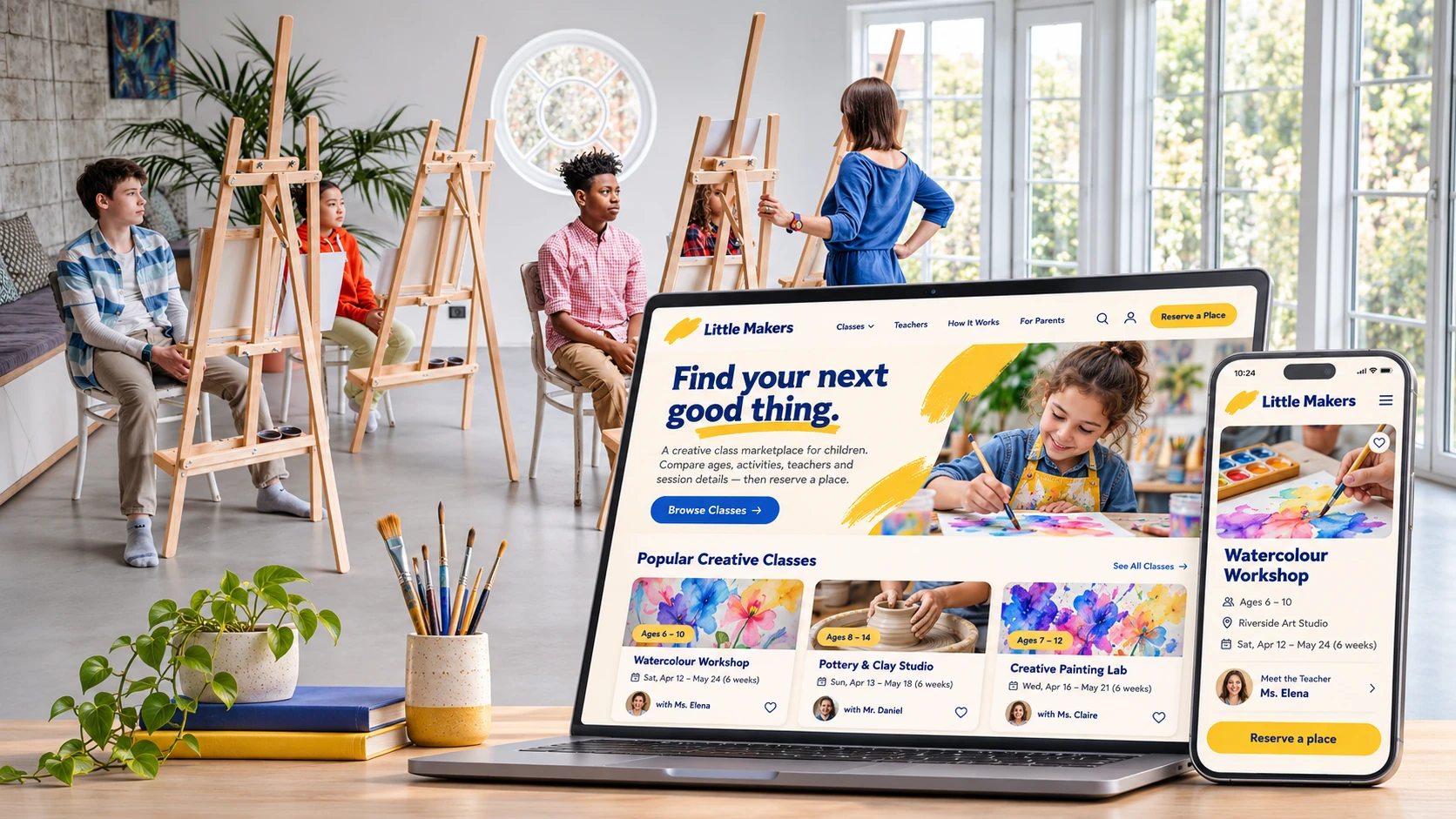
A child spends the weekend drawing imaginary buildings and asks for an art class. Their parent finds appealing pictures but cannot tell the age range, supervision or materials needed. Your marketplace could make those details easy to compare, helping a family choose an experience the teacher is prepared to deliver.
A business you can
picture.
Build a class marketplace around creative enrichment. Let parents compare age ranges, activities, teacher introductions and session expectations before reserving a place for their child.
Who would be glad
you built it?
Parents and guardians
Choose suitable creative activities.
Independent teachers
Present age-appropriate class offerings.
Community studios
Manage places and practical class information.
Where the money
could come from.
Families could pay for an individual class or a clearly defined series, with the teacher sharing a disclosed booking fee. The platform's income must cover teacher onboarding, payment handling and parent support. Materials, venue and delivery costs belong in the class price, and unused-session terms should be easy to understand.
The part you could
make your own.
Better practical detail could make the marketplace feel dependable: who teaches, what happens and how children are supported. Test whether that clarity helps families choose thoughtfully instead of relying only on attractive activity photographs.
An angle to test with the people you want to serve.Start with something
worth using.
Start with one creative category and a small reviewed teacher group. Show age ranges, format, materials, supervision and booking terms. Keep bookings and communication with the parent or guardian rather than creating open child messaging.
- Class descriptions and age guidance
- Teacher introductions and schedules
- Parent-managed booking and communication
Give the promise
something to stand on.
You need thoughtful teacher onboarding and clear arrangements for children's participation. Supervision, guardian communication, collection rules and how concerns are handled should shape the product before broad marketplace growth.
Safeguarding, teacher checks and parent-controlled participation belong in the operating design. Review recordings, messages and sharing permissions carefully. Avoid making promises about a child’s development from attendance alone.
Let a small beginning
teach you something.
Invite parents to review a few actual class listings and explain what they would still need to know. Pilot bookings with known teachers and collect feedback about both the activity and the practical handover.
Can a parent choose a suitable class and understand participation and supervision arrangements without chasing missing details?
Look for these signs
- Listings answer age and materials questions
- Guardians understand arrival and collection
- Teachers can deliver the stated activity
A little more
clarity.
Should children have public profiles?
The initial booking experience can work through guardian accounts without public child profiles. Collect only the information needed for the class and define who may see it and how it is used.
What if a child does not enjoy the class?
Describe the activity honestly and set clear cancellation or trial arrangements. Encourage parents and teachers to discuss suitability, while avoiding promises that every child will respond to the same teaching style.
Outschool is a reference for online classes for children.
Now picture it
with your name on it.
Your people. Your priorities. The version you keep thinking about. Answer a few questions and leave with a starting plan you can keep.
Free to explore. No account or email needed for your starting plan.