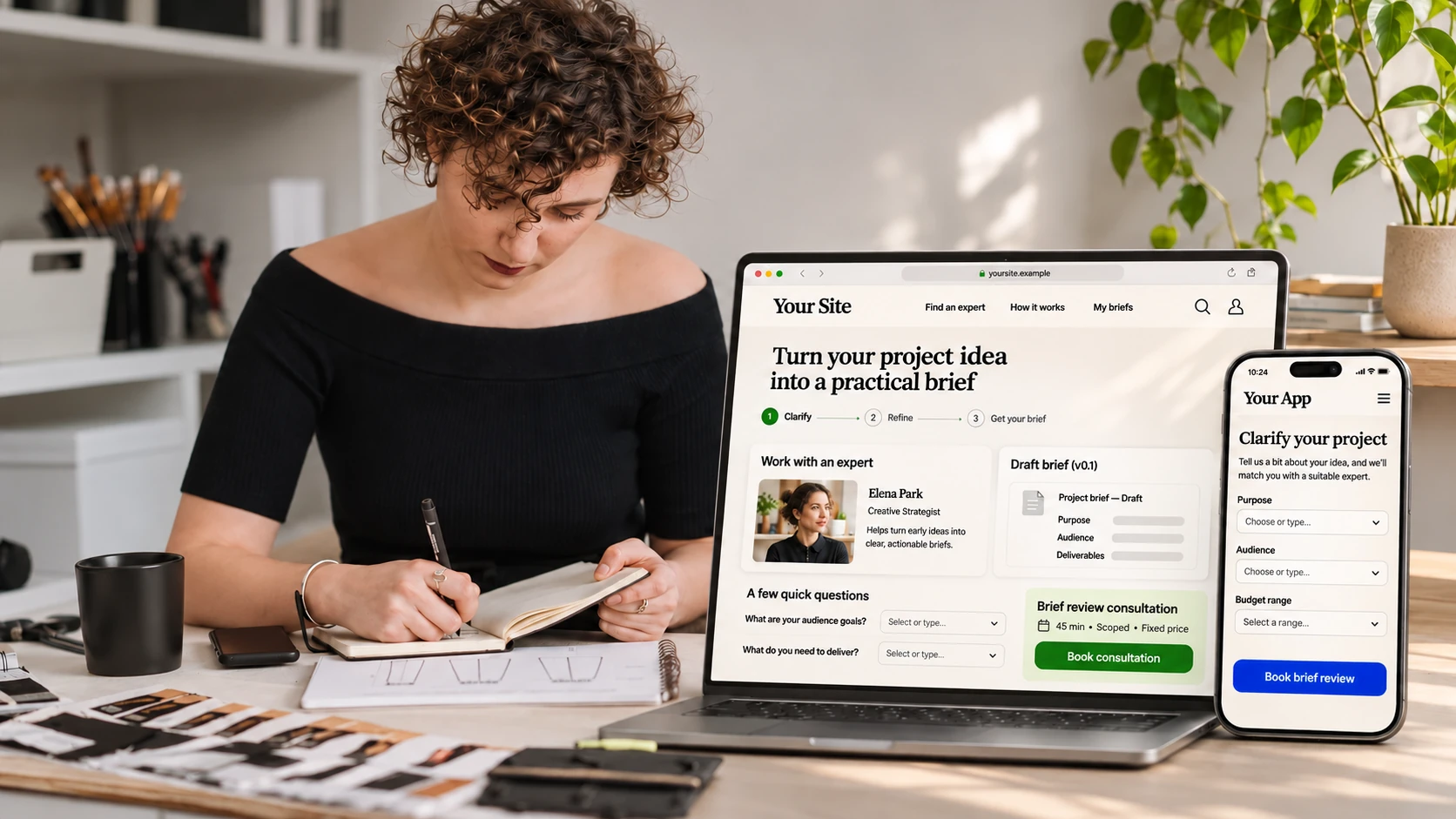
A customer describes a project to three providers and receives three very different quotations. Each provider has filled the gaps with a different assumption. Your service could help the customer turn a vague wish into a clear, portable brief, so the next conversation starts from a shared understanding of what matters.
A business you can
picture.
Start with one service category. A suitable expert holds a structured conversation, records the customer's priorities and produces a brief the customer can review and use with several providers.
Who would be glad
you built it?
Customers preparing a service project
A useful brief they can take to providers
Small businesses commissioning unfamiliar work
Clear priorities and comparison questions
Providers receiving enquiries
Better-defined needs before preparing a proposal
Where the money
could come from.
Customers could pay a fixed fee for the defined brief package. That fee supports discovery, writing and review, with further work separately agreed. Providers may purchase preparation credits for their customers if the relationship is disclosed. The brief should remain useful without obliging the customer to hire a particular provider or promising a final price.
The part you could
make your own.
Your proposed edge is an asset the customer owns and understands. A clear statement of priorities and exclusions may help quotations become more comparable without pretending every provider will propose the same solution.
An angle to test with the people you want to serve.Start with something
worth using.
Choose one kind of project. Offer a structured interview, a customer-reviewed brief and a list of unresolved questions. Include one revision and an export the customer can use independently.
- Describe the desired result and current situation.
- Separate essential needs from optional possibilities.
- List unresolved questions and useful next checks.
Give the promise
something to stand on.
You need skilled interviewers and reviewers familiar with the chosen service category. Keep the customer in control, distinguish desired outcomes from technical decisions and disclose any provider relationship.
Define the expert's role and keep the customer in control of the brief. Preparation should not imply technical approval, a guaranteed price or an obligation to hire a particular provider.
Let a small beginning
teach you something.
Invite customers already considering a project and willing providers in that category. Prepare a small set of briefs, then ask each provider which assumptions remain before quoting and each customer whether the brief reflects their intent.
Can different providers understand the customer’s priorities from the same brief without inventing conflicting assumptions about the requested work?
Look for these signs
- Customers approve the final brief
- Providers identify fewer basic ambiguities
- Unresolved specialist questions remain explicit
A little more
clarity.
Does the brief technically approve the project?
No. It describes the customer’s intentions and questions. Technical feasibility, required permissions and final design need the appropriate provider or qualified professional assessment.
Must customers use our preferred provider?
The initial offer should give them a portable brief and a genuine choice. Any referral arrangement should be disclosed and should not make ownership or access conditional on a later purchase.
What should my first version focus on?
Start with the first test described here, then build around the part people actually use and would pay to keep.
Now picture it
with your name on it.
Your people. Your priorities. The version you keep thinking about. Answer a few questions and leave with a starting plan you can keep.
Free to explore. No account or email needed for your starting plan.