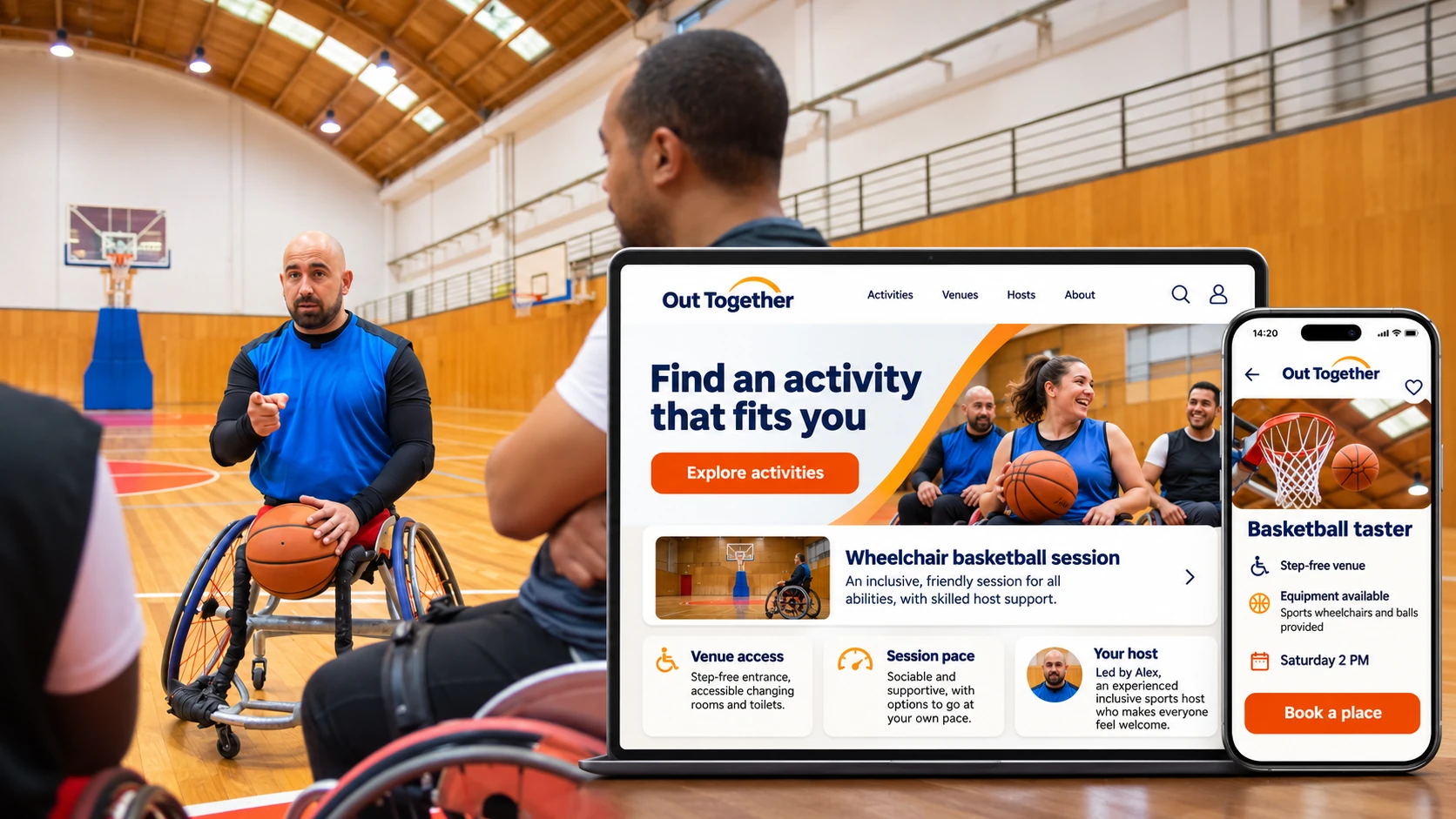
Someone wants to join an activity but keeps wondering about the entrance, seating, noise and whether they can step out briefly. A cheerful welcome message does not answer those questions. Your service could help providers describe the experience concretely, giving each person more information to decide what feels suitable.
A business you can
picture.
Begin with a small set of recreation providers. Hosts describe observable arrangements, participants choose the information important to them and the service supports questions before booking.
Who would be glad
you built it?
People trying an unfamiliar activity
Specific information about the setting and session
Activity providers
A clearer way to explain practical arrangements
Community organisers
Suitable information for helping members explore options
Where the money
could come from.
Providers could pay for profile and booking tools that help them explain their activities clearly. The subscription supports information maintenance and enquiry handling. A hosted introduction can be separately priced if you provide it. Paid visibility should be labelled, and neither payment nor a detailed profile should imply medical suitability or a universal safety guarantee.
The part you could
make your own.
Your proposed difference is replacing broad reassurance with details people can judge for themselves. A photograph of the entrance and a description of the session’s pace may be more useful than saying everyone is welcome.
An angle to test with the people you want to serve.Start with something
worth using.
Choose a small range of local activities. Record entrance details, seating, noise, pace and available support, with the source and check date. Offer a question route before a visitor books.
- Describe access and participation details specifically.
- Show the host's answers and review dates.
- Let visitors ask about their own requirements.
Give the promise
something to stand on.
You need attentive venue research and providers willing to describe details accurately. Keep information dated, invite corrections and avoid treating one access label as proof that a session suits every person.
Keep venue information current and avoid guarantees of suitability. Participants with medical questions need appropriate professional guidance; the platform focuses on practical access and the described activity experience.
Let a small beginning
teach you something.
Invite a varied group of prospective participants to review a small set of provider-confirmed listings. Ask which questions remain unanswered and, with consent, compare the description with their experience of a visit.
Does the listing answer the visitor’s practical questions well enough for them to make their own informed choice about attending?
Look for these signs
- Listings show information sources and dates
- Visitors can ask specific follow-up questions
- Provider descriptions match the actual experience
A little more
clarity.
Can we say an activity is suitable for everyone?
Avoid that claim. Explain the actual setting and arrangements so people can decide for themselves, and direct medical suitability questions to appropriate professionals.
What if a venue changes its layout?
Give providers and visitors a clear correction route and show when details were last checked. Information that affects arrival or participation should be reviewed before it remains presented as current.
What should my first version focus on?
Start with the first test described here, then build around the part people actually use and would pay to keep.
Now picture it
with your name on it.
Your people. Your priorities. The version you keep thinking about. Answer a few questions and leave with a starting plan you can keep.
Free to explore. No account or email needed for your starting plan.