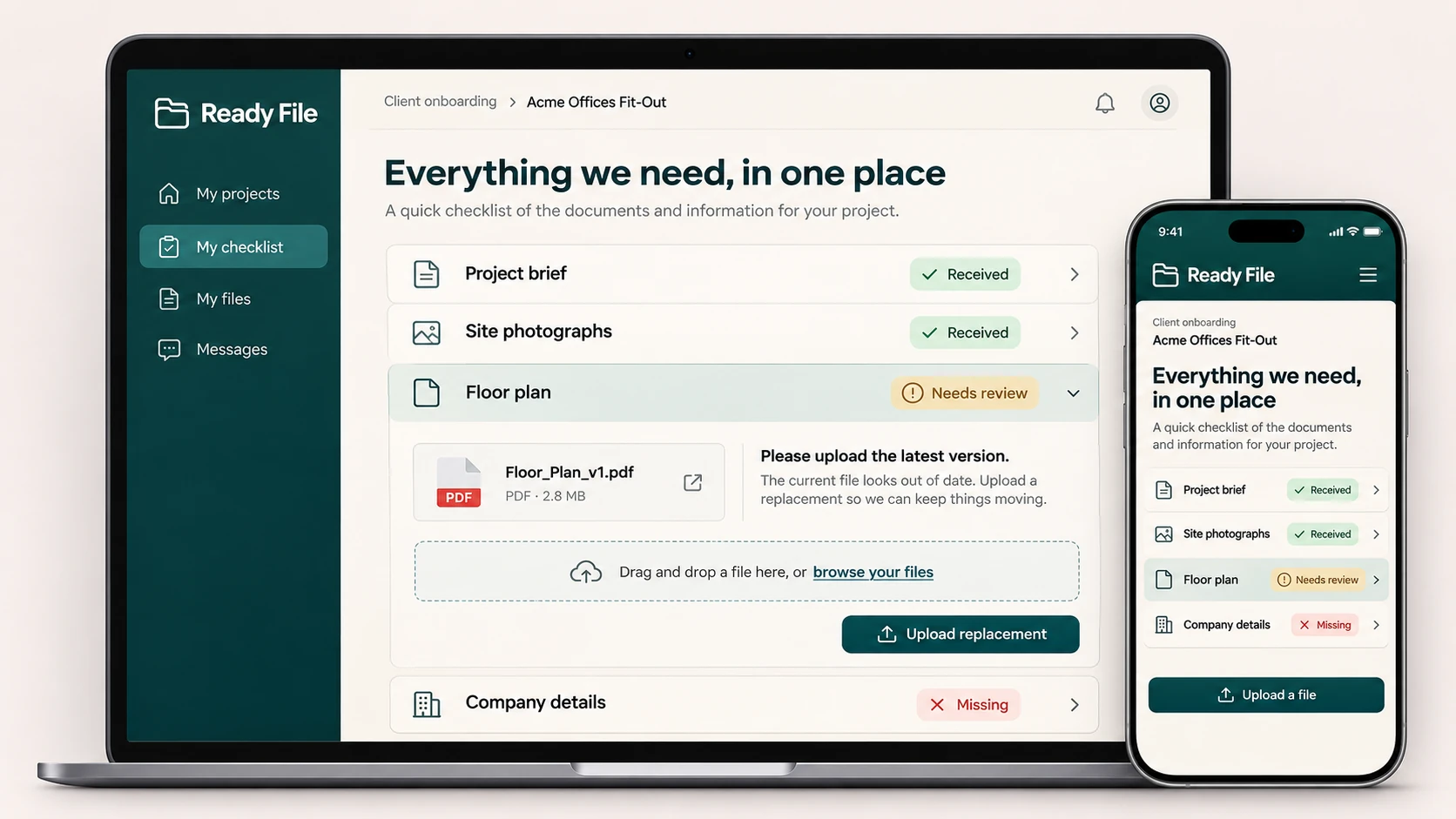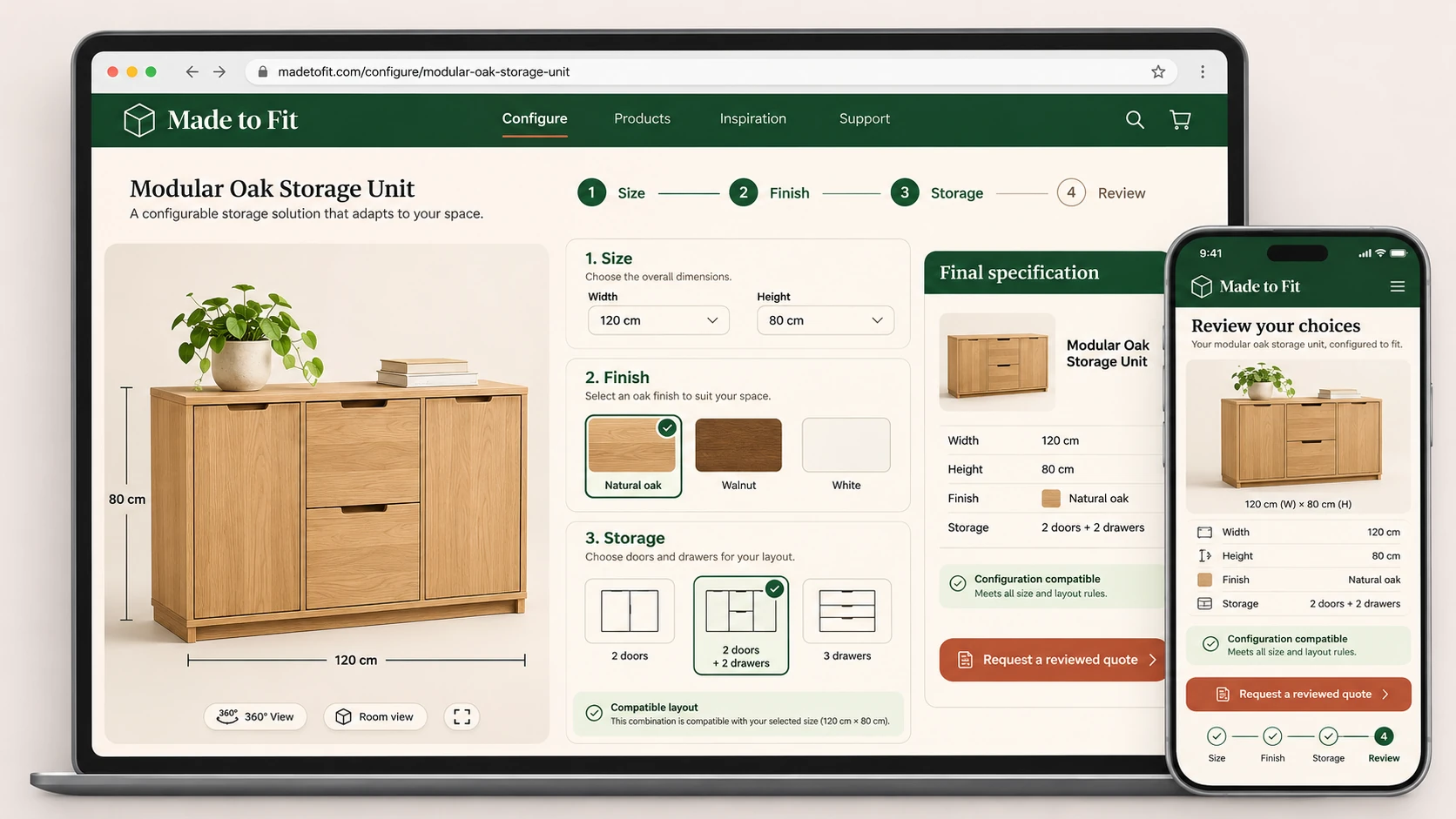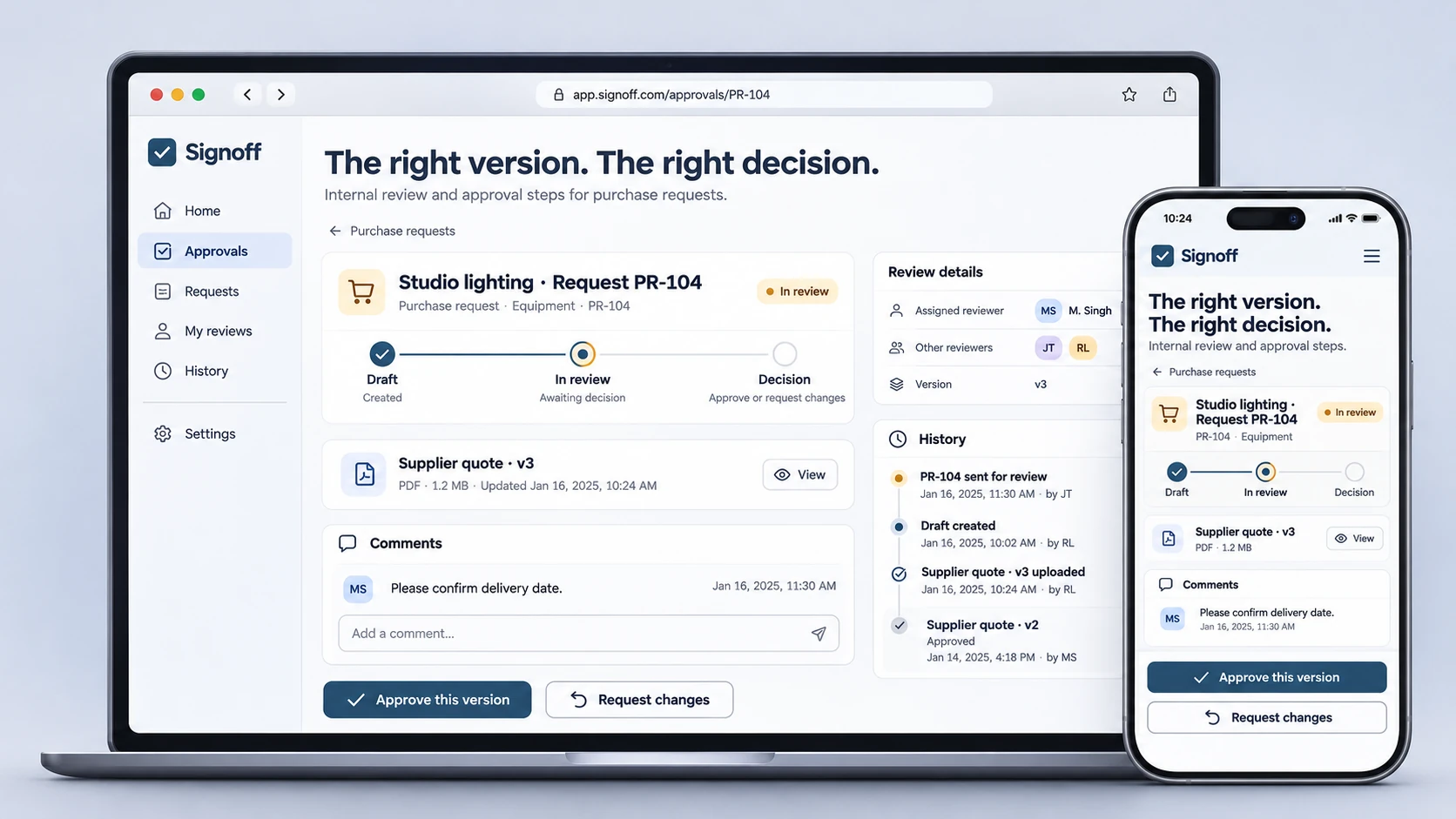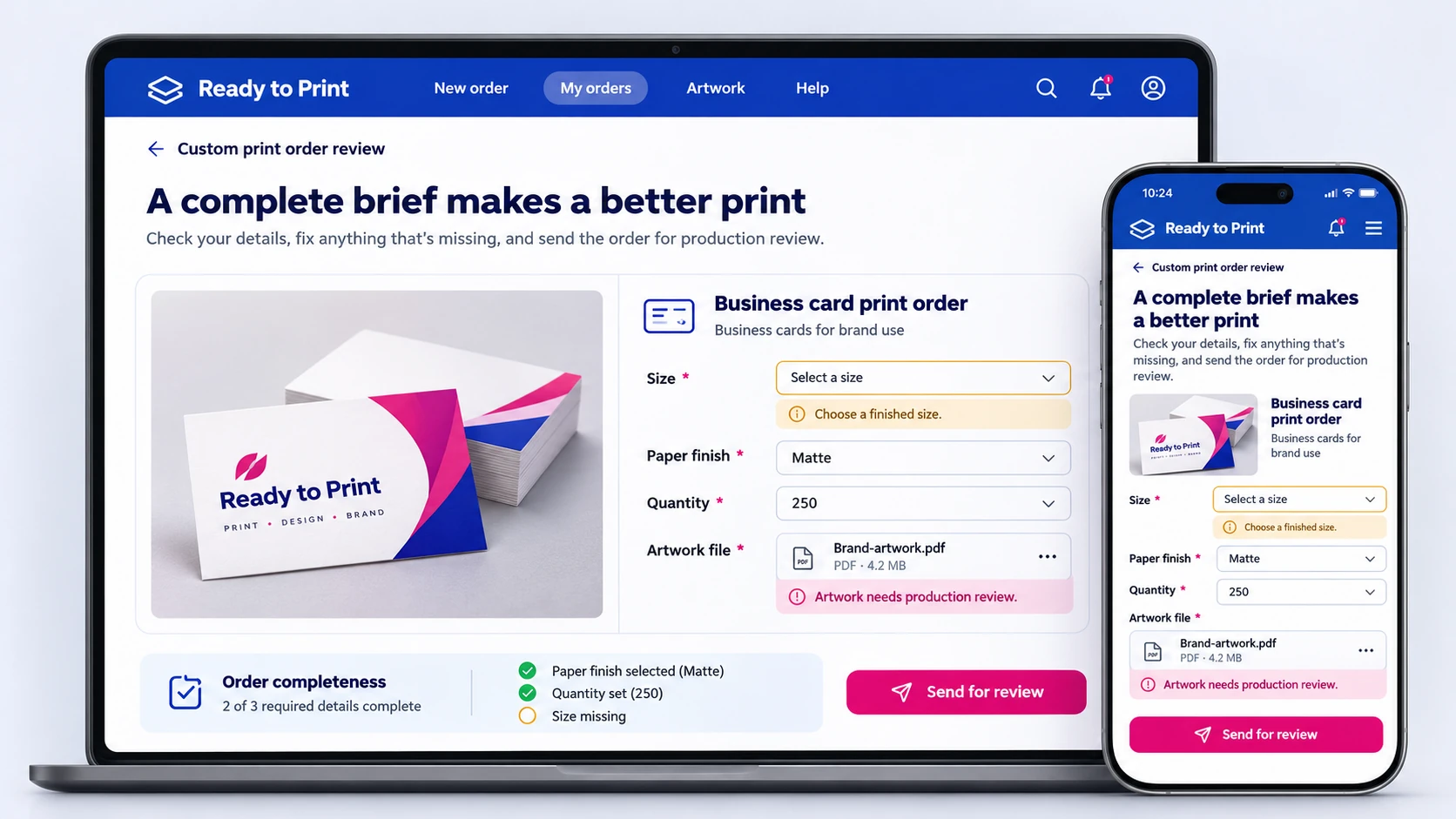
A customer submits a print order with a file but no finished size. The production team stops to ask a question that could have been answered at checkout. Completeness checks could guide the customer through the required choices and show your team whether the order is ready for review, without pretending that filled fields guarantee suitability.
An order reaches production with a missing choice or unclear file, and the team must pause while the customer reconstructs the requirement.
The form explains essential details and flags gaps early, then marks a complete submission for the appropriate human production review.
Where it could
make a difference.
Printers
Collect the required file and production choices.
Custom makers
Receive dimensions and finish selections.
Project services
Check essential brief information before work starts.
Useful on: Online store, Custom order website, Business portal.
What this could mean
for your business.
Completeness checks can reduce avoidable clarification and help work reach the right reviewer sooner. The benefit depends on asking the right questions and keeping requirements current. Review stopped jobs, correction requests and staff handling time, while watching whether the form becomes harder for suitable customers to finish.
Start with something
worth using.
Start with the few missing details that most often stop work. Use clear correction messages and a ready-for-review state. Keep a route for customers who do not know the answer yet.
- Required fields and options
- Clear correction messages
- A ready-for-review status
Give the promise
something to stand on.
You need current production requirements and a person responsible for exceptions. Separate simple field checks from decisions that need expert review, such as whether a supplied file or measurement is appropriate.
The team must define the checks and keep them aligned with the actual service. Give unusual requests a route to human review instead of forcing them into the wrong form.
- Current production requirements
- Clear validation rules
- An exception and review route
How it fits what you already have
Check product variants, file requirements, checkout and production records. Define which checks are automatic and which need a person, and ensure an exception route does not silently bypass requirements the team depends on.
Let a small beginning
teach you something.
Review recent incomplete orders with the production team, then ask willing customers to complete sample requests. Check whether the guidance helps them provide usable information rather than merely pass the form.
Can the customer supply the necessary context and understand which parts still need your team's professional review?
Look for these signs
- Required details match production needs.
- Correction messages explain the next action.
- Uncertain cases reach a reviewer.
A little more
clarity.
Does complete mean ready to manufacture?
Not necessarily. A form can confirm that information is present, while your team still checks its accuracy and suitability. Keep those states separate so customers and staff understand the remaining review.
What if the customer does not know a measurement?
Offer an honest way to ask for help or submit a review request. Forcing a guessed value can create a more expensive problem later in production.
Could this work with my existing website?
We would check how your current website is built, what it already does and which services need to connect. That helps us choose a suitable addition and avoid paying twice for something you already have.
What would this change
in your business?
Your customers. Your working day. The part you would love to make easier. Answer a few questions and leave with a starting plan you can keep.
Free to explore. No account or email needed for your starting plan.