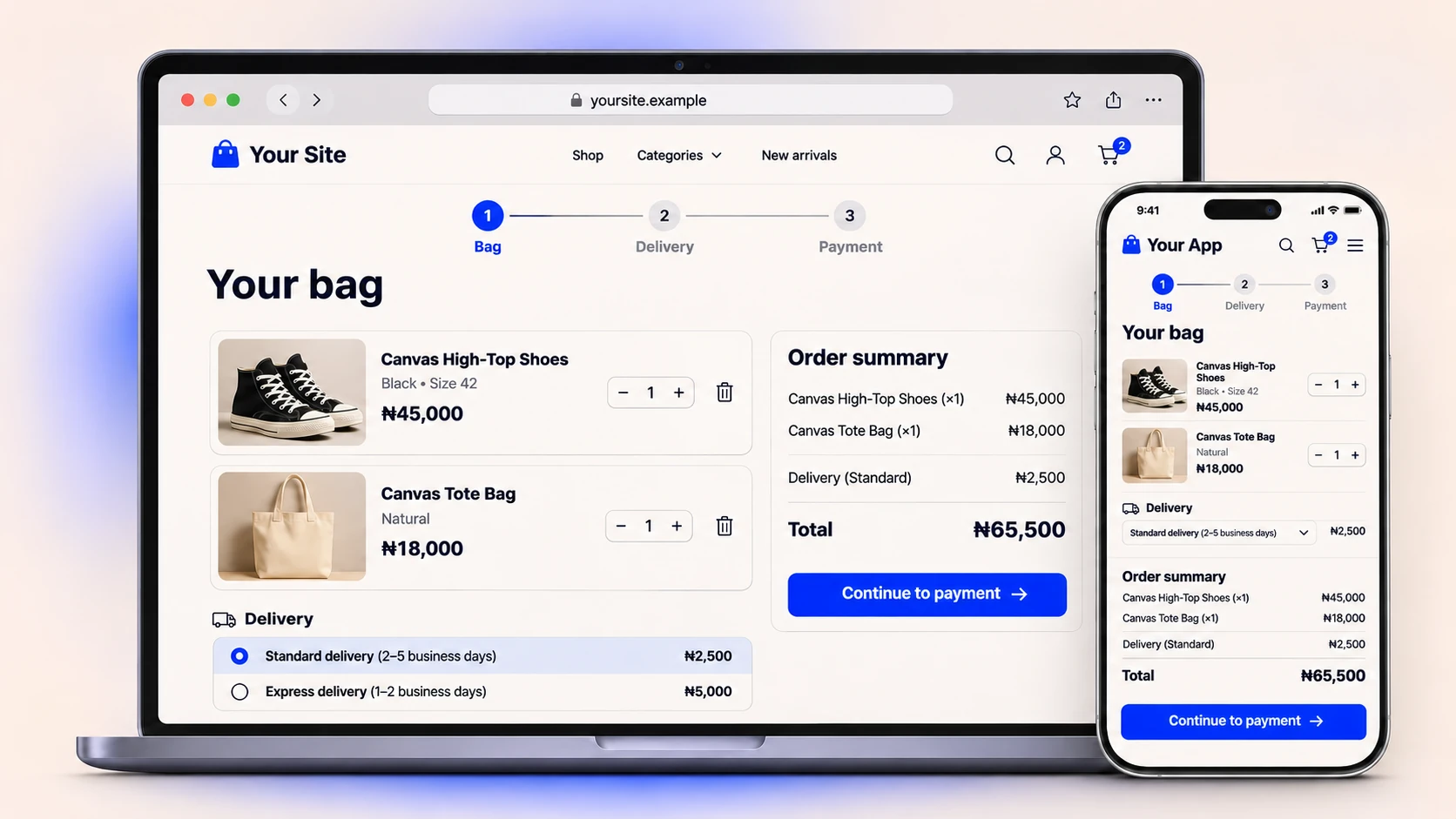
Someone finds a bag they love on your website, then has to message for the price, available colour and delivery arrangement. The moment of interest becomes a waiting period. A shop and checkout could put those answers beside the product and carry a complete order into your fulfilment process.
A customer asks several basic questions before you can manually collect the choices, payment and delivery details needed to fulfil an order.
The customer reviews the product, sees the full terms and submits a complete paid order with a clear next step.
Where it could
make a difference.
Independent brands
Turn product interest into a complete order.
Makers
Sell a manageable range directly.
Existing shops
Give regular customers another ordering route.
Useful on: Online store, Business website.
What this could mean
for your business.
This provides a direct route to product sales and can reduce repeated order-taking questions. Revenue still depends on an offer customers choose and fulfilment you can deliver. Payment charges, packaging, delivery, returns and support belong in the calculation, alongside completed purchases and unfinished checkouts.
Start with something
worth using.
Begin with a small range, essential choices, full pricing and delivery information. Connect payment and clear confirmation. Test an unavailable item, failed payment and order change before expanding the catalogue.
- Product choices and availability
- Full price and delivery information
- Payment and order confirmation
Give the promise
something to stand on.
You need accurate product details, stock or availability and a workable delivery and returns process. Someone must handle order questions and exceptions after payment, not just publish the products.
The shop needs current product information and someone responsible for fulfilment, questions and changes. Payment options must suit the markets you serve.
- Product images and descriptions
- Delivery and returns process
- Suitable payment service
How it fits what you already have
Check the website platform, stock records, payment service and delivery process. Decide how orders reach the responsible team and how failed payments, cancellations and stock changes stay consistent across your sales channels.
Let a small beginning
teach you something.
Ask willing existing customers to place suitable test orders and explain the total and delivery expectation. Follow each record into fulfilment to see whether your team has everything it needs.
Can the customer complete the intended purchase and understand the total, delivery arrangement and next step without messaging for clarification?
Look for these signs
- Orders contain the correct product choices.
- Customers see the full payable total.
- Fulfilment staff receive usable order records.
A little more
clarity.
Can we keep selling through messages too?
Yes, but stock and order responsibility must stay clear across channels. Decide how an offline sale updates availability so two customers are not promised the same item.
Does a payment receipt mean the order has shipped?
No. Payment, acceptance and dispatch are different events. Use statuses that match your process and tell customers what each confirmation actually means.
Could this work with my existing website?
We would check how your current website is built, what it already does and which services need to connect. That helps us choose a suitable addition and avoid paying twice for something you already have.
What would this change
in your business?
Your customers. Your working day. The part you would love to make easier. Answer a few questions and leave with a starting plan you can keep.
Free to explore. No account or email needed for your starting plan.