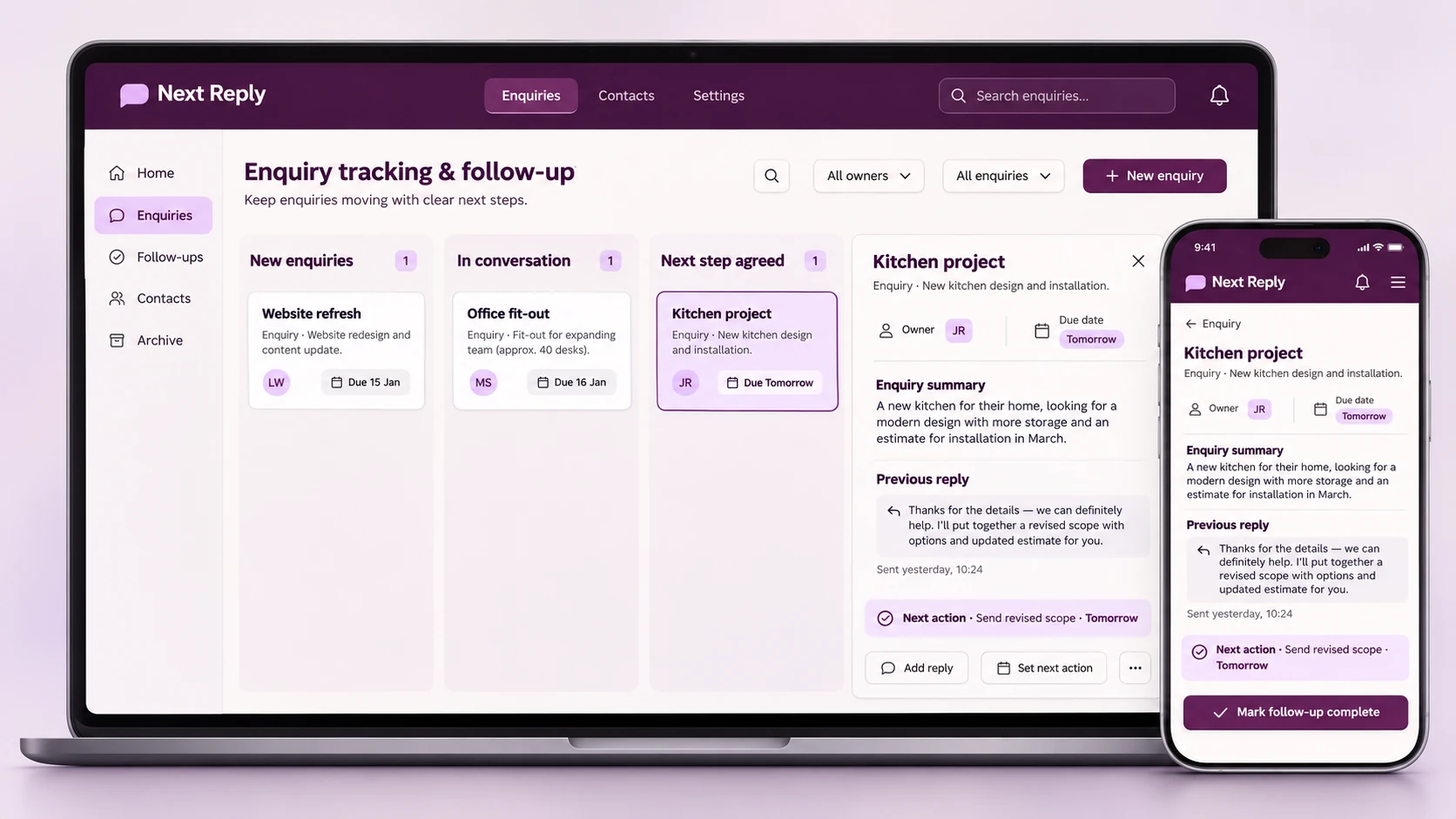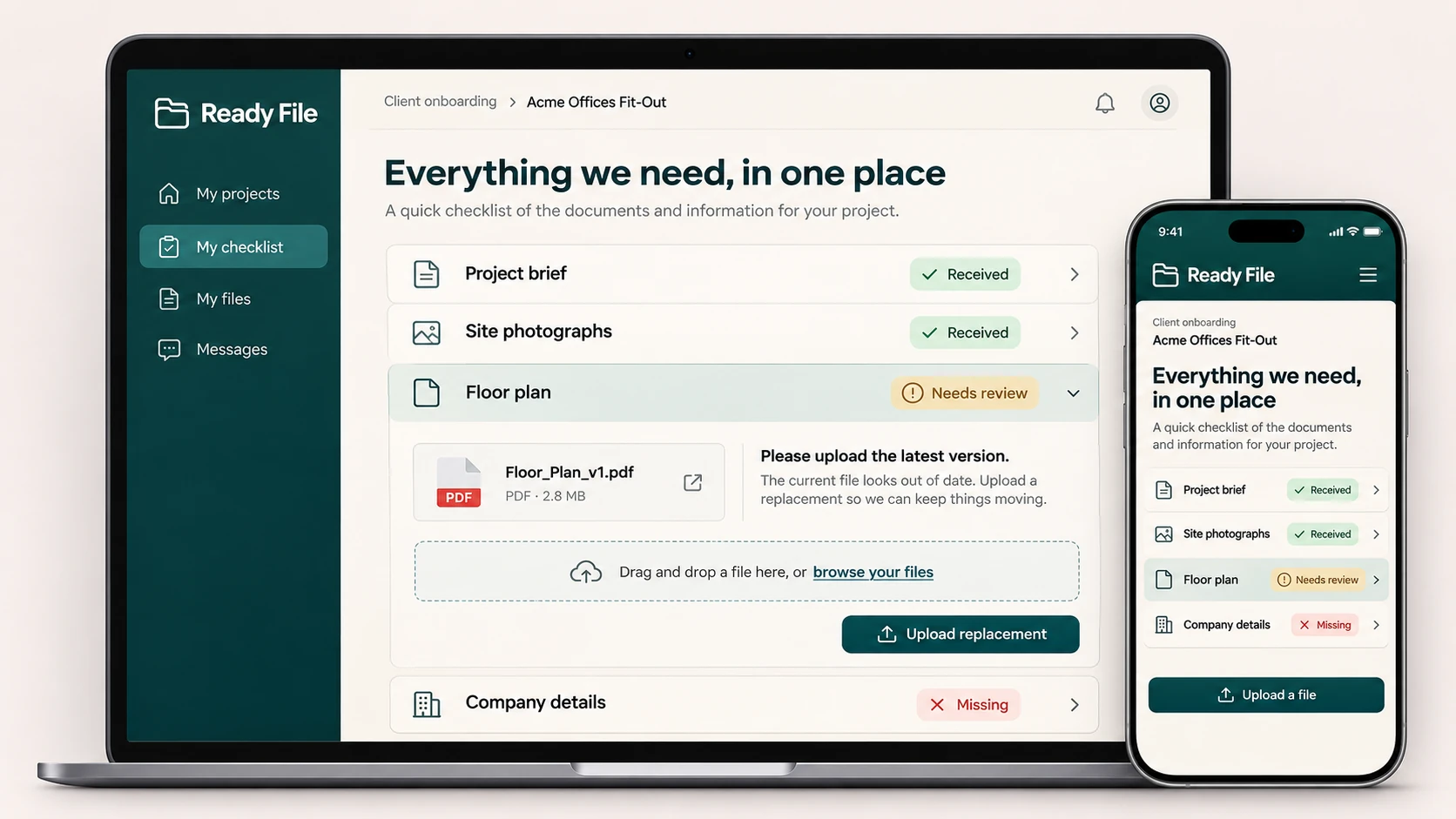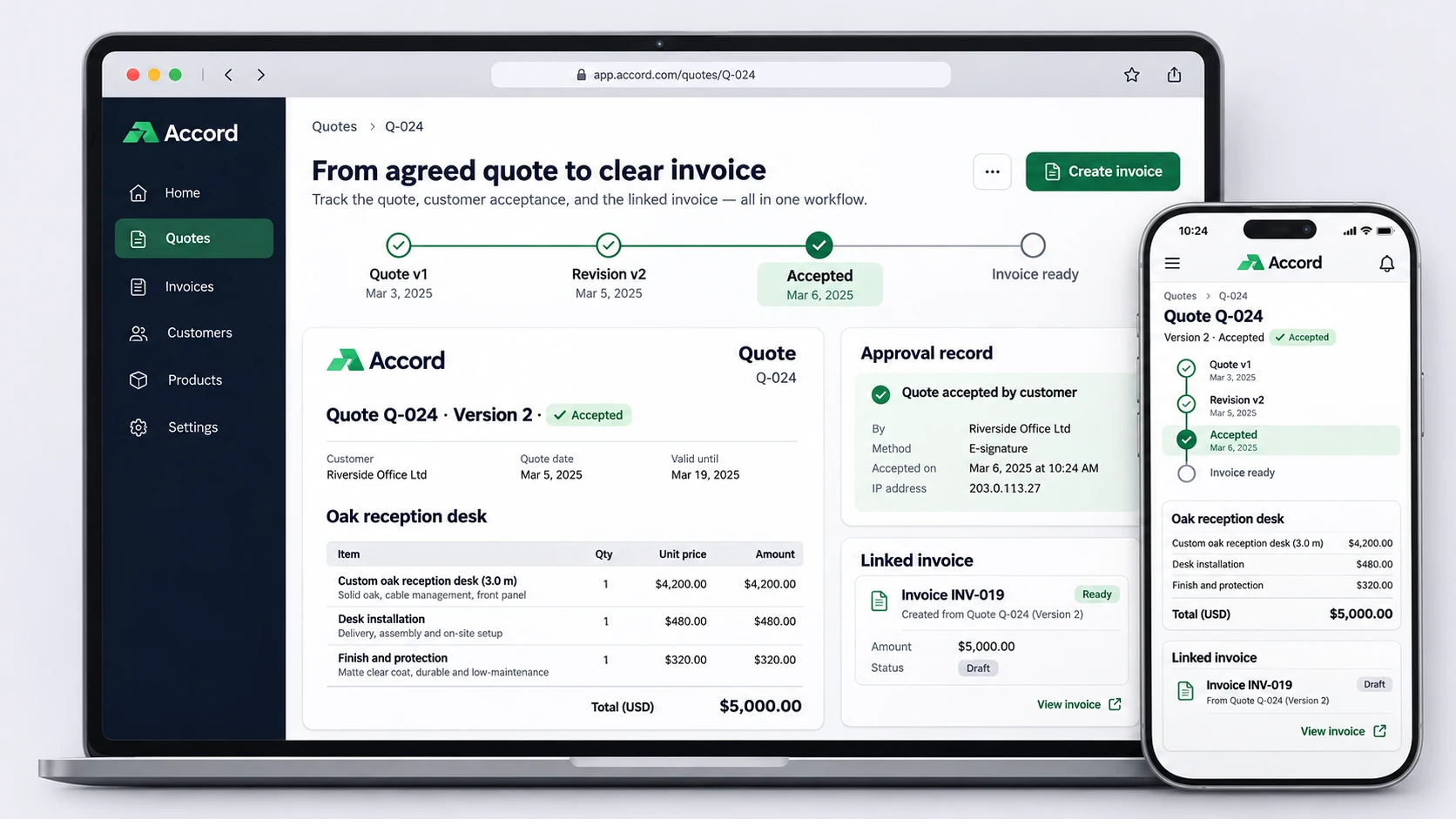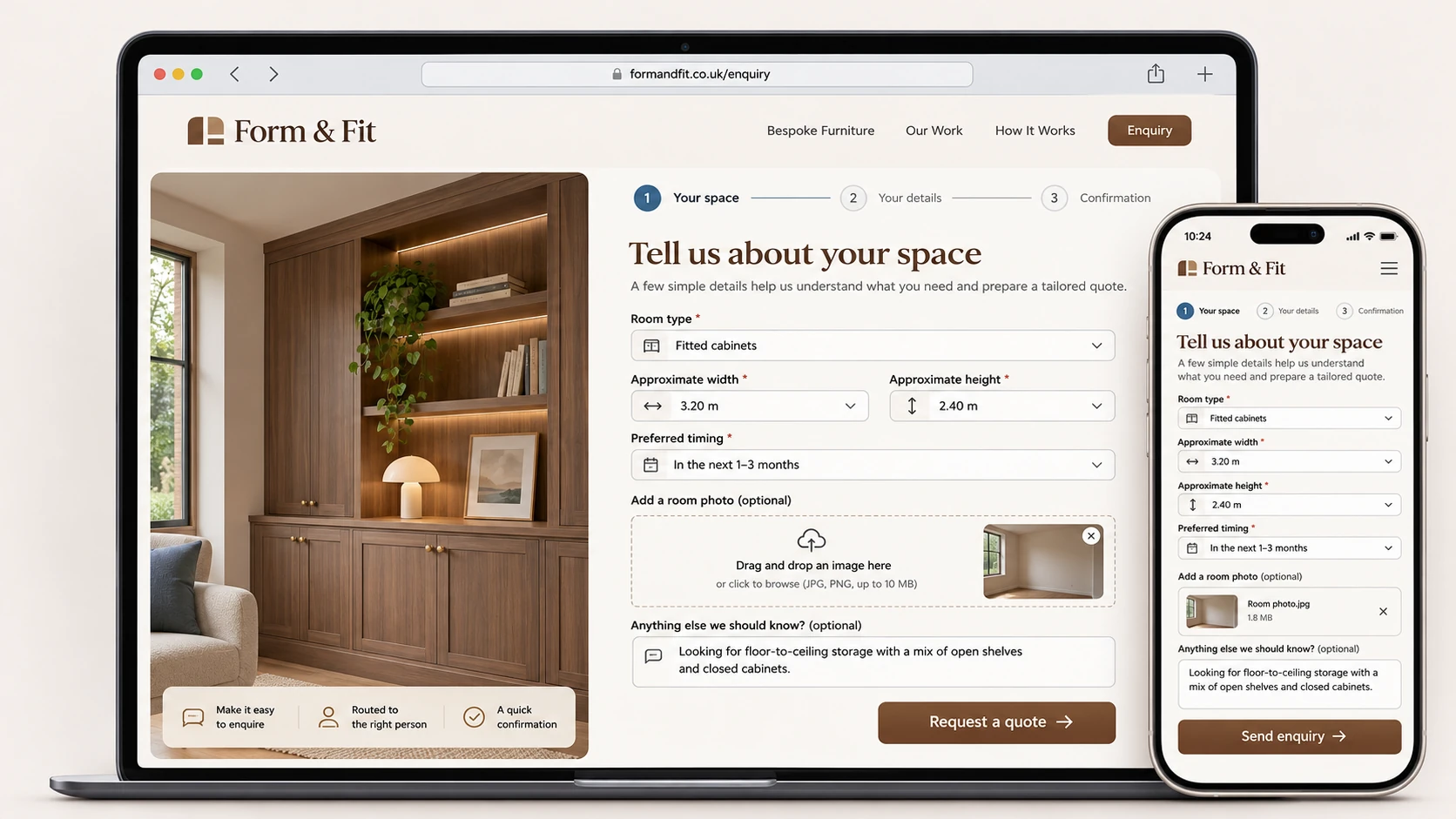
A visitor wants a custom item but hesitates at an empty message box because they do not know what to explain. A considered enquiry form could guide them through a few relevant questions, leaving room for their own words. Your team receives context rather than a bare request to send a price.
A visitor faces an empty message box, while your team later asks several basic questions before understanding the request.
A short guided form collects relevant context and explains the next step, giving the responder a clearer place to begin.
Where it could
make a difference.
Custom product businesses
Collect dimensions and intended use.
Contractors
Understand the project before a quote conversation.
Professional services
Route a request to the appropriate person.
Useful on: Business website, Service website, Supplier website.
What this could mean
for your business.
A useful form can support enquiries and reduce the time spent collecting basic context. The value comes from relevant requests that your team follows up well. Account for response capacity, spam handling and delivery services; adding more fields does not automatically produce better leads.
Start with something
worth using.
Start with a short form, optional supporting context and a real receipt confirmation. Route it to the right person and define response expectations. Test delivery and failure handling before inviting enquiries.
- Clear questions and optional context
- A confirmation of receipt
- Routing to the responsible person
Give the promise
something to stand on.
You need a responsible responder and a clear idea of the information required at this stage. Ask for useful context without demanding sensitive documents or unnecessary detail before the relationship begins.
Agree where submissions go, who replies and how files and personal information are handled. A form should confirm receipt only after the message has actually been stored or delivered.
- A working submission service
- Response responsibility
- Appropriate data handling
How it fits what you already have
Check the website's submission service, email or customer-record destination and data handling. Test receipt, routing, failed delivery and spam controls, and make sure a real person owns the resulting queue.
Let a small beginning
teach you something.
Ask willing prospective customers to describe a sample request through the form. Have the receiving team review whether the answers help them respond, and remove questions that do not change the next step.
Can the visitor submit a useful request without feeling they must already know the technical solution or exact project specification?
Look for these signs
- Submissions reach the responsible responder.
- Customers receive an accurate receipt message.
- Staff can identify the next useful question.
A little more
clarity.
Does submitting a form book the work?
Usually it begins a conversation. The confirmation should explain whether the request is only received or whether any appointment, quote or order has actually been agreed.
Should every field be required?
Only when the answer is necessary for the next step. Optional context and an honest “not sure yet” choice can help visitors who are still shaping their plans.
Could this work with my existing website?
We would check how your current website is built, what it already does and which services need to connect. That helps us choose a suitable addition and avoid paying twice for something you already have.
What would this change
in your business?
Your customers. Your working day. The part you would love to make easier. Answer a few questions and leave with a starting plan you can keep.
Free to explore. No account or email needed for your starting plan.