A learner rereads notes and recognises every sentence, then struggles when asked to recall the answer without looking. Your app could offer a clear practice routine with accurate, relevant cards and honest self-rating. The business rests on useful material and a manageable review experience, not a claim that tapping cards guarantees mastery.
One useful moment.
A reason to open it.
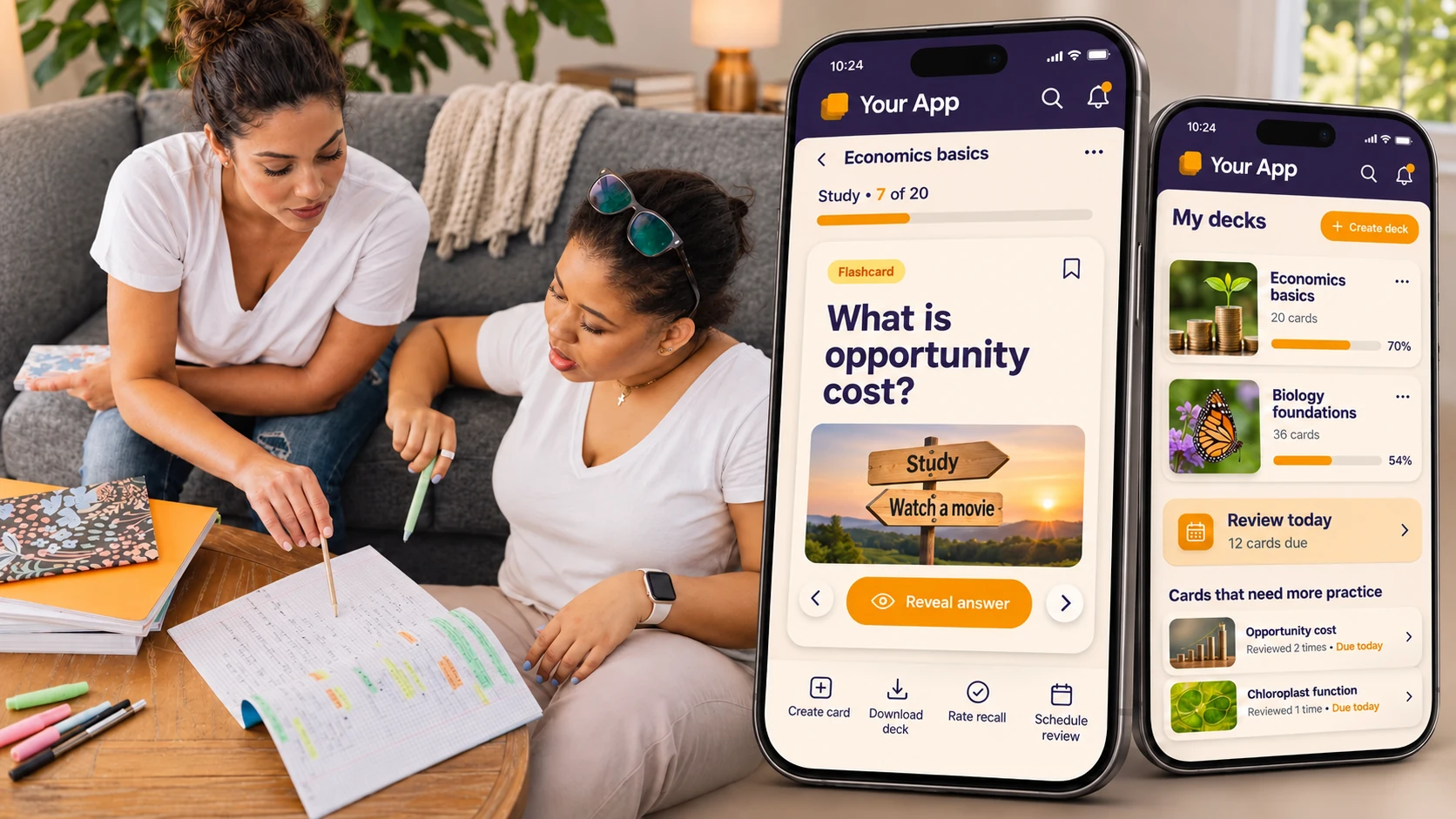
A learner opens a short review set, attempts the answer before revealing it and rates their recall. Confusing cards can be flagged for editorial review.
Who would be glad
you built it?
Subject learners
Practise recalling a defined body of material.
Language students
Review relevant words and examples.
Educators
Share a carefully reviewed deck with their class.
A place in their life.
At the right moment.
Why it belongs on a phone
A few cards fit into a spare moment on the phone. Downloaded decks make the same short practice available without a connection.
A reason to come back
Cards due for review provide a clear reason to return. Learners can notice which answers feel easier without a noisy competition.
Where the money
could come from.
Learners could buy an expert-reviewed deck for a defined subject, while educators may license private class access. Writing, review, corrections and support affect costs. The paid offer should explain the material and access provided, rather than relying on a generic promise of faster learning.
The part you could
make your own.
Choose a topic where ordinary decks miss important distinctions. Carefully written examples and useful explanations could give your collection a reason to be chosen over blank flashcards.
An angle to test with the people you want to serve.Start with something
worth using.
Start with one reviewed subject deck, user-created cards and a simple review schedule. Allow downloads and edits where permitted. Show what the learner has practised without predicting exam results.
- Create cards with text and images
- Download a subject deck
- Rate recall and schedule another review
- See which cards need more practice
Give the promise
something to stand on.
You need subject reviewers and appropriate rights to the content. Keep the deck's intended level and scope clear, and provide a route for correcting ambiguous or mistaken cards.
Check teaching rights and answer accuracy. Avoid guaranteed grades or mastery claims, and give users a way to report a confusing or incorrect card.
Let a small beginning
teach you something.
Ask suitable learners and an educator to try a small deck. Watch whether questions have a clear answer and whether the self-rating reflects recall rather than confusion about the wording.
Do the cards prompt meaningful recall of the intended material, with explanations when the answer needs context?
Look for these signs
- Cards have clear, reviewed answers.
- Learners can report confusing material.
- Review sessions remain manageable.
A little more
clarity.
Can AI create all the cards?
It can assist drafting, but subject review remains necessary. A plausible-looking card can still be wrong or ambiguous, so publish only material that has passed the intended editorial check.
Is a correct tap proof of learning?
No. The app records the practice interaction. Broader understanding and performance need appropriate evaluation beyond the card history.
Do we need thousands of cards at launch?
No. A small, carefully reviewed deck for a clear learning goal is a stronger starting point than a large collection nobody has checked.
Anki supports flashcards and scheduled reviews, with mobile options. It is a familiar reference for the practice pattern, rather than a template for your own teaching content.
Now picture it
with your name on it.
Your people. Your priorities. The version you keep thinking about. Answer a few questions and leave with a starting plan you can keep.
Free to explore. No account or email needed for your starting plan.