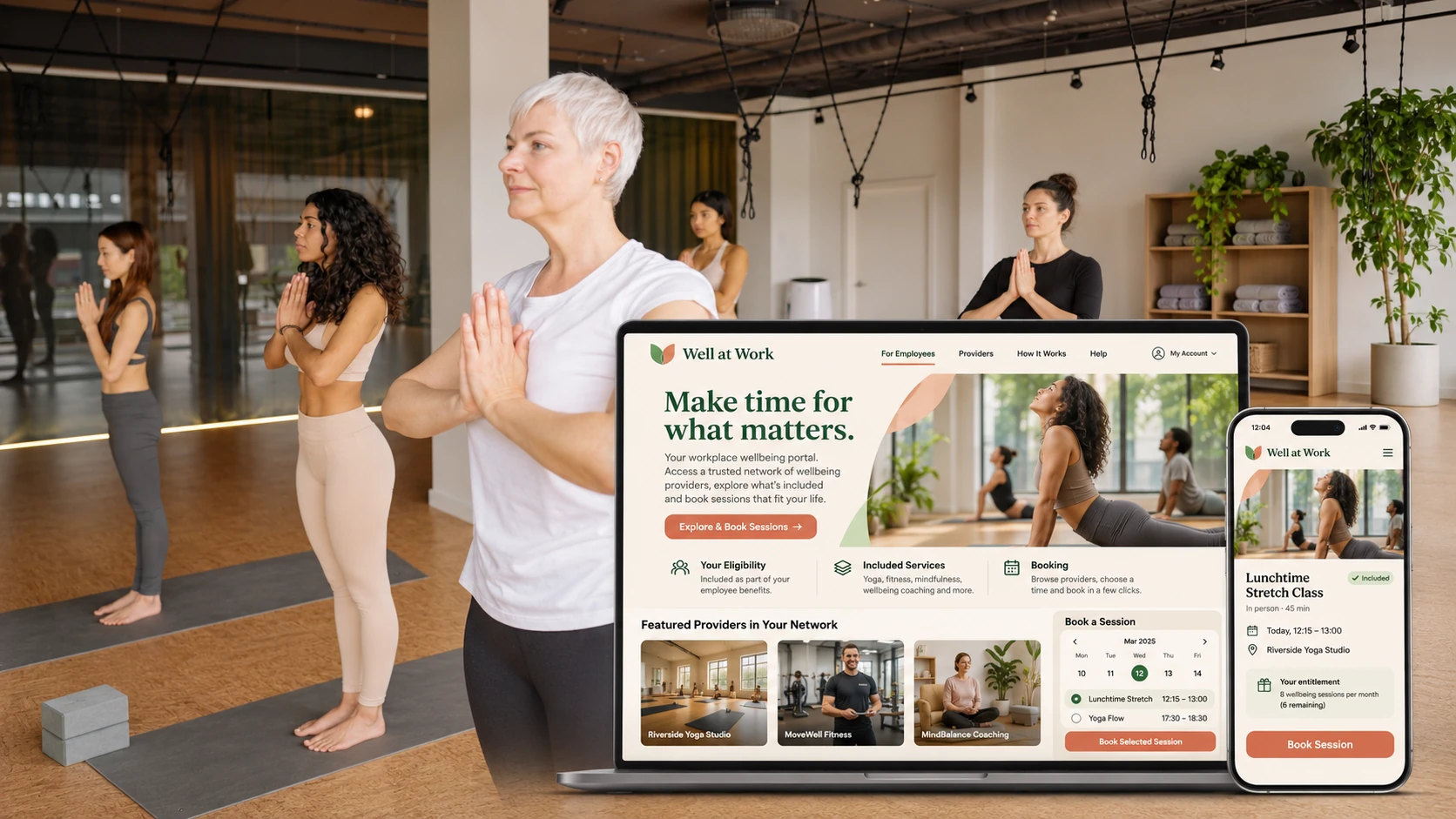
An employee hears that a benefit exists but cannot tell whether they qualify, what it covers or who sees their booking. Your platform could answer those practical questions and connect them to an approved provider, making a useful employer-funded service easier to choose without unnecessary exposure of personal information.
A business you can
picture.
Connect employers with a defined network of wellbeing providers. Explain eligibility, included services and booking arrangements so employees can choose what suits them.
Who would be glad
you built it?
Employees using offered benefits
Understand eligibility and booking choices.
Employer benefits teams
Administer a defined service programme.
Approved wellbeing providers
Manage suitable bookings and service terms.
Where the money
could come from.
Employers could pay an administration or access fee under a clearly defined programme, with provider payments handled by agreed arrangements. Explain any employee contribution separately. Provider onboarding, support, reporting and benefit administration cost money; the platform's fee should be distinguishable from the actual services employees receive.
The part you could
make your own.
Clear choices and privacy could be your edge. Employees may value knowing what they can book and who can see it more than browsing a very large catalogue. Test whether those answers make the benefit easier to use.
An angle to test with the people you want to serve.Start with something
worth using.
Start with one employer and a small approved service set. Show eligibility, included allowances, any employee charge and booking terms. Define privacy and reporting before introducing a large provider network or broad personalisation.
- Employer benefit plans and eligibility
- Provider discovery and service details
- Bookings and employee-controlled preferences
Give the promise
something to stand on.
You need employer and provider agreements that clearly define the service, payment and reporting. Employee privacy deserves particular care; employers should understand the limited information they receive rather than expect unrestricted visibility into personal use.
Provider quality review and privacy need attention. Employers should receive only appropriate programme information, not unnecessary personal health details. Clarify which organisation handles cancellations and support.
Let a small beginning
teach you something.
Ask employees to navigate sample benefits without disclosing personal needs. Test whether they understand cost, eligibility and visibility, then pilot a bounded programme with feedback from the employer and participating providers.
Can an employee choose an included service while understanding the cost and exactly what information is shared?
Look for these signs
- Eligibility rules are understandable
- Employee charges are visible before booking
- Reporting respects agreed privacy boundaries
A little more
clarity.
Can managers see which services each employee uses?
Design reporting around the agreed purpose and privacy requirements. Avoid unnecessary individual detail, and explain visibility before booking. A benefits platform should not create a surprise monitoring channel for managers.
Does access mean every service suits every employee?
No. Providers retain their appropriate suitability and service processes. The platform can explain options and arrangements, but should not present employer inclusion as a personal clinical recommendation.
Wellhub is a reference for workplace wellbeing access.
Now picture it
with your name on it.
Your people. Your priorities. The version you keep thinking about. Answer a few questions and leave with a starting plan you can keep.
Free to explore. No account or email needed for your starting plan.