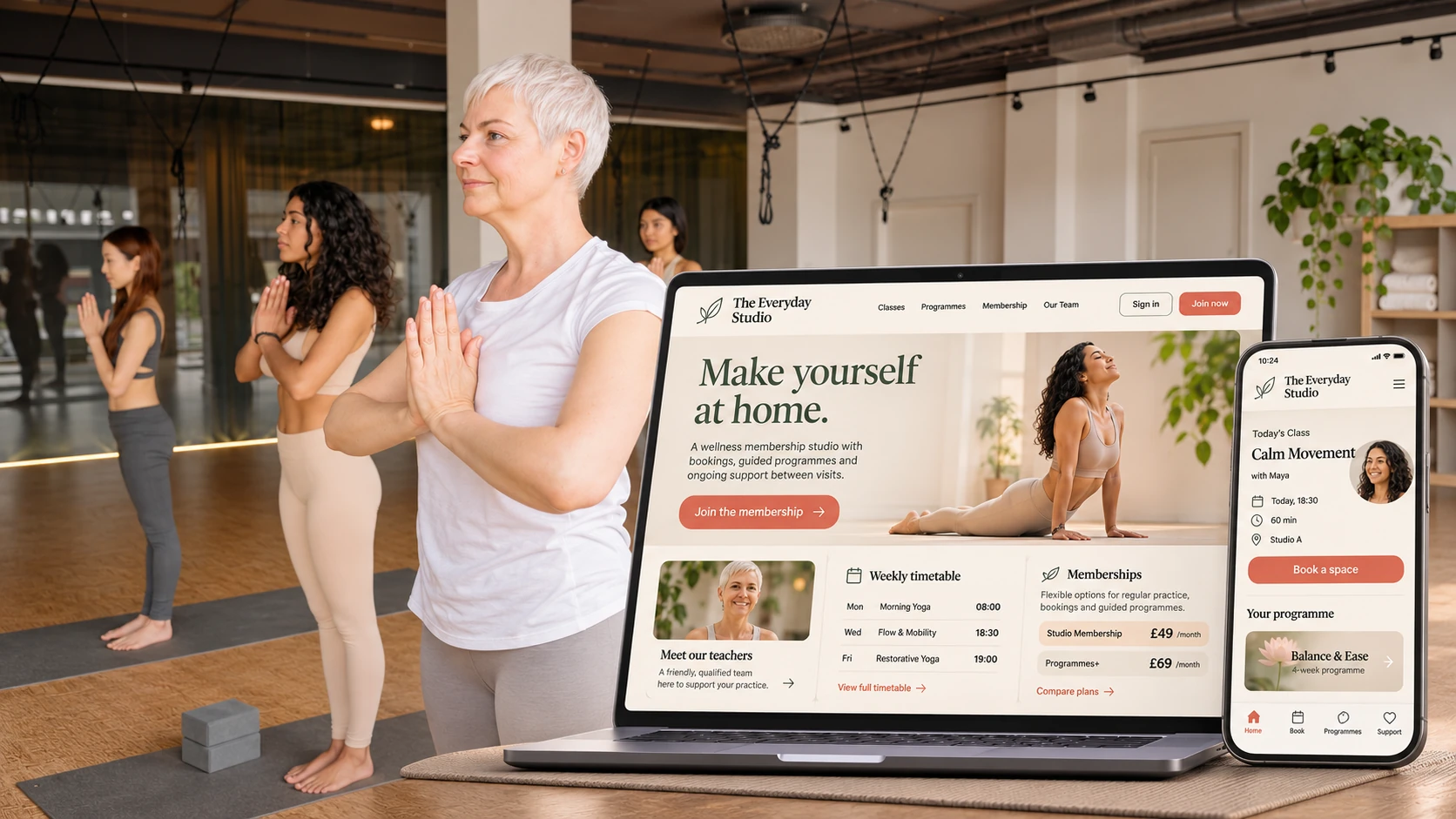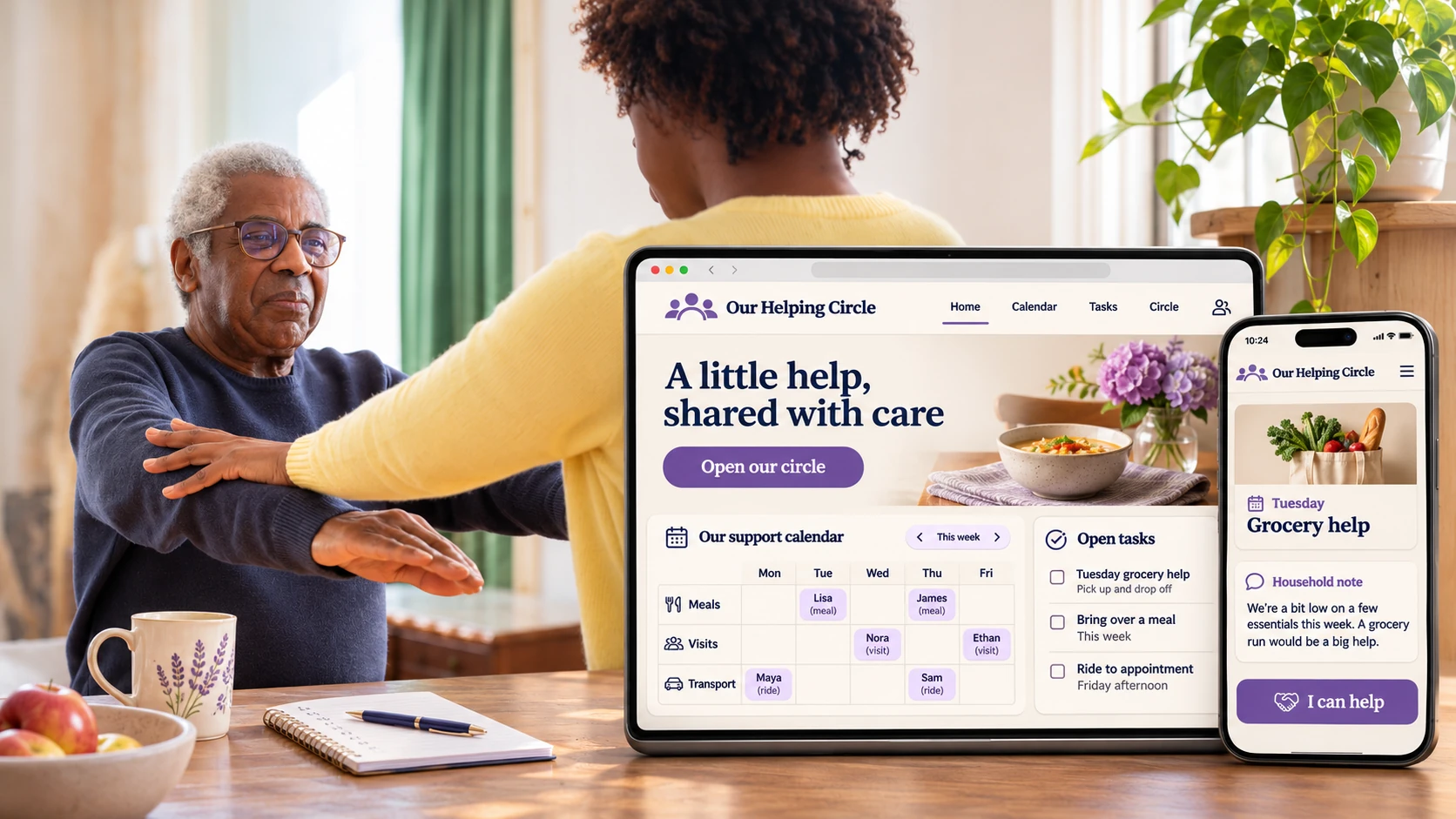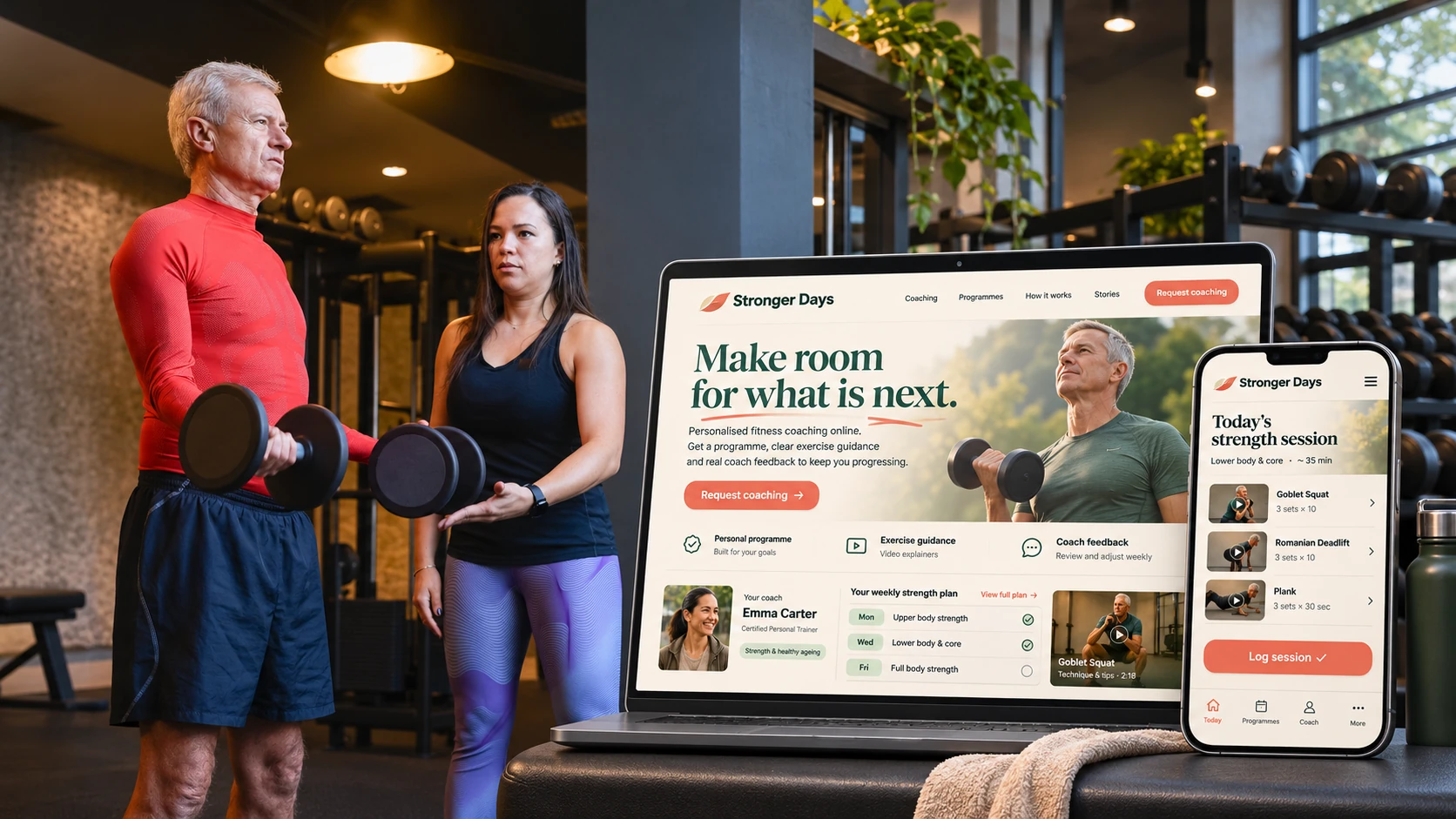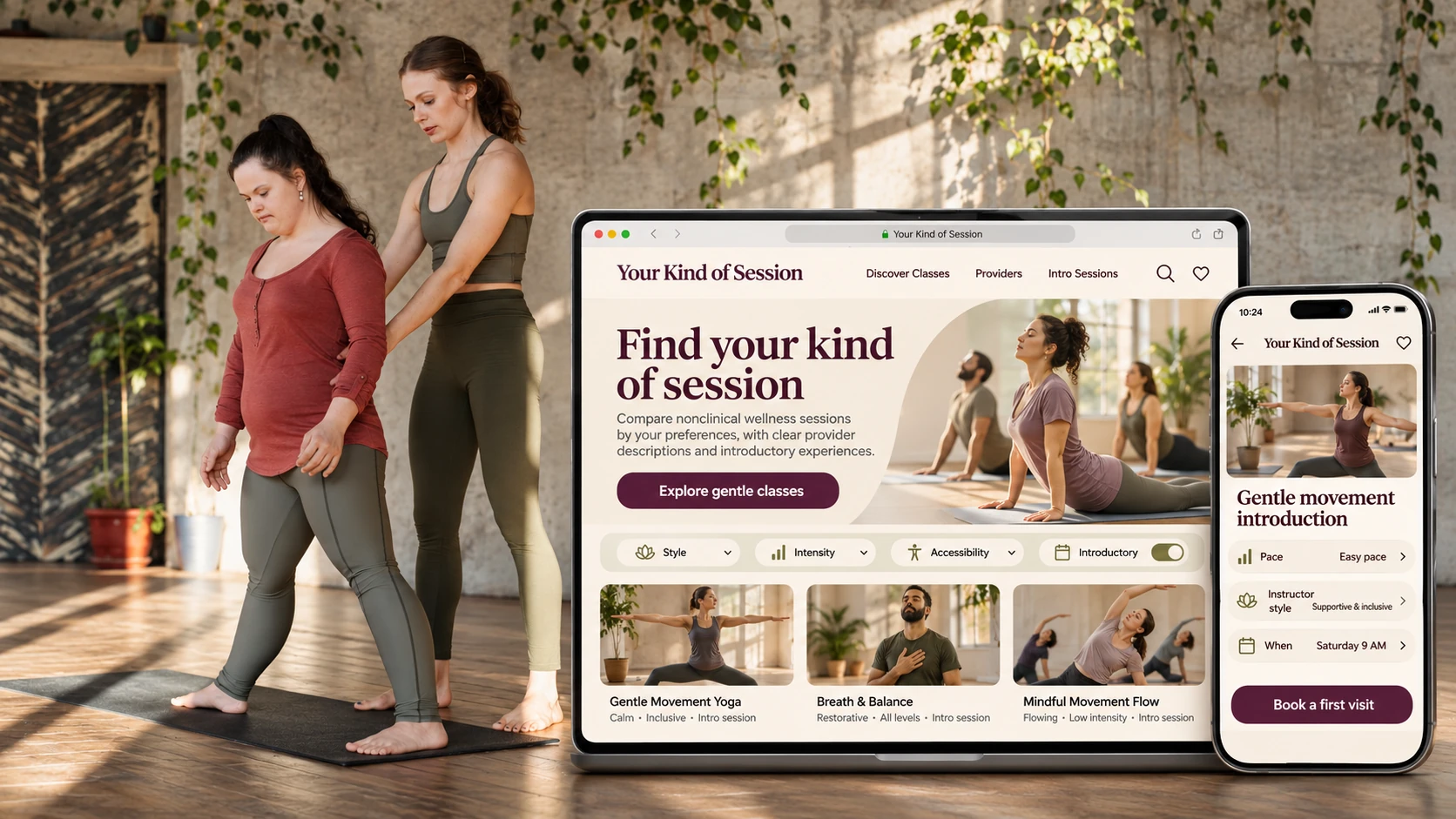
Someone wants to try a class but every listing promises balance and transformation. What they really want to know is whether the group is small, the room is noisy and beginners are guided. Your service could make those ordinary preferences useful, helping them choose an experience they feel comfortable enough to try.
A business you can
picture.
Focus on a defined set of nonclinical activities. Providers explain the actual session, visitors state practical preferences and a booking route makes the first visit straightforward.
Who would be glad
you built it?
People exploring a wellbeing activity
Clear practical descriptions before a first session
Class providers
A useful way to explain their approach and setting
Community organisers
Comparable information for optional member activities
Where the money
could come from.
Providers could pay for profile and booking tools, with clearly labelled promotional placement if offered. The fee supports information maintenance, scheduling and support. A participant introduction bundle can come later with explicit contents. The product should be sold around informed choice and a clear first experience, not promised health improvements or a personalised treatment recommendation.
The part you could
make your own.
Your angle could be matching everyday preferences people rarely find in a generic class description. A quiet setting and a clear beginner welcome may matter more to one visitor than a dramatic outcome claim.
An angle to test with the people you want to serve.Start with something
worth using.
Choose a small group of activity types and providers. Describe pace, group size, language, setting and beginner expectations. Offer a clear booking or enquiry route without claiming to diagnose what a visitor needs.
- Compare pace, setting and participation style.
- Show what a first session involves.
- Collect specific feedback about the described experience.
Give the promise
something to stand on.
You need providers willing to describe sessions accurately and keep details current. Qualifications should be transparent where relevant, while medical suitability questions remain with appropriate professionals rather than a preference quiz.
Keep provider descriptions accurate and qualifications transparent where relevant. Medical suitability questions belong with appropriate professionals; the service should not diagnose needs from a preference quiz.
Let a small beginning
teach you something.
Ask willing first-time participants to compare provider-confirmed descriptions. Let them choose a session and, with consent, report whether the setting and pace matched what they expected rather than asking for a health-result score.
Does the description help a visitor choose a session whose practical experience matches the preferences they actually stated?
Look for these signs
- Providers describe pace and setting clearly
- Participants understand the first-session expectations
- Promotional claims stay separate from practical facts
A little more
clarity.
Does the finder tell people what is medically suitable?
No. It helps compare everyday preferences and described activities. Medical questions need appropriate professional guidance, and the service should not infer a diagnosis from someone’s answers.
Can a provider pay to appear as the best match?
Paid placement must be labelled and kept distinct from factual matching information. Visitors should understand why an option is shown and which parts of its presentation are commercial.
What should my first version focus on?
Start with the first test described here, then build around the part people actually use and would pay to keep.
Now picture it
with your name on it.
Your people. Your priorities. The version you keep thinking about. Answer a few questions and leave with a starting plan you can keep.
Free to explore. No account or email needed for your starting plan.