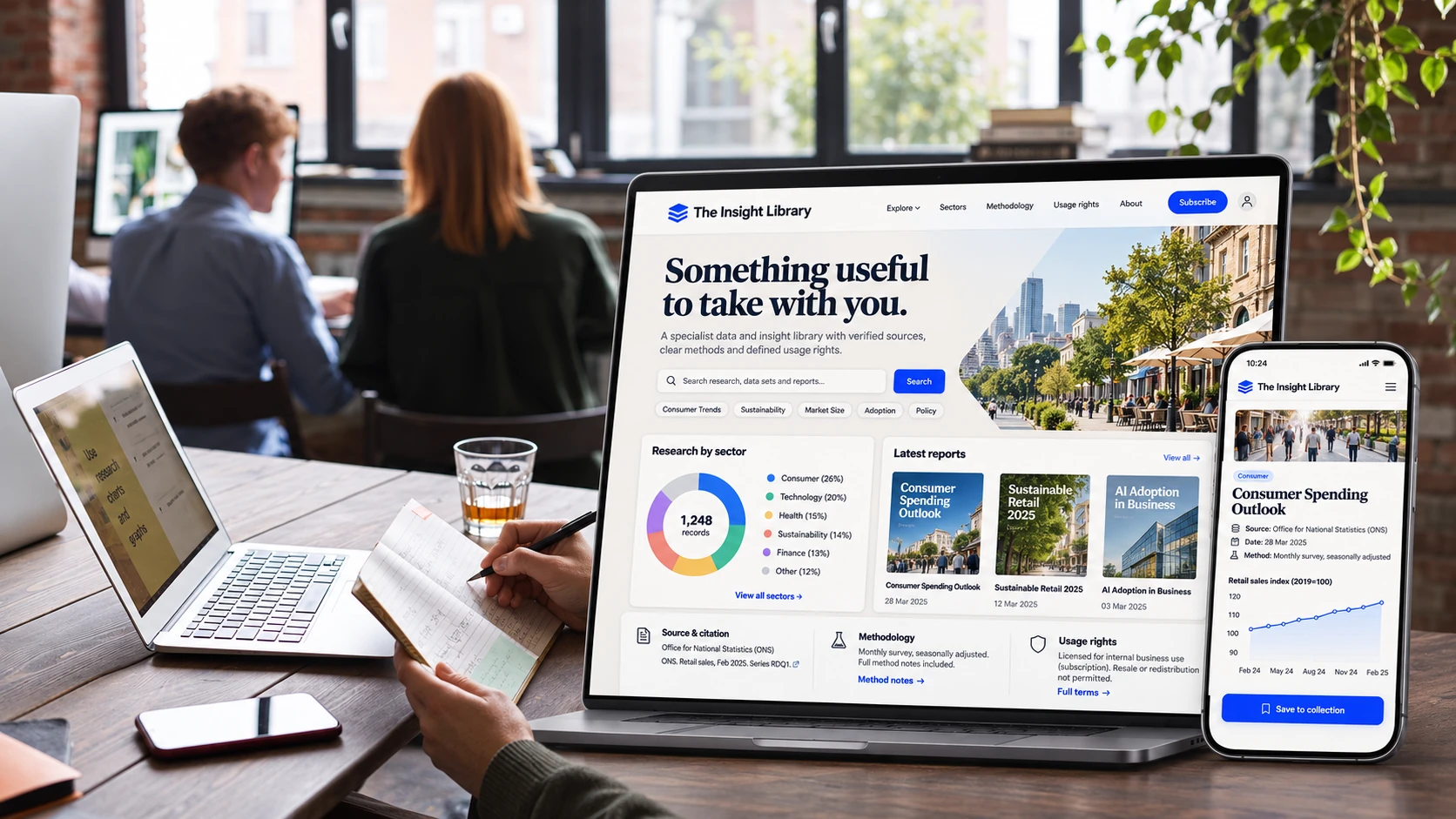
A manager finds two reports describing the same market with very different figures. One uses an estimate, the other measures a different period, and neither difference is obvious at first. Your library could help people trace those details, making a narrow field of evidence easier to understand and use.
A business you can
picture.
Create a subscription database around a defined field. Organise data records with sources, dates, methods and usage rights, supported by clear explanations of their limits.
Who would be glad
you built it?
Research teams
Sourced information they can revisit and compare
Business planners
Context that distinguishes estimates from observations
Specialist advisers
Evidence records suitable for explaining a recommendation
Where the money
could come from.
Organisations could pay for team access to a maintained specialist collection. The offer should specify coverage, permitted reuse and update expectations. Revenue needs to support research, licensing, checking and customer questions. A separate research assignment can be priced when it goes beyond the library’s promise, rather than being quietly included in every subscription.
The part you could
make your own.
Your edge could be making incompatible figures visibly different. Definitions, missing periods and method changes may help a specialist user avoid a confident but misleading comparison, which is a concrete value to test.
An angle to test with the people you want to serve.Start with something
worth using.
Choose one recurring research question. Assemble a small sourced dataset with definitions, dates, methods and revision notes. Provide search, comparison guidance and export permissions that match the rights you hold.
- Searchable datasets and source records
- Dated charts and methodology notes
- Licensed downloads and saved research
Give the promise
something to stand on.
You need subject knowledge, legitimate access to source material and a disciplined update process. The value comes from careful organisation and explanation, not simply copying figures into a larger table.
Data rights, provenance and correction procedures are central. Do not republish restricted material without permission. Keep historical versions where appropriate and explain when a series has changed method.
Let a small beginning
teach you something.
Ask a few relevant teams for research questions they recently struggled to answer. Build a sample evidence trail for those questions and observe whether the teams can explain the sources and limitations correctly.
Can a user trace an important figure to its source and explain what it does and does not measure?
Look for these signs
- Users find a relevant original source
- Comparisons retain necessary definitions
- Updates and corrections remain traceable
A little more
clarity.
Can I collect numbers from public websites?
Public visibility does not automatically grant redistribution rights. Check the source’s permissions and terms, and distinguish linking to evidence from selling a copy of a protected dataset.
Should every figure look equally certain?
No. Mark estimates, incomplete series and modelled values clearly. Showing uncertainty is part of a useful research product because it changes how a reader should use the information.
Statista is a reference for a data and insight platform.
Now picture it
with your name on it.
Your people. Your priorities. The version you keep thinking about. Answer a few questions and leave with a starting plan you can keep.
Free to explore. No account or email needed for your starting plan.