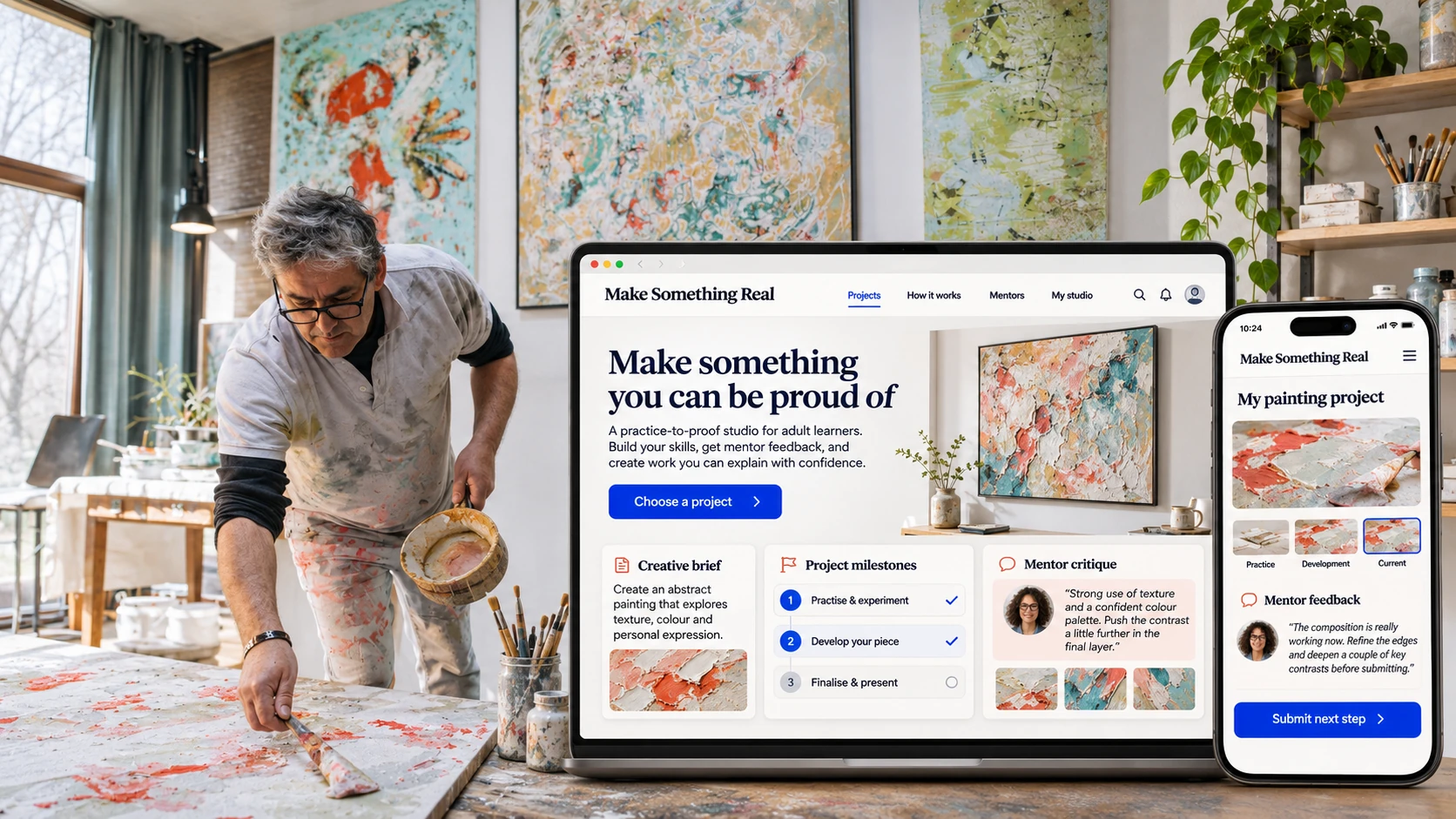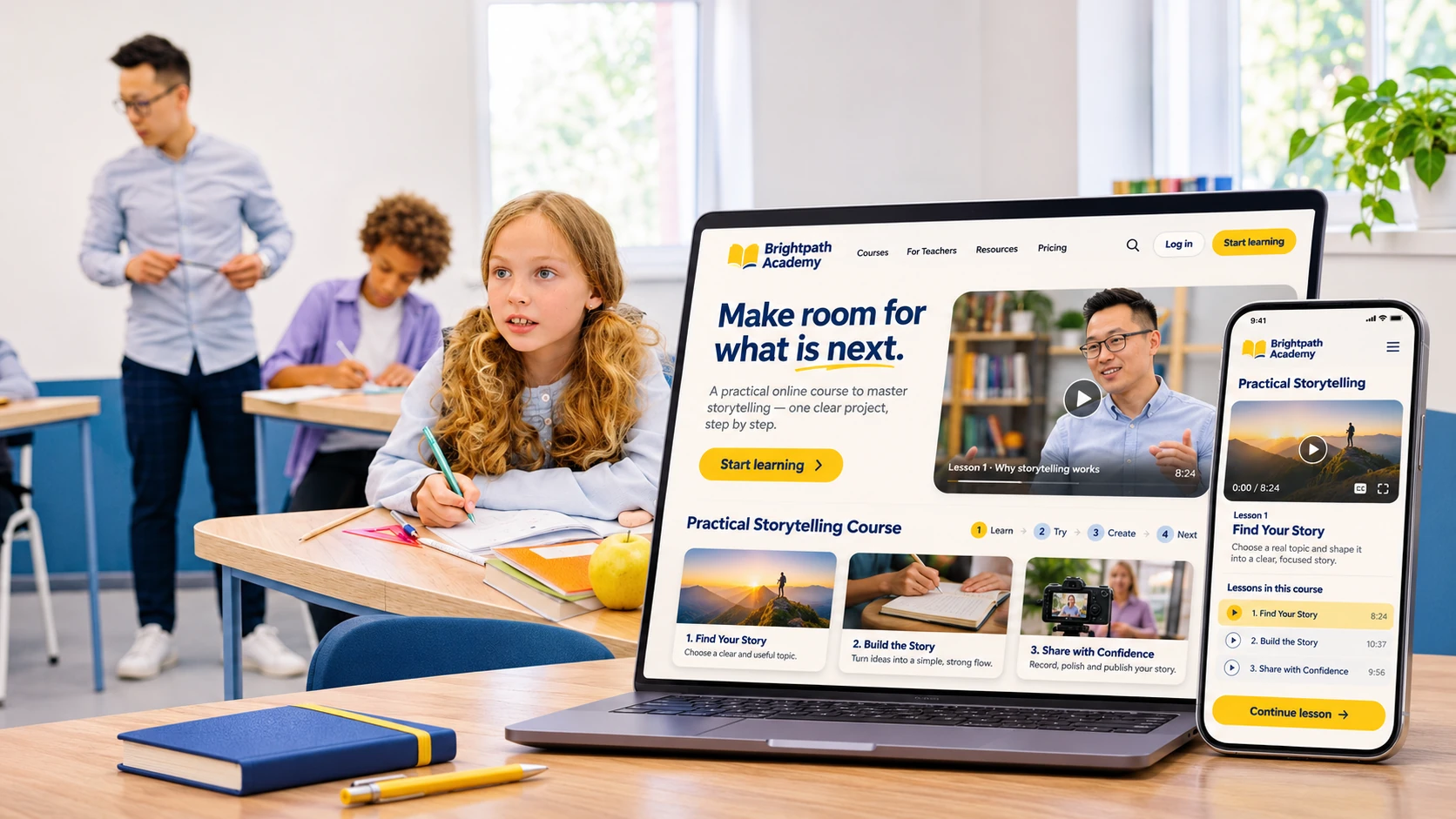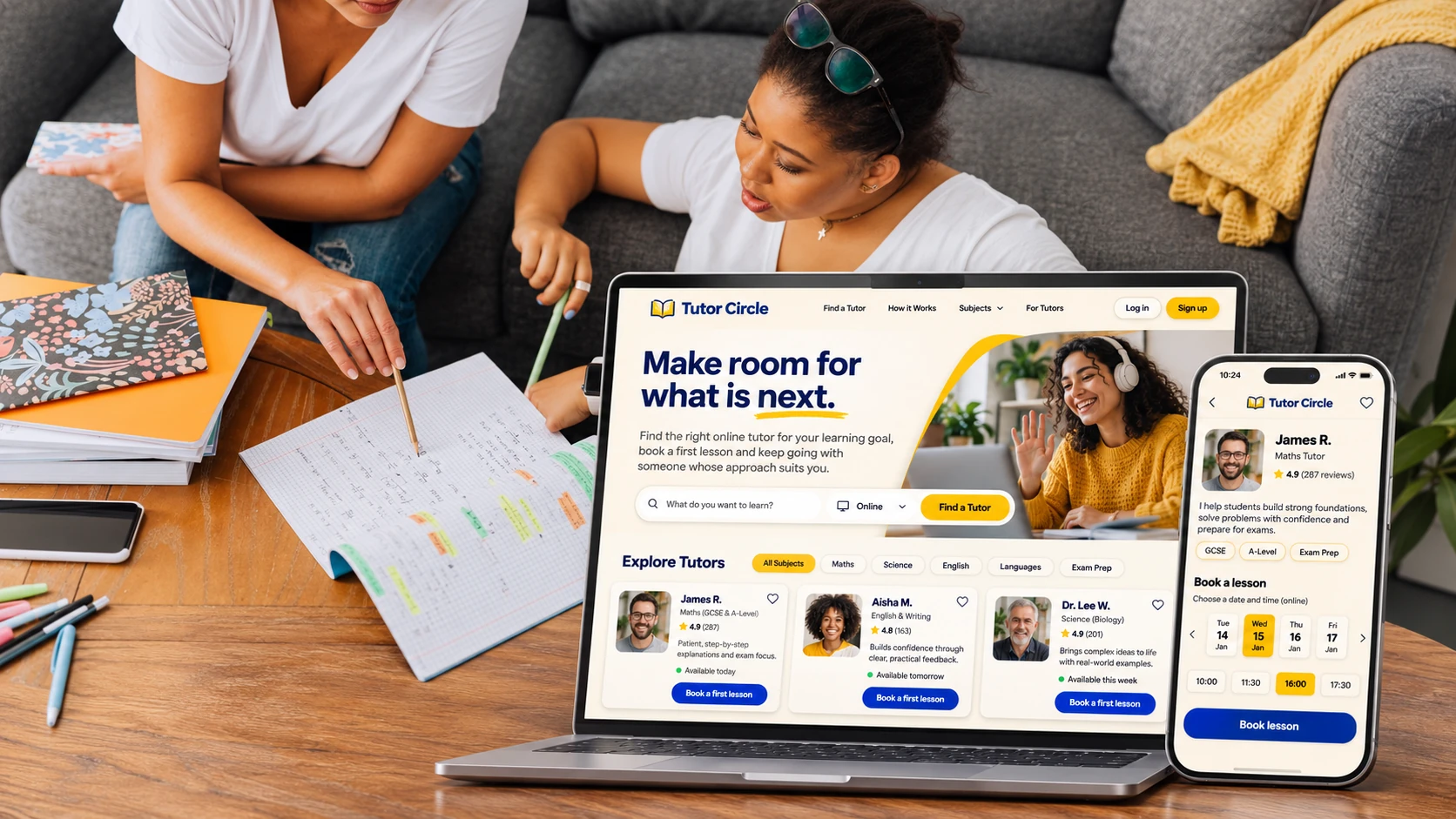
Someone has watched tutorials for months but still hesitates when a real task arrives. Your school could give that person a place to ask the awkward question, try the work and receive useful feedback. The opportunity begins with a particular learner and a change you can help them make.
A business you can
picture.
Choose one skill and one group of adult learners. Shape a programme around a clear piece of progress you can help them work towards.
Who would be glad
you built it?
Career changers
Practise one unfamiliar professional task.
Business owners
Apply a skill to their own operation.
Employers
Give a team structured guided practice.
Where the money
could come from.
Learners pay for a defined cohort place, with employers potentially buying places for staff. That payment buys teaching, practice and feedback over an agreed period. Include preparation, marking, guest expertise and learner support when setting a price; platform access alone is only part of what you deliver.
The part you could
make your own.
A focused working context could make your school memorable. Customer research for independent shop owners, for example, can use their real buying questions. Test whether that relevance helps participants make progress they could not achieve through general tutorials.
An angle to test with the people you want to serve.Start with something
worth using.
Choose one practical outcome, one cohort and a short sequence of lessons, live sessions and assignments. Publish the support boundaries and what participants should already know before they pay for a place.
- Explain who the programme is for and what it covers.
- Publish dates, enrolment details and learning materials.
- Give learners practical assignments to submit.
- Bring people together for live sessions and useful feedback.
Give the promise
something to stand on.
You need credible subject experience, a teachable method and time to review learners' work. A good programme also needs someone to host discussions and notice when a participant falls behind.
A good learning business needs time for preparation, reliable sessions and learner support. Explain cancellations and what a completion certificate represents. Ask permission before sharing a learner’s work or recording a discussion.
Let a small beginning
teach you something.
Invite people who already ask you about the skill to discuss their hardest real task. Offer a clearly described pilot with a manageable group, and review the work they produce rather than collecting praise alone.
Can learners complete a task they previously avoided and explain how they would repeat it independently?
Look for these signs
- Assignments show meaningful revision
- Learners apply the skill outside class
- Support fits the teaching capacity
A little more
clarity.
Do I need a huge course library first?
A single well-supported learning journey can test the offer. A large library adds preparation work before you know which explanations, exercises and feedback your audience actually needs.
Can the programme promise a new job?
Describe the skills, practice and support you provide. Employment depends on factors outside the programme. Learner work and clearly explained outcomes offer a more useful basis for choosing than a guaranteed career result.
Do I need a large course library?
No. One focused programme that you can teach well is a useful place to begin.
Maven lists cohort-based courses with live schedules. It is a reference for the format; your teaching, experience and relationship with learners would make the offer your own.
Now picture it
with your name on it.
Your people. Your priorities. The version you keep thinking about. Answer a few questions and leave with a starting plan you can keep.
Free to explore. No account or email needed for your starting plan.