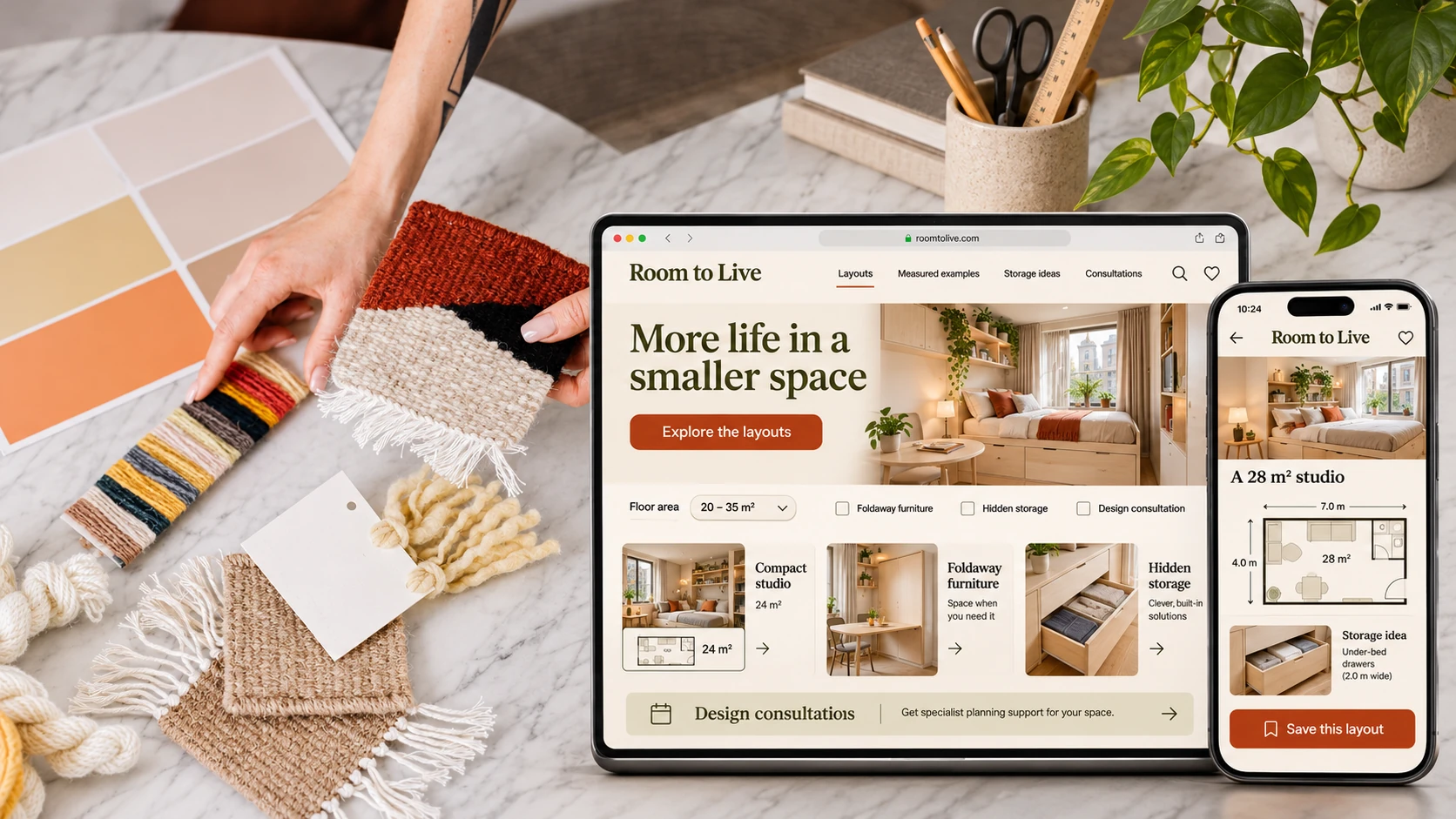
A renter saves a beautiful photograph of a compact room, then realises the furniture would block the only cupboard they use every morning. Your library could make inspiration more useful by showing dimensions, compromises and everyday routines, helping someone choose a change that fits their life as well as the picture.
A business you can
picture.
Focus on one common space problem, such as a shared room or tiny workspace. Publish permissioned examples with dimensions, trade-offs and clear notes about what needs professional assessment.
Who would be glad
you built it?
People living in compact homes
Examples with measurements and practical compromises
Renters seeking manageable changes
Ideas suited to the permissions they actually have
Households adapting a shared room
Ways to compare competing everyday uses
Where the money
could come from.
Households could buy a curated planning pack for one type of space or challenge. The price supports research, image rights, editorial work and updates. A later library membership should have a clear continuing promise. Product referrals can be included only with disclosure, and should not turn the collection into unexplained shopping recommendations.
The part you could
make your own.
Your possible edge is showing what an arrangement gives up as well as what it gains. Explaining that a foldaway desk needs clear floor space could help readers make a more realistic choice.
An angle to test with the people you want to serve.Start with something
worth using.
Build one collection around a common small-space problem. Include accurate dimensions, before-and-after use descriptions and the limits of each example. Offer a simple planning worksheet before adding custom design services.
- Search examples by dimensions and daily needs.
- Compare storage, movement and furniture choices.
- Save a brief for a specialist consultation.
Give the promise
something to stand on.
You need well-documented examples, permission to use them and a good understanding of spatial trade-offs. Separate inspiration from technical plans and identify changes that need suitable professional advice or consent.
Secure rights to examples and distinguish inspiration from construction documentation. Structural, electrical or other specialist changes need suitable professional advice and any relevant permissions.
Let a small beginning
teach you something.
Invite people with the chosen room problem to use a sample pack alongside their own measurements. Ask them to identify a feasible change and explain which example details helped rule out unsuitable ideas.
Can someone use the measurements and trade-offs to identify an idea that fits their own room and routine?
Look for these signs
- Examples include usable dimensions
- Readers recognise relevant compromises
- Chosen changes reflect actual permissions and space
A little more
clarity.
Are the examples construction drawings?
No, unless explicitly produced and reviewed for that purpose. Inspiration and planning context do not replace professional design, structural advice or permission for specialist work.
Do we need to recommend expensive furniture?
The first offer can focus on understanding space and routine. Include product suggestions only when they help the particular example, with dimensions, limitations and any commercial relationship clearly explained.
What should my first version focus on?
Start with the first test described here, then build around the part people actually use and would pay to keep.
Now picture it
with your name on it.
Your people. Your priorities. The version you keep thinking about. Answer a few questions and leave with a starting plan you can keep.
Free to explore. No account or email needed for your starting plan.