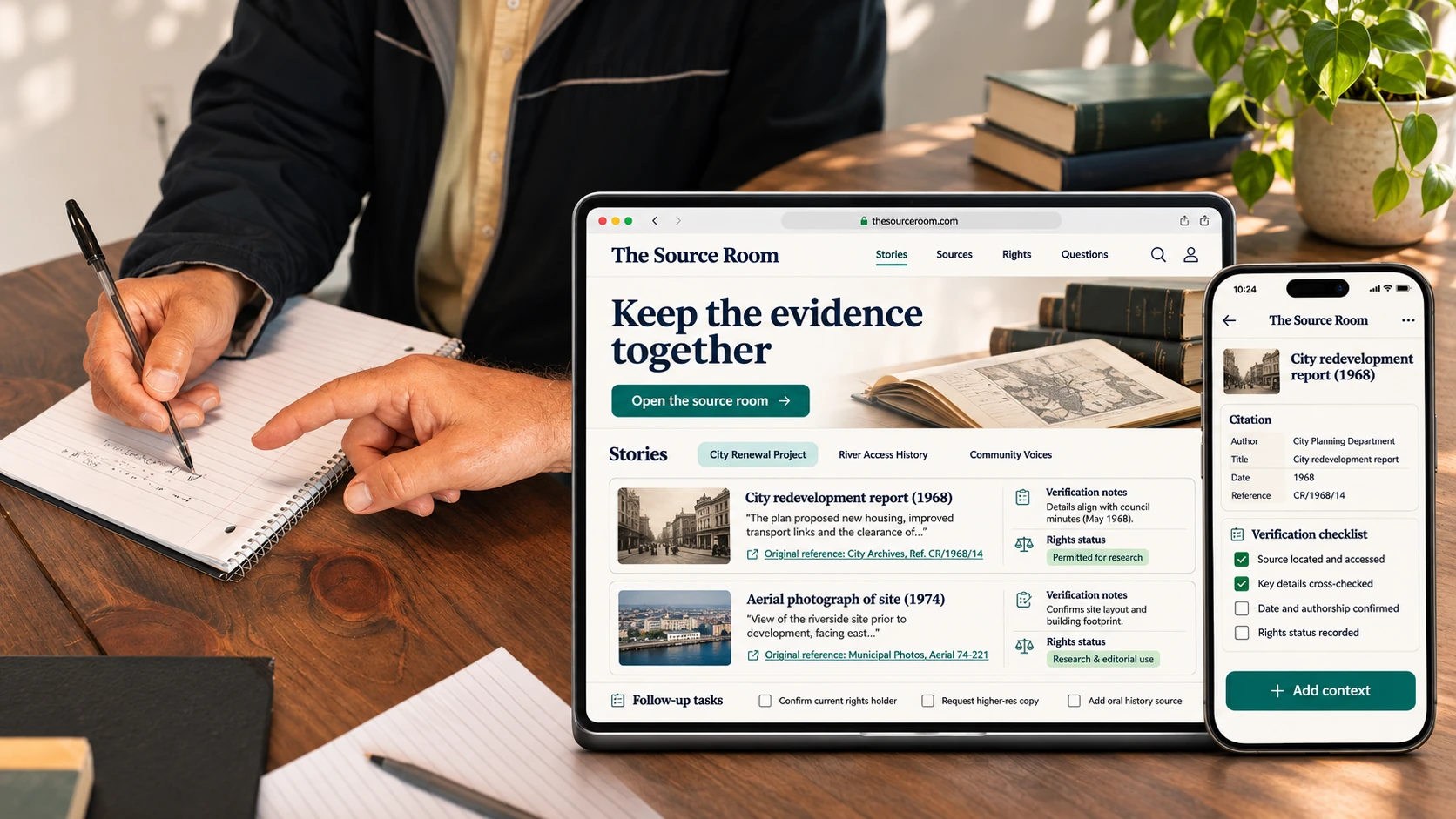
A researcher finds an excellent source, notes its limitations in a private document and moves on. Months later, a colleague discovers the link but not the caution that made it useful. Your service could keep the research question, context and reuse permissions beside the source, helping teams revisit evidence more responsibly.
A business you can
picture.
Start with a defined editorial or research team. Each source record keeps the original reference, the question it addressed, review dates and any permission or usage limits.
Who would be glad
you built it?
Research teams
A shared memory of sources and their limitations
Editors and analysts
Context for checking an earlier finding
New project contributors
A clear starting point without treating old notes as current facts
Where the money
could come from.
Teams could pay for a workspace subscription and an optional archive-organisation project. The fee supports storage, search and record maintenance, with the service limited to material customers are entitled to keep. The product’s value is preserved context; it should not imply that an imported source has been freshly verified or that every stored quotation can be republished.
The part you could
make your own.
Your possible difference is explaining why a source was used and where it fell short. That context could help a new researcher choose the next check instead of repeating an old conclusion without understanding it.
An angle to test with the people you want to serve.Start with something
worth using.
Start with one team and project. Record source links, the question they informed, relevant notes, limitations and permitted reuse. Add review dates and access settings before building broad automated collection.
- Keep source context beside the original reference.
- Record what was checked and when.
- Separate permissioned reuse from material needing new consent.
Give the promise
something to stand on.
You need research-workflow knowledge and careful access controls. Respect copyright, confidentiality and source restrictions, and make it possible to correct, update or retire records without hiding their history.
Respect copyright, source confidentiality and access restrictions. Store only material the team is entitled to keep, and make it easy to correct or retire an outdated record.
Let a small beginning
teach you something.
Invite a team to revisit a completed project and organise a small source set. Ask a colleague who did not do the original research to use it for a related question, noting where context still needs explanation.
Can a new researcher understand why a source was useful, what limits apply and what needs checking again?
Look for these signs
- Sources retain context and access restrictions
- Old observations show their review date
- Corrections and retired records remain traceable
A little more
clarity.
Can we save full copies of every source?
Only when the team has the right to retain them. Linking, note-taking and storing a full protected work have different permissions, which the workspace should help record rather than assume.
Does an old verified note stay true indefinitely?
No. Show when it was checked and what might have changed. The service should encourage fresh review when a new decision depends on current information.
What should my first version focus on?
Start with the first test described here, then build around the part people actually use and would pay to keep.
Now picture it
with your name on it.
Your people. Your priorities. The version you keep thinking about. Answer a few questions and leave with a starting plan you can keep.
Free to explore. No account or email needed for your starting plan.