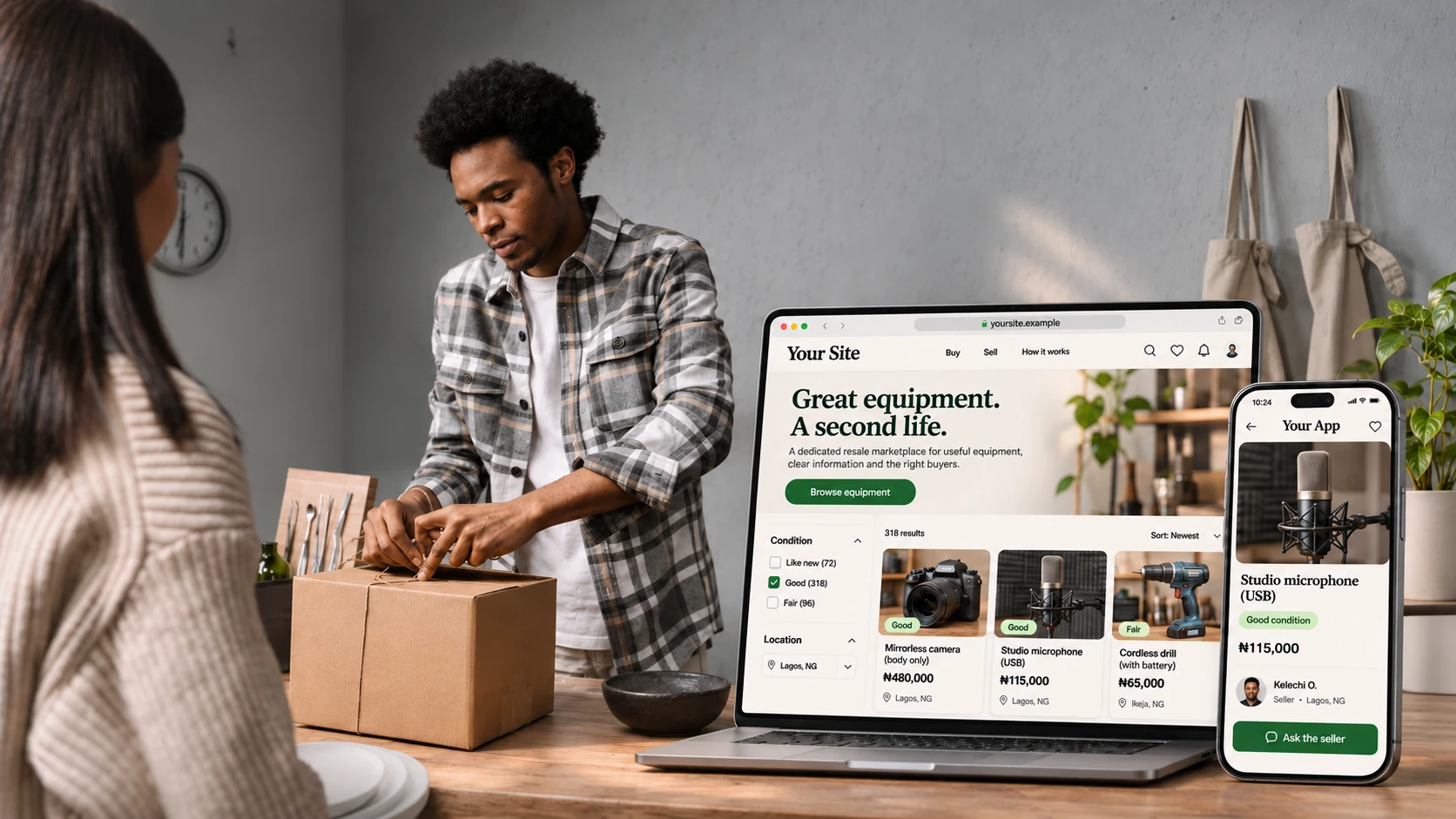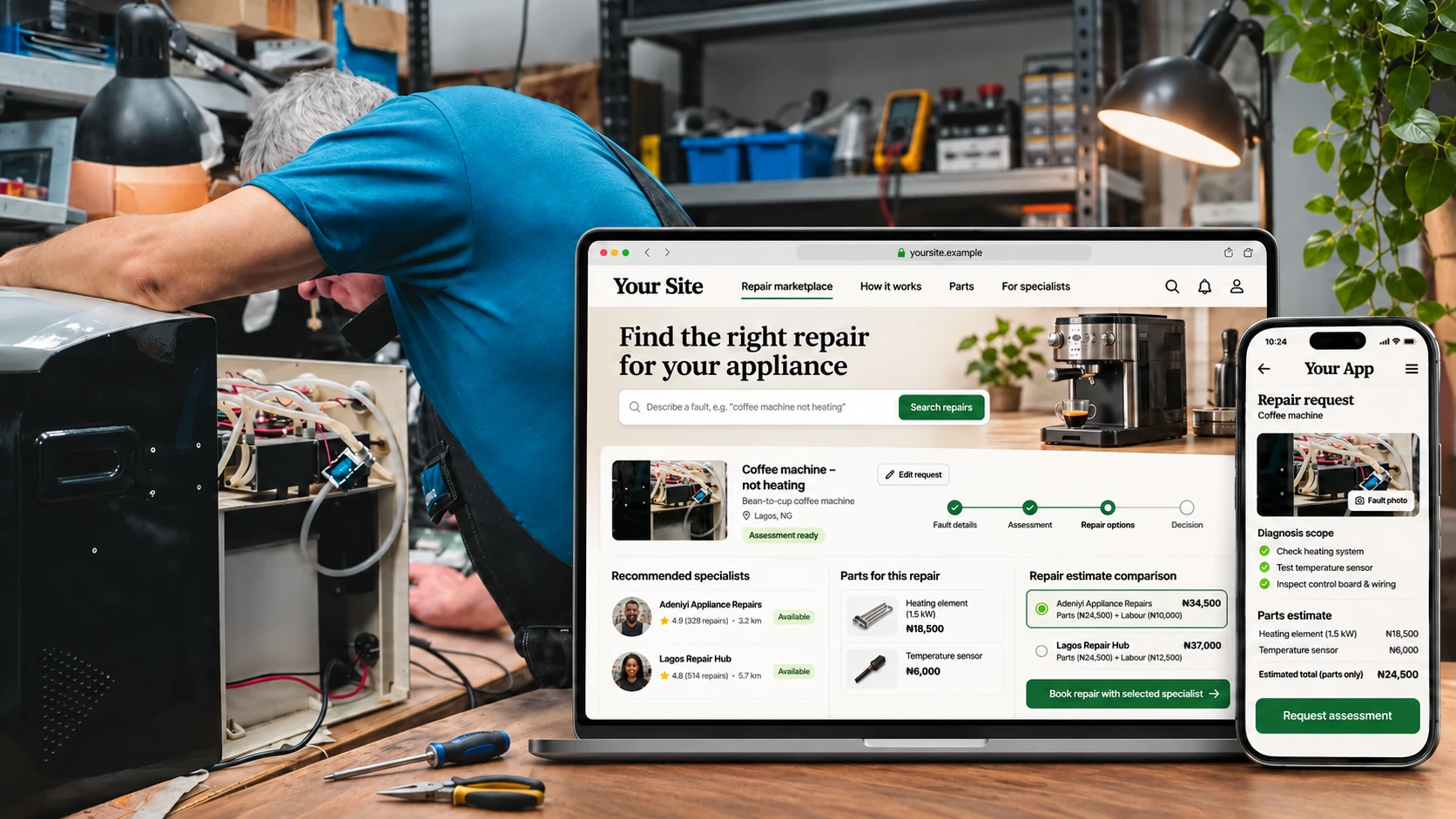
An appliance stops working and its owner is caught between buying another one and calling a repairer without knowing what to ask. You could build a service that makes the first assessment clearer, helping the owner describe the problem, arrange a suitable inspection and understand the choices that follow.
A business you can
picture.
Choose one product category and a dependable group of repairers. Owners submit the item details, receive an assessment arrangement and review a written repair proposal before approving work.
Who would be glad
you built it?
Owners of repairable items
A clear assessment and decision process
Specialist repairers
Useful intake details and agreed appointments
Small businesses with equipment
Traceable repair history and practical next steps
Where the money
could come from.
Customers could pay a stated assessment-coordination fee, with repairers charging separately for inspection or repair under clear terms. Your fee funds intake, booking and support. If you instead receive a repair commission, disclose it and preserve the customer’s option to decline repair; the service must remain useful when replacement or no further work is the sensible choice.
The part you could
make your own.
Your proposed advantage is a readable assessment history. An owner could see the reported issue, specialist findings and approved work together, rather than receiving a vague price with no explanation of the decision.
An angle to test with the people you want to serve.Start with something
worth using.
Choose one repair category and a small partner network. Collect symptoms and item details, arrange a defined assessment and present the resulting options clearly. Keep the owner’s approval separate from the inspection booking.
- Collect useful item details and photographs.
- Separate assessment charges from repair quotations.
- Show parts, timing and collection arrangements.
Give the promise
something to stand on.
You need trustworthy repair partners and knowledge of one product category. Inspection, parts, workmanship, stored data where relevant and handling unrepaired items all need clearly assigned responsibilities.
Set responsibility for inspection, parts and workmanship. Product safety, data stored on devices and the handling of unrepaired items need clear processes appropriate to the chosen category.
Let a small beginning
teach you something.
Partner with a few repairers in one category and follow real enquiries from intake to decision. Ask owners which information helped them choose and repairers which details prevented an unnecessary visit.
Does the owner understand the assessment and choose whether to proceed without feeling that booking an inspection already committed them to repair?
Look for these signs
- Intake gives repairers useful information
- Owners approve defined work explicitly
- Unrepaired items have a clear return plan
A little more
clarity.
Can we guarantee an item can be fixed?
Only a suitable assessment can establish the available options. Present repairability as something to investigate, with clear assessment costs and no promise based solely on a photograph or symptom description.
What if the item contains personal data?
Choose a category-specific handling process before accepting it. Owners should understand access, backup and data responsibilities, and repair partners should receive only the permissions needed for the agreed work.
What should my first version focus on?
Start with the first test described here, then build around the part people actually use and would pay to keep.
Now picture it
with your name on it.
Your people. Your priorities. The version you keep thinking about. Answer a few questions and leave with a starting plan you can keep.
Free to explore. No account or email needed for your starting plan.