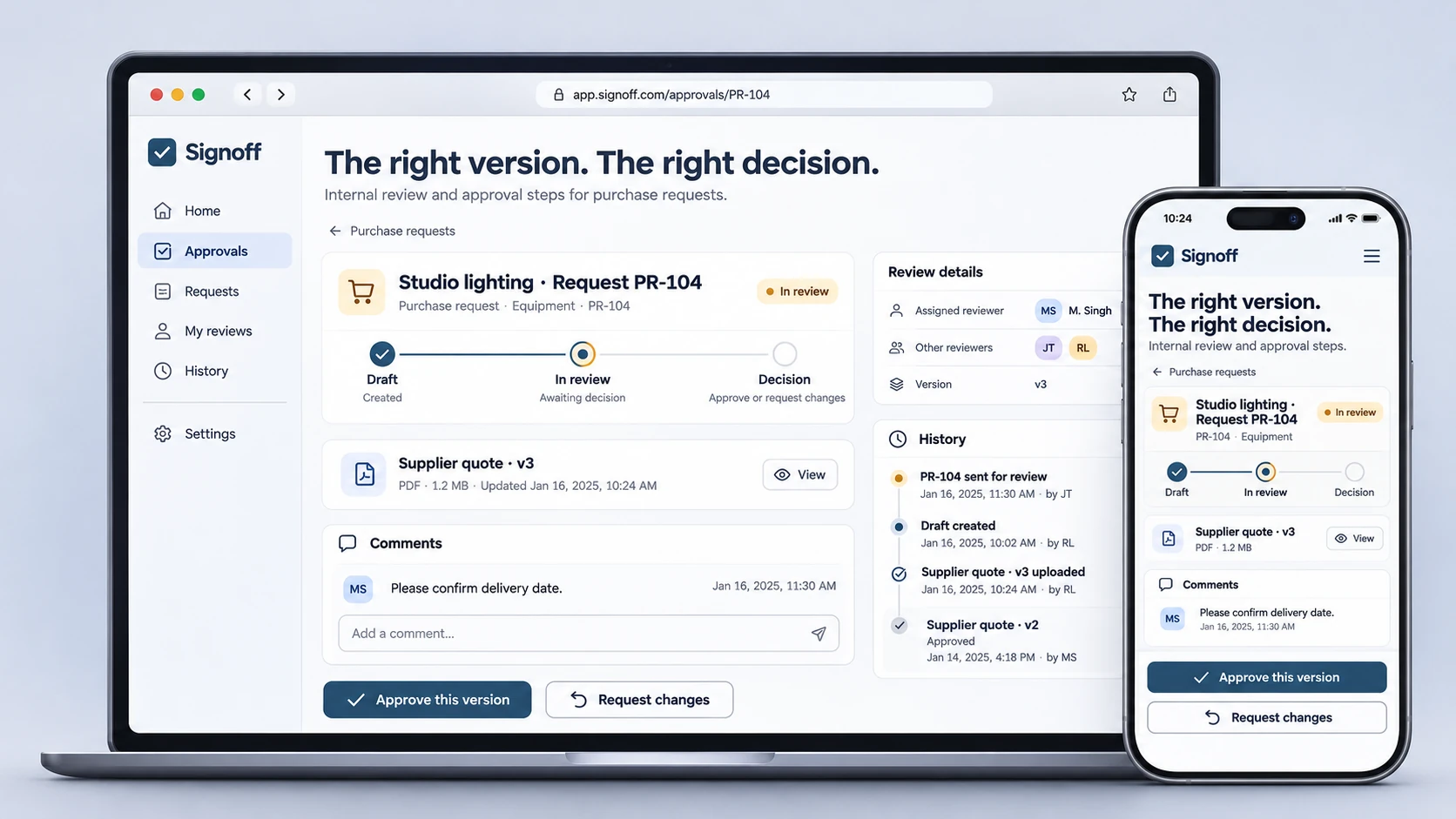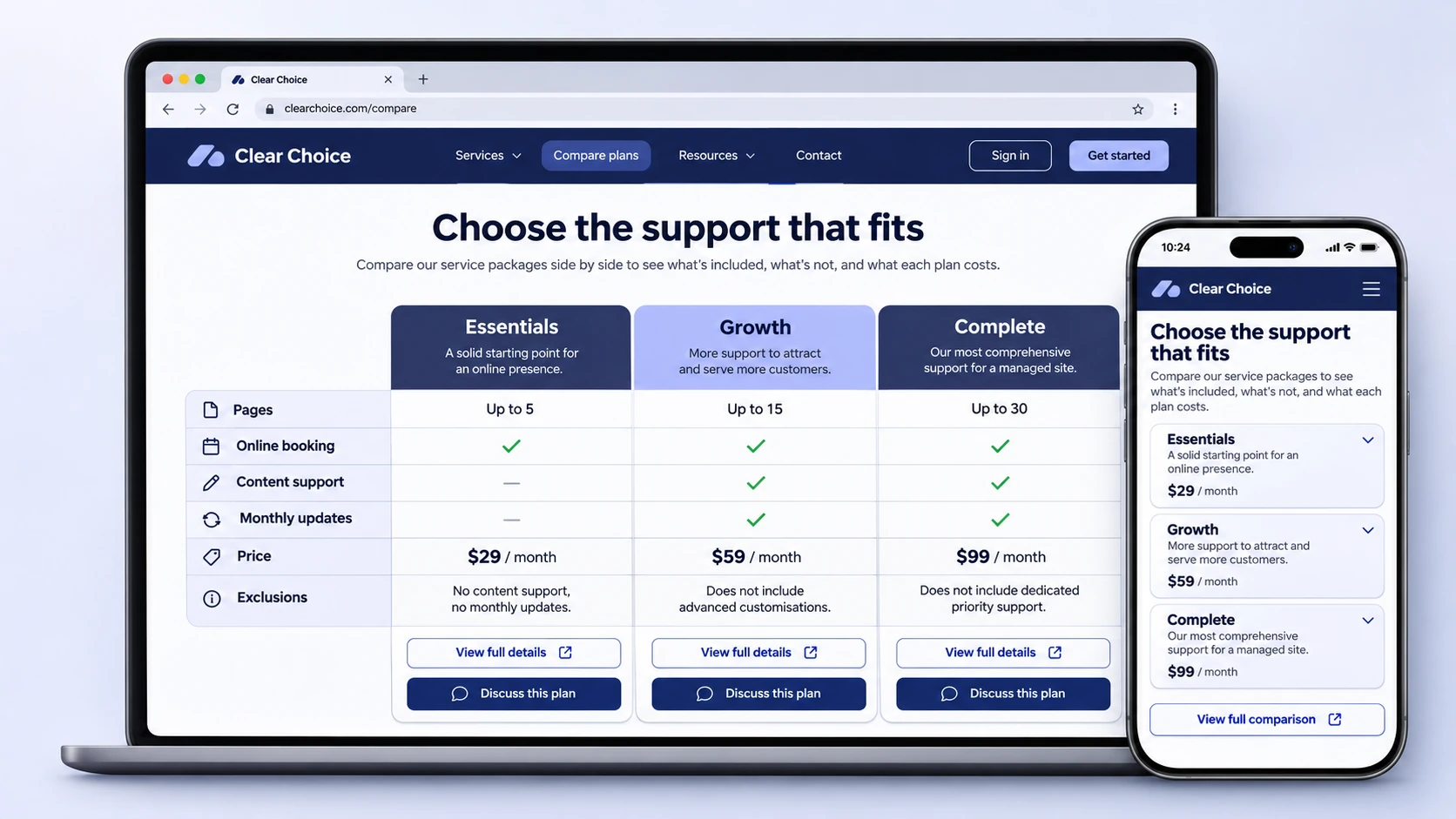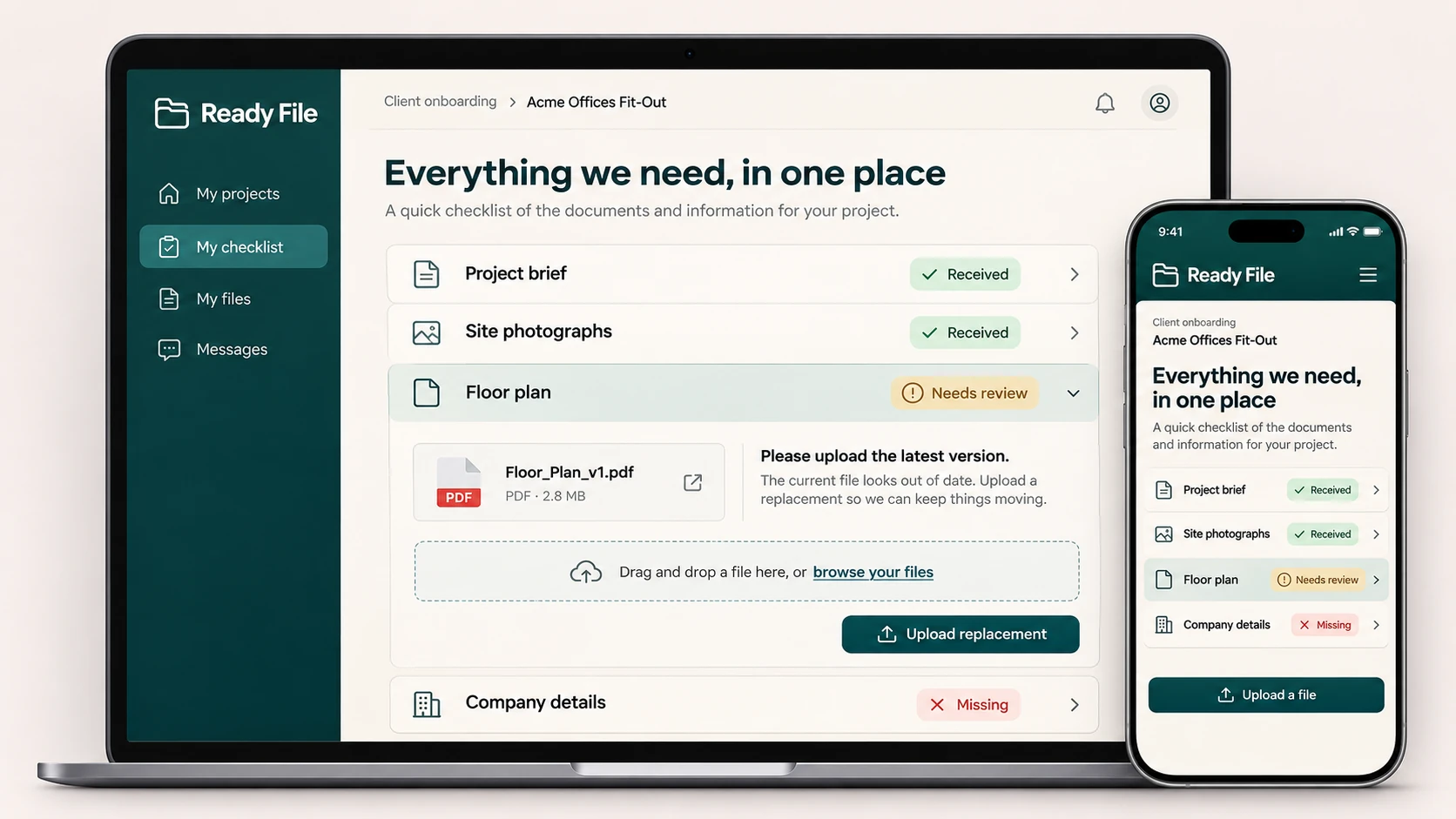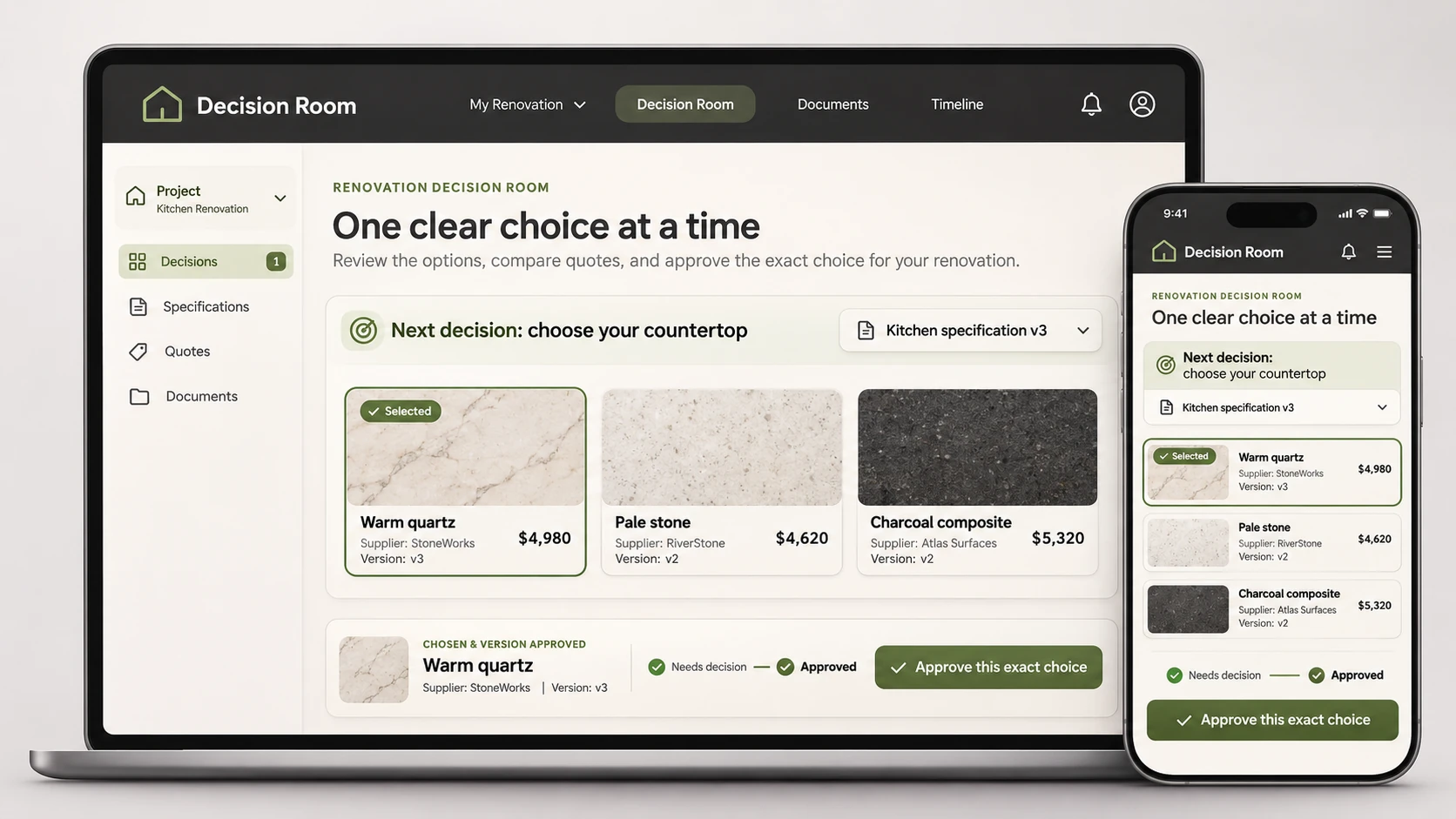
A client approves a tile in a message, then discovers that the size, price or delivery date was different from what they imagined. A decision room could place the actual option beside its consequences, helping your team and client share the same understanding before the next work begins.
A choice is scattered across messages, and the client and contractor remember different versions of the item or quotation.
The current option, its stated effects and the exact reviewed version remain together, with changes sent back for a fresh decision.
Where it could
make a difference.
Interior designers
Present real selections with current context.
Renovation contractors
Track decisions that affect upcoming work.
Project clients
Review the exact option and version requested.
Useful on: Client portal, Property website, Project workspace.
What this could mean
for your business.
This can support a more considered paid service and reduce repeated explanations around selections. Its value depends on current information and a clear approval process. Measure overdue choices and disputed changes alongside the time your team spends maintaining the room; the feature does not automatically eliminate rework.
Start with something
worth using.
Begin with one project and a small set of upcoming choices. Show the option, current quotation and decision needed. Preserve earlier versions when a price or specification changes.
- Real options and quotations
- The next decision needed
- Exact choice and version approved
Give the promise
something to stand on.
You bring current quotations, product details and a named person who manages choices. Agree which actions record preference and which require a separate formal approval or change process.
Someone must keep prices, availability and project details current. Protect addresses, drawings and budgets. Agree how a selection becomes an authorised change; clicking a choice should not silently rewrite a contract.
How it fits what you already have
Check your project records, quotation format, client access and formal change process. Decide which system owns prices and approvals, who can edit a selection and how earlier versions remain available.
Let a small beginning
teach you something.
Ask an existing willing client to review a few real selections. Have them explain what they chose and what it affects, then identify any assumption the page failed to make clear.
Can the client describe the exact choice and its stated consequences without relying on a separate explanation from your team?
Look for these signs
- Selections retain their approved version.
- Pending choices have a responsible person.
- Changed prices prompt a new review.
A little more
clarity.
Does clicking approve change the contract?
Only if your agreed process explicitly gives it that effect. The interface must distinguish a preference from formal authorisation and reflect the terms your business actually uses.
What if a chosen item becomes unavailable?
Keep the original decision visible, mark the availability change and request a new selection. Do not silently substitute an item that the client has not reviewed.
Can AI set the renovation price?
Use real professional quotations for commitments. AI could help summarise agreed changes, with a person checking every detail.
Must I build a new website for this?
The room could become a focused addition to a suitable existing website or client portal.
Houzz Pro offers selection boards for project choices. It is an adjacent reference. This idea focuses on a clear record of the choices and changes within agreed work.
What would this change
in your business?
Your customers. Your working day. The part you would love to make easier. Answer a few questions and leave with a starting plan you can keep.
Free to explore. No account or email needed for your starting plan.