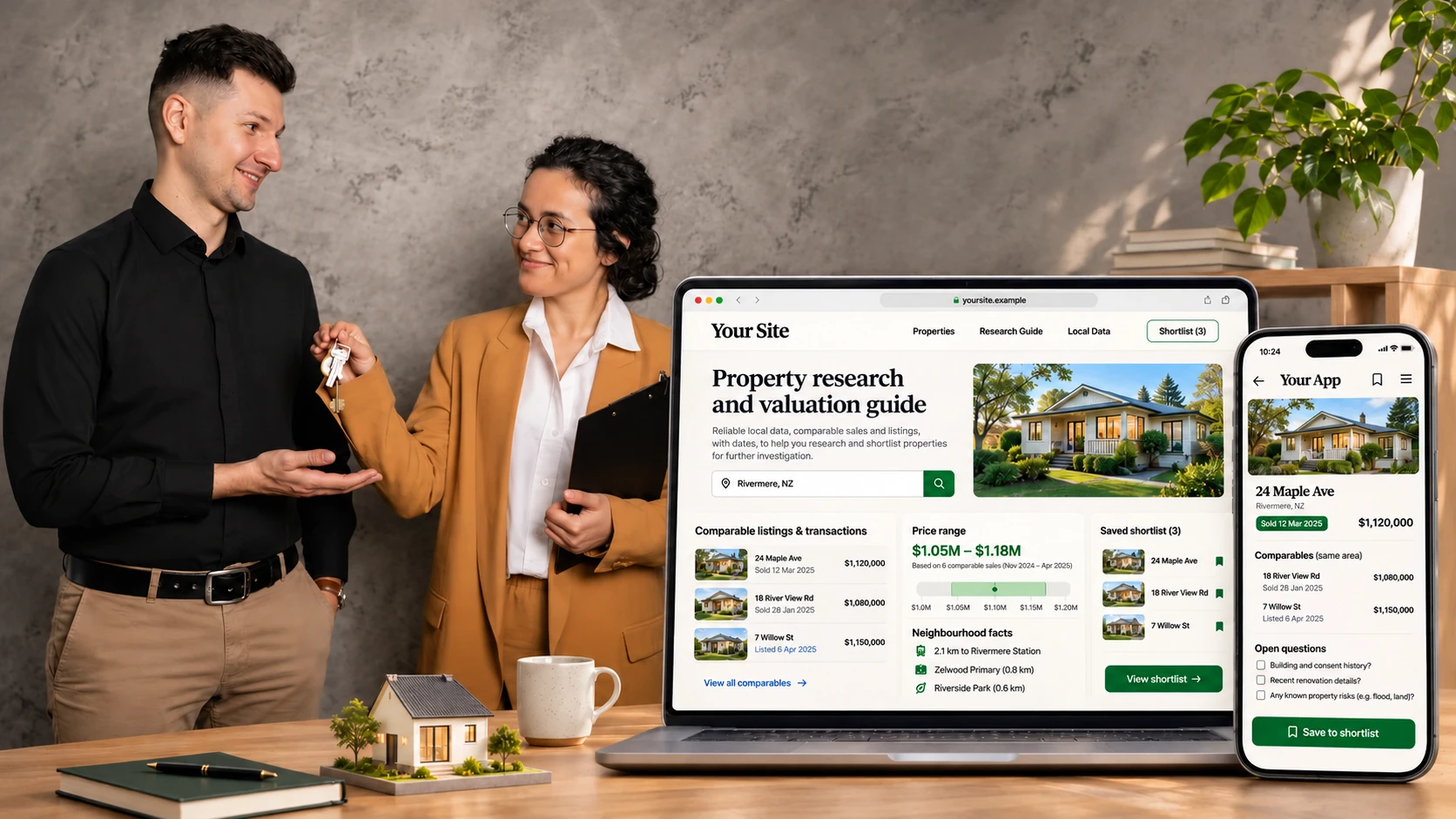
A buyer sees several asking prices in an area and assumes they reveal what every property is worth. The homes differ in condition and the listings may be old. Your research guide could put those limitations beside the comparisons, helping people form better questions before committing to a purchase or project.
A business you can
picture.
Build a property information publication around reliable local data. Show comparable listings or transactions where lawfully available, explain their dates and help users organise a shortlist for further investigation.
Who would be glad
you built it?
Prospective buyers
Explore an area and prepare questions.
Owners considering a sale
Understand available comparison evidence.
Property professionals
Organise sourced research for clients.
Where the money
could come from.
Subscribers or professional firms could pay for maintained research tools and source organisation. Optional reports can be separately scoped. Data rights, verification, updates and expert review create costs; the subscription buys research access, not a promise that a purchase will appreciate or an estimate will match a final transaction.
The part you could
make your own.
Honest comparison notes could be your edge. Explaining differences, stale evidence and unanswered questions may help users more than a single confident-looking price. Test whether the guide improves the quality of their next professional conversation.
An angle to test with the people you want to serve.Start with something
worth using.
Choose one area and a small set of clearly sourced comparison fields. Show dates, property differences and missing information. Offer a research shortlist and notes before adding automated value estimates or broad market predictions.
- Area and property research pages
- Dated comparable information
- Saved research and professional enquiry routes
Give the promise
something to stand on.
You need reliable, lawfully usable local data and a transparent method. Distinguish asking prices, completed transactions and estimates, and avoid presenting an attractive chart as a formal valuation without the appropriate service behind it.
Data rights, update frequency and methodological review are essential. A website estimate should not present itself as a formal valuation unless the required professional process has actually been completed.
Let a small beginning
teach you something.
Ask intended users and a qualified property professional to review sample comparisons. Test whether readers can explain why two properties differ and identify the evidence they would still seek before making a decision.
Can a reader distinguish observed data from an estimate and identify the limitations of the comparison?
Look for these signs
- Comparisons show source and date
- Property differences remain visible
- Readers understand what the research cannot establish
A little more
clarity.
Is an online estimate a formal valuation?
Not automatically. Explain the service, method and limitations, and distinguish research from any professional valuation that requires a qualified assessment. Do not use a precise figure to imply certainty the underlying data cannot support.
Can old listing prices still be useful?
They may offer context if clearly dated and described as asking prices. They should not be silently treated as recent completed transactions or evidence that a similar property will sell for the same amount.
Zoopla is a reference for property search and price information.
Now picture it
with your name on it.
Your people. Your priorities. The version you keep thinking about. Answer a few questions and leave with a starting plan you can keep.
Free to explore. No account or email needed for your starting plan.