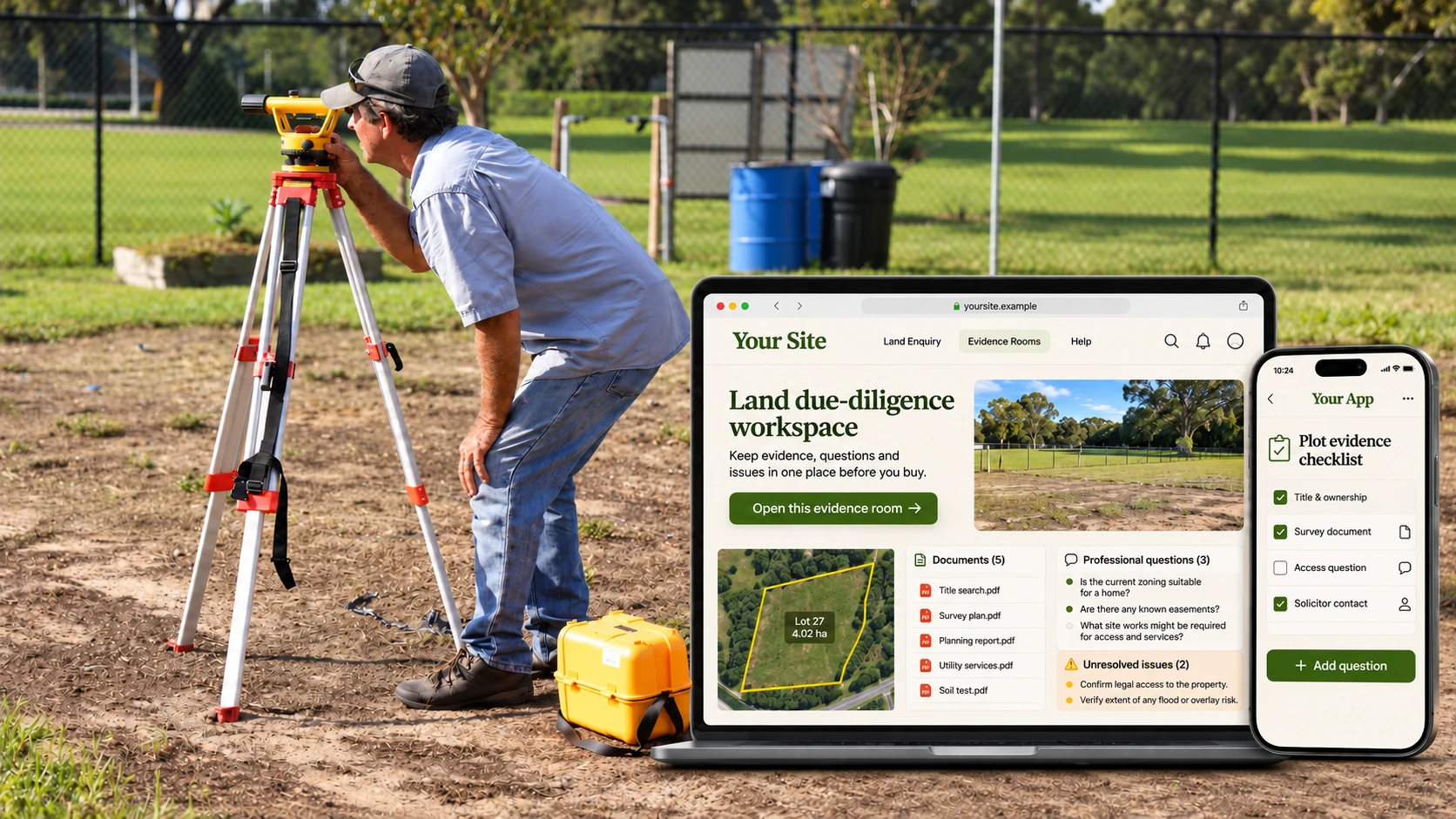
A buyer is excited about a plot but receives documents they cannot confidently interpret. Each adviser asks for something different and one unanswered question gets lost. Your service could organise that enquiry into a readable trail, helping the buyer see what has been supplied, who reviewed it and what remains unresolved.
A business you can
picture.
Build a private workspace for one property enquiry. The buyer controls access, specialists provide attributed findings and the coordinator tracks what has been requested, received and still needs attention.
Who would be glad
you built it?
Prospective land buyers
A clear record of documents and review questions
Qualified land advisers
Organised material within their agreed professional scope
Families coordinating a land enquiry
Shared visibility of authorised next steps
Where the money
could come from.
The buyer could pay a fixed coordination fee for document organisation and review scheduling. Professional reports are commissioned and priced separately, with their responsibility clearly identified. Your fee supports administration and secure access; it does not buy a guaranteed title, a favourable professional conclusion or a completed transaction. Keep purchase funds outside the initial service.
The part you could
make your own.
Your proposed difference is making the evidence trail understandable to the buyer. A clear distinction between received, reviewed and unresolved may help someone pause at the right question instead of mistaking a full folder for certainty.
An angle to test with the people you want to serve.Start with something
worth using.
Start with a private workspace for one enquiry. List the buyer’s questions, record supplied documents and assign reviews to appropriately qualified professionals. Keep the source, date and limitations of each response visible.
- Organise supplied documents without implying verification.
- Assign specific questions to suitable professionals.
- Keep findings, dates and unresolved issues together.
Give the promise
something to stand on.
You need careful administration and trusted professional referral arrangements. The platform must never make document completeness look like certified title, and paid relationships should be visible to the buyer.
The platform does not certify title or guarantee a transaction. Qualified local professionals must perform relevant checks, and the buyer should understand the limitations of each report.
Let a small beginning
teach you something.
Work with a qualified adviser and a buyer already conducting an enquiry. Organise one set of questions and documents, then ask the buyer to explain which issues have actually been answered and which have not.
Can the buyer identify the source and limits of each professional answer and the questions still unresolved before the next decision?
Look for these signs
- Documents retain their source and date
- Reports show scope and responsible reviewer
- Unresolved questions remain visible to the buyer
A little more
clarity.
Does a complete evidence room certify the land?
No. It organises material and professional responses. Certification or legal conclusions require the appropriate qualified process, and the room should display each report’s actual scope and limitations.
Can sellers edit the buyer’s review record?
They can supply information through a controlled route, but professional findings and buyer notes need appropriate permissions and history. Keep a seller’s claim distinct from an independent reviewer’s conclusion.
What should my first version focus on?
Start with the first test described here, then build around the part people actually use and would pay to keep.
Now picture it
with your name on it.
Your people. Your priorities. The version you keep thinking about. Answer a few questions and leave with a starting plan you can keep.
Free to explore. No account or email needed for your starting plan.