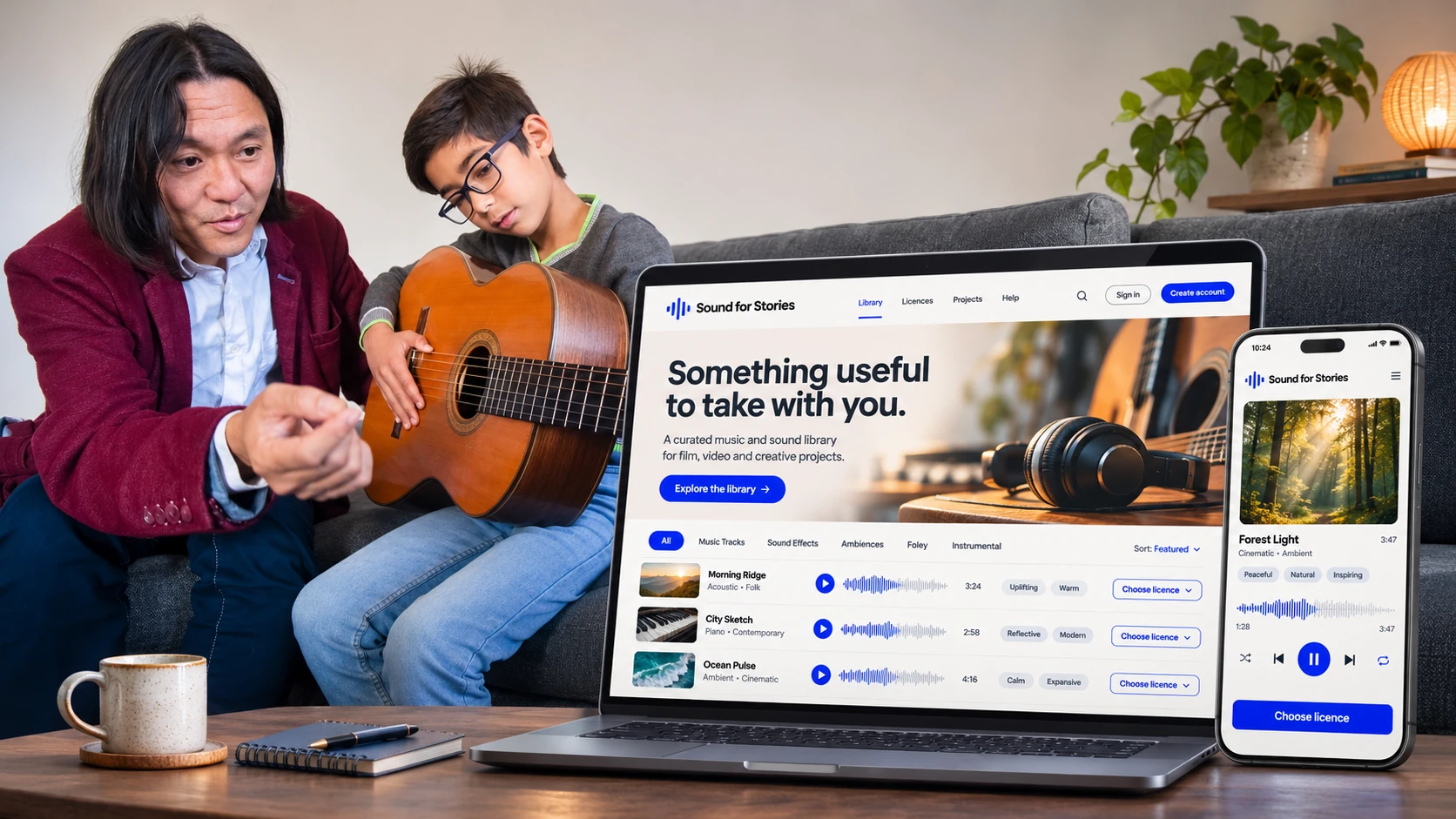
A filmmaker finally finds the right music for a quiet scene, then stops at checkout because the licence does not explain the intended release. Your library could serve that moment with useful musical discovery and clear rights, making the creative choice easier to carry through to publication.
A business you can
picture.
Create a curated music and sound library for a defined production audience. Let buyers audition tracks, compare usage permissions and keep a record of the licence attached to their project.
Who would be glad
you built it?
Independent filmmakers
Music that fits a scene and its distribution plans
Content studios
Reusable search and licence records for client work
Composers and sound makers
A defined route to customers and agreed payment
Where the money
could come from.
A useful initial model is payment for each defined licence. Agree contributor shares and account for preview hosting, file delivery, payment processing and claims support. A subscription can be considered later if the catalogue and permissions support repeated use; it should not obscure what any particular purchase allows.
The part you could
make your own.
You could focus on one production need, such as understated documentary sound. Accurate tags for pacing, instruments and available edits could give that audience a more useful search than broad labels like happy or cinematic.
An angle to test with the people you want to serve.Start with something
worth using.
Launch one carefully cleared collection with previews, mood and pacing filters, a stated licence and downloadable proof of purchase. Include a way to ask about uses outside the standard licence.
- Audio previews and mood filters
- Project use and licence information
- Downloads and licence history
Give the promise
something to stand on.
You need a distinctive catalogue, contributor agreements and people who understand the uses being licensed. Music selection and rights administration are both part of the product you are building.
Music rights can involve several owners and uses. Confirm the rights you can grant, explain restrictions and keep a process for claims or changes. Do not promise universal clearance without supporting agreements.
Let a small beginning
teach you something.
Give a few willing filmmakers a real brief to search against. Watch where they hesitate over both sound and rights, then test whether a clearly described licence helps them complete a purchase.
Can a creator select a suitable track and correctly explain where their purchased licence permits them to use it?
Look for these signs
- Creative searches lead to suitable auditions
- Buyers retain a clear licence record
- Rights questions are resolved before publication
A little more
clarity.
Can I promise that no copyright claim will happen?
Avoid that promise. Even carefully licensed work can produce questions or disputes. Keep evidence of the rights granted and provide a practical process for helping a buyer respond.
What if a customer wants a different edit?
Offer only the versions you can supply and license. A custom edit may be a separately agreed service, with the composer’s involvement and delivery terms made clear.
Artlist is a reference for creative media licensing.
Now picture it
with your name on it.
Your people. Your priorities. The version you keep thinking about. Answer a few questions and leave with a starting plan you can keep.
Free to explore. No account or email needed for your starting plan.