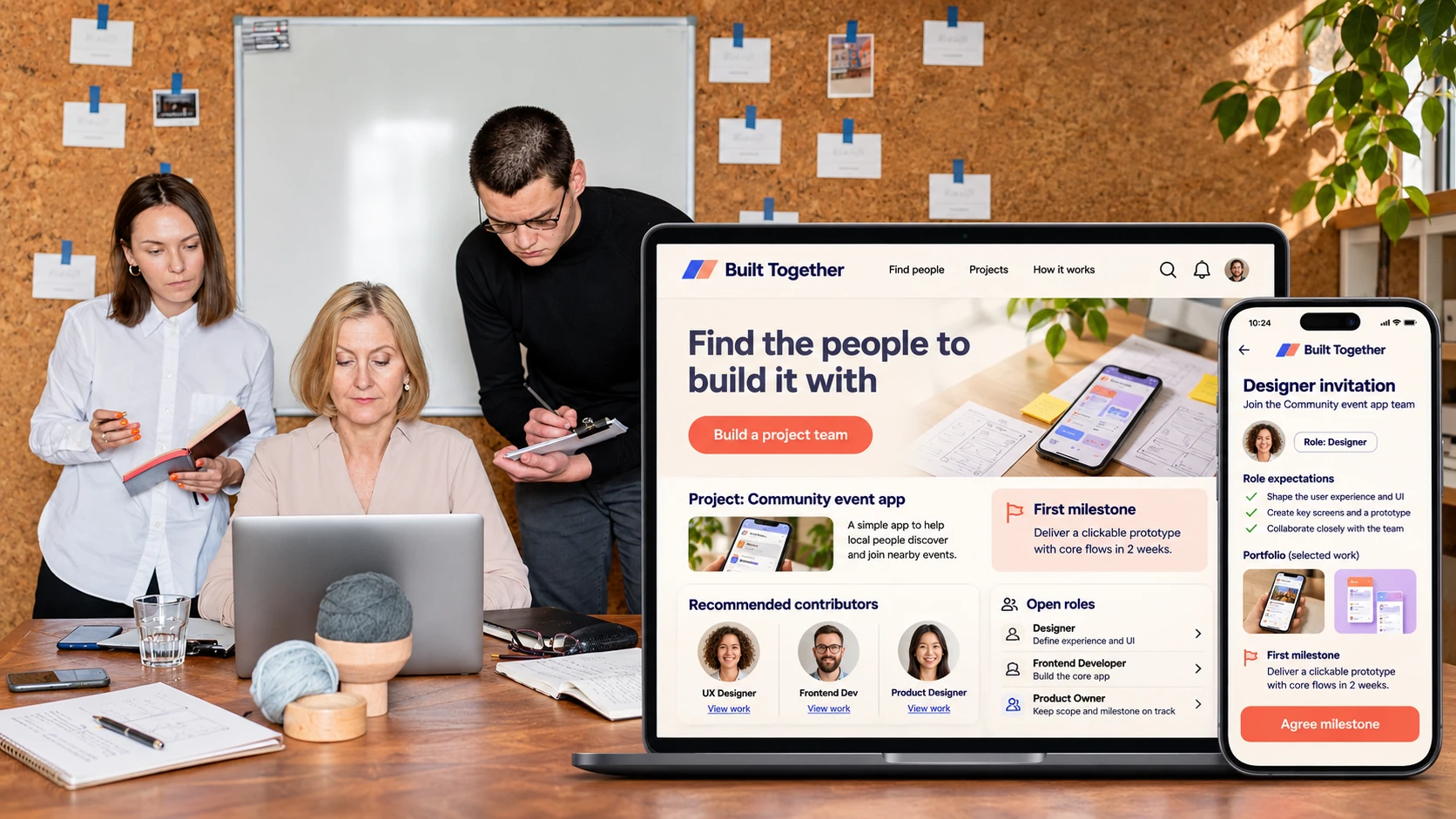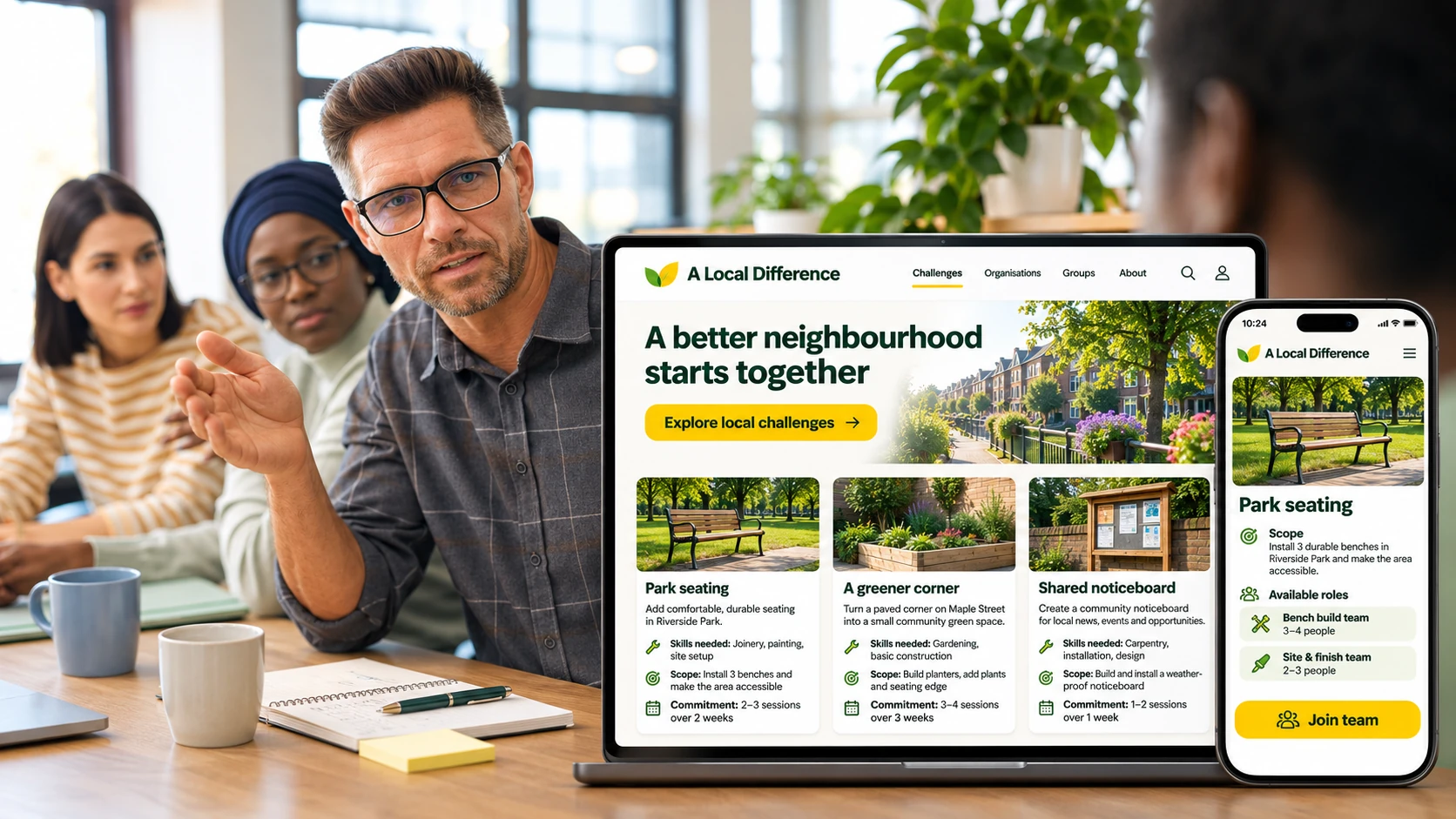
A community organisation needs a clearer visitor guide, while nearby people want to contribute useful design or research skills. An open request for help leaves the task vague. Your service could shape one bounded challenge, with a real recipient, clear ownership and feedback that lets participants understand what their work changed.
A business you can
picture.
Organisations submit a small challenge, such as improving a public information pack. A host helps define the brief, confirms participants and supports the group through agreed review points.
Who would be glad
you built it?
Local organisations with defined projects
A prepared challenge and coordinated contributors
People joining a suitable project
Clear expectations, time commitment and feedback
Employers or education programmes
A responsibly organised participation opportunity
Where the money
could come from.
The organisation could pay for challenge preparation and hosting, with any participant compensation budget shown separately. Your fee covers scoping, coordination and review support. A sponsor may fund access if its role is disclosed. The offer should sell a well-run process, not promise professional-quality output from unpaid participants regardless of the task.
The part you could
make your own.
Your proposed difference is a visible finish and an accountable recipient. Participants could see how the final work is reviewed and used, instead of losing their contribution inside an indefinite volunteer request.
An angle to test with the people you want to serve.Start with something
worth using.
Choose one small deliverable for a willing organisation. Write a clear brief, agree participant terms and appoint a reviewer. Run a bounded collaboration with checkpoints and a visible handover at the end.
- Publish the problem, scope and expected commitment.
- Confirm roles and an accountable organisation contact.
- Record feedback and permissioned project outcomes.
Give the promise
something to stand on.
You need facilitation and the ability to scope work honestly. Agree compensation, ownership, confidentiality and expected time before inviting participants, and avoid using a challenge to disguise ordinary unpaid labour.
Define ownership, confidentiality and any payment before work begins. Avoid using unpaid challenges to replace ordinary paid roles, and make the expected time commitment visible.
Let a small beginning
teach you something.
Work with one organisation on a modest project it needs and can review. Invite suitable participants under clear terms, then assess whether the final handover is useful and the time expectations were fair.
Do the organisation and participants agree on the useful outcome, time commitment and ownership before the challenge starts?
Look for these signs
- Participants understand compensation and rights
- The recipient provides useful feedback
- The final handover has a clear use or next decision
A little more
clarity.
Can the challenge replace a paid staff role?
It should not be framed as a convenient way to avoid ordinary employment or fair payment. Scope an appropriate participation arrangement and make compensation and responsibilities explicit.
Who owns the finished work?
Agree that before work begins. Participants need to understand any transfer or licence, portfolio use and confidentiality conditions instead of discovering those terms after contributing.
What should my first version focus on?
Start with the first test described here, then build around the part people actually use and would pay to keep.
Now picture it
with your name on it.
Your people. Your priorities. The version you keep thinking about. Answer a few questions and leave with a starting plan you can keep.
Free to explore. No account or email needed for your starting plan.