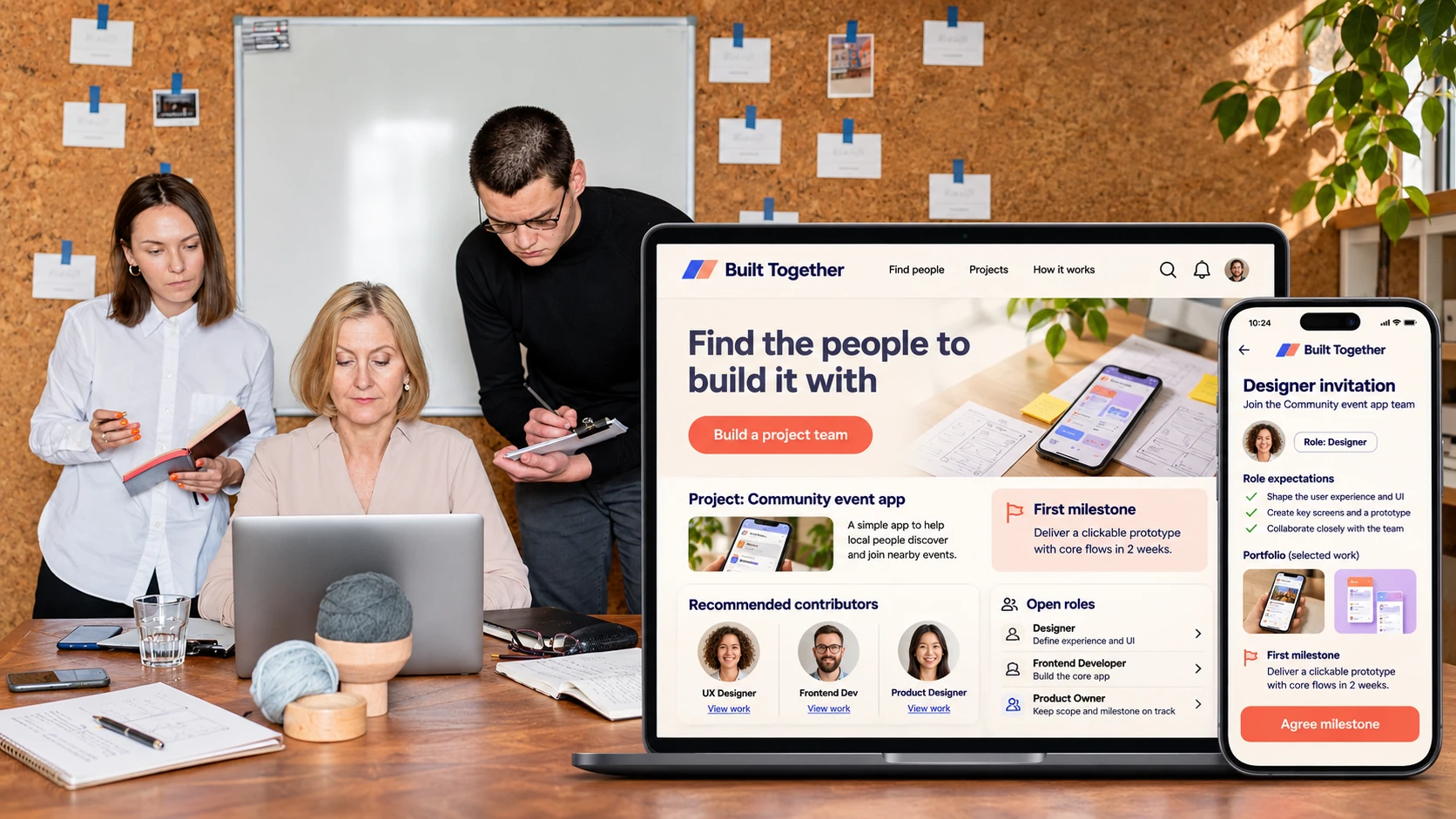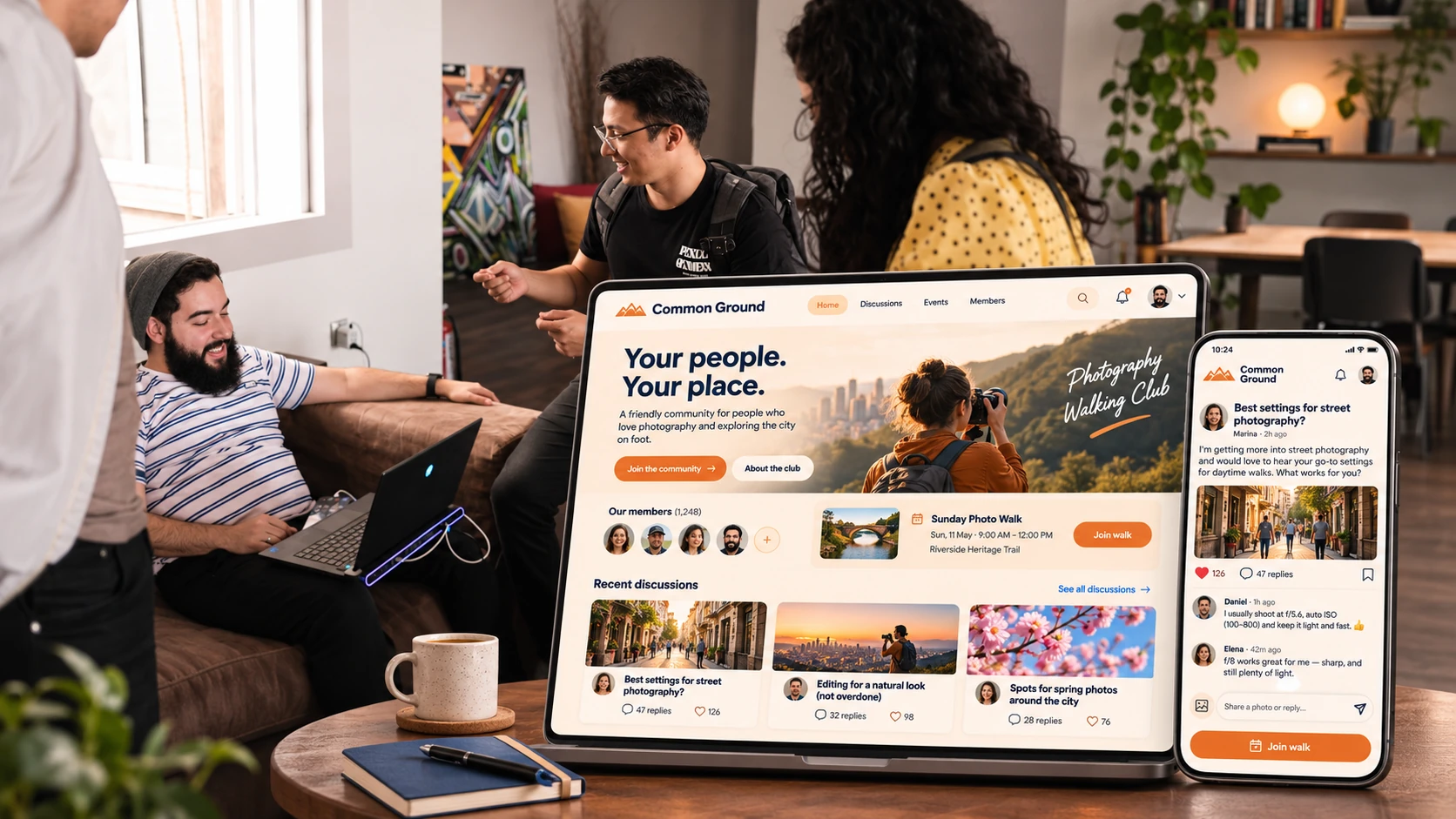
Someone is considering a major change and wants to hear from people who have already navigated something similar. One confident story is helpful but incomplete. Your service could bring several experiences into a carefully hosted conversation, making room for practical questions, different circumstances and the choice to take away only what fits.
A business you can
picture.
Start with one ordinary transition, such as returning to study or beginning self-employment. A facilitator hosts a small session with contributors whose relevant experience is openly described.
Who would be glad
you built it?
People exploring a life or work transition
Contextual experience from more than one perspective
Community organisations
A bounded conversation programme for members
Invited contributors
A respectful setting with clear sharing boundaries
Where the money
could come from.
Participants could pay for a defined hosted session, with contributors and the facilitator receiving agreed payments. Your share covers preparation, scheduling and support. Organisations may sponsor access, but the commercial promise remains a thoughtful conversation, not counselling, a personalised professional recommendation or a guaranteed resolution to a difficult decision.
The part you could
make your own.
Your possible difference is the variety of answers and the context behind them. Hearing why two people made different choices could help a participant think more clearly than a single success story presented as a formula.
An angle to test with the people you want to serve.Start with something
worth using.
Choose one non-emergency transition topic. Run a small hosted session with reviewed contributor briefs, clear participation rules and optional questions. Do not record by default; make any recording permission explicit.
- Publish the question and the contributors' experience.
- Let participants submit questions before the session.
- Share agreed takeaways without exposing private stories.
Give the promise
something to stand on.
You need capable hosts and contributors comfortable sharing within agreed limits. Moderation must distinguish personal experience from professional advice and avoid turning a vulnerable question into pressure to follow someone else’s path.
Set boundaries between peer experience and professional advice. Obtain consent for any recordings, moderate respectfully and let contributors choose what they are comfortable sharing.
Let a small beginning
teach you something.
Invite a relevant community to suggest questions for a pilot topic. Brief contributors carefully, run a bounded session and ask participants which new questions they now want to explore rather than whether they copied a speaker’s choice.
Do participants leave with clearer questions and an understanding that contributors’ experiences may not apply directly to their own circumstances?
Look for these signs
- Contributors stay within agreed boundaries
- Different experiences receive respectful attention
- Participants identify useful questions to explore next
A little more
clarity.
Is this a professional advice service?
The initial concept is moderated peer experience. If a participant needs qualified advice, make that distinction clear and do not let a contributor’s confidence substitute for appropriate professional support.
Can contributors decline a question?
Yes. Agree that boundary before the session and let the host support it. A paid conversation should never require someone to reveal private experiences they have not chosen to share.
What should my first version focus on?
Start with the first test described here, then build around the part people actually use and would pay to keep.
Now picture it
with your name on it.
Your people. Your priorities. The version you keep thinking about. Answer a few questions and leave with a starting plan you can keep.
Free to explore. No account or email needed for your starting plan.