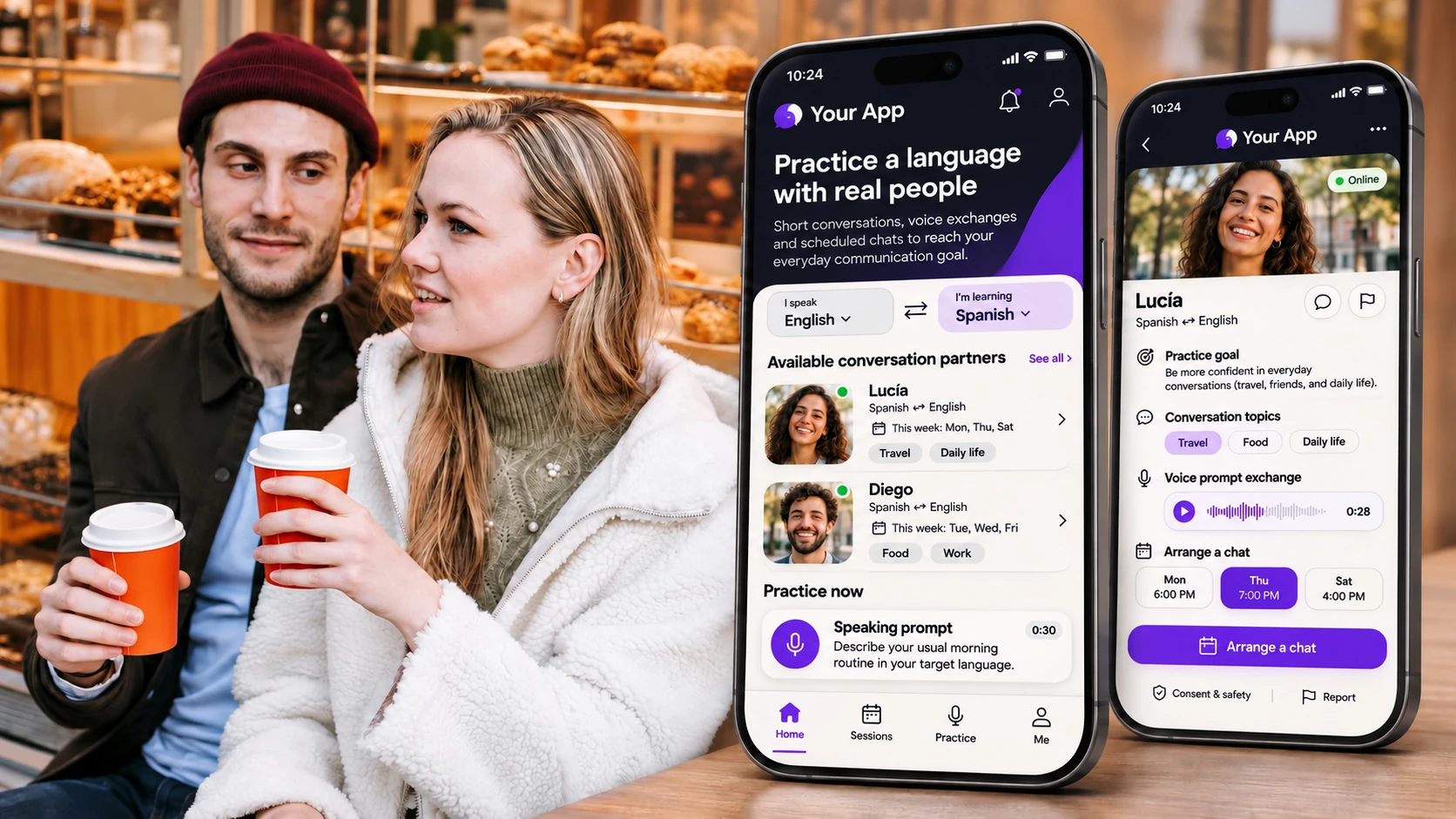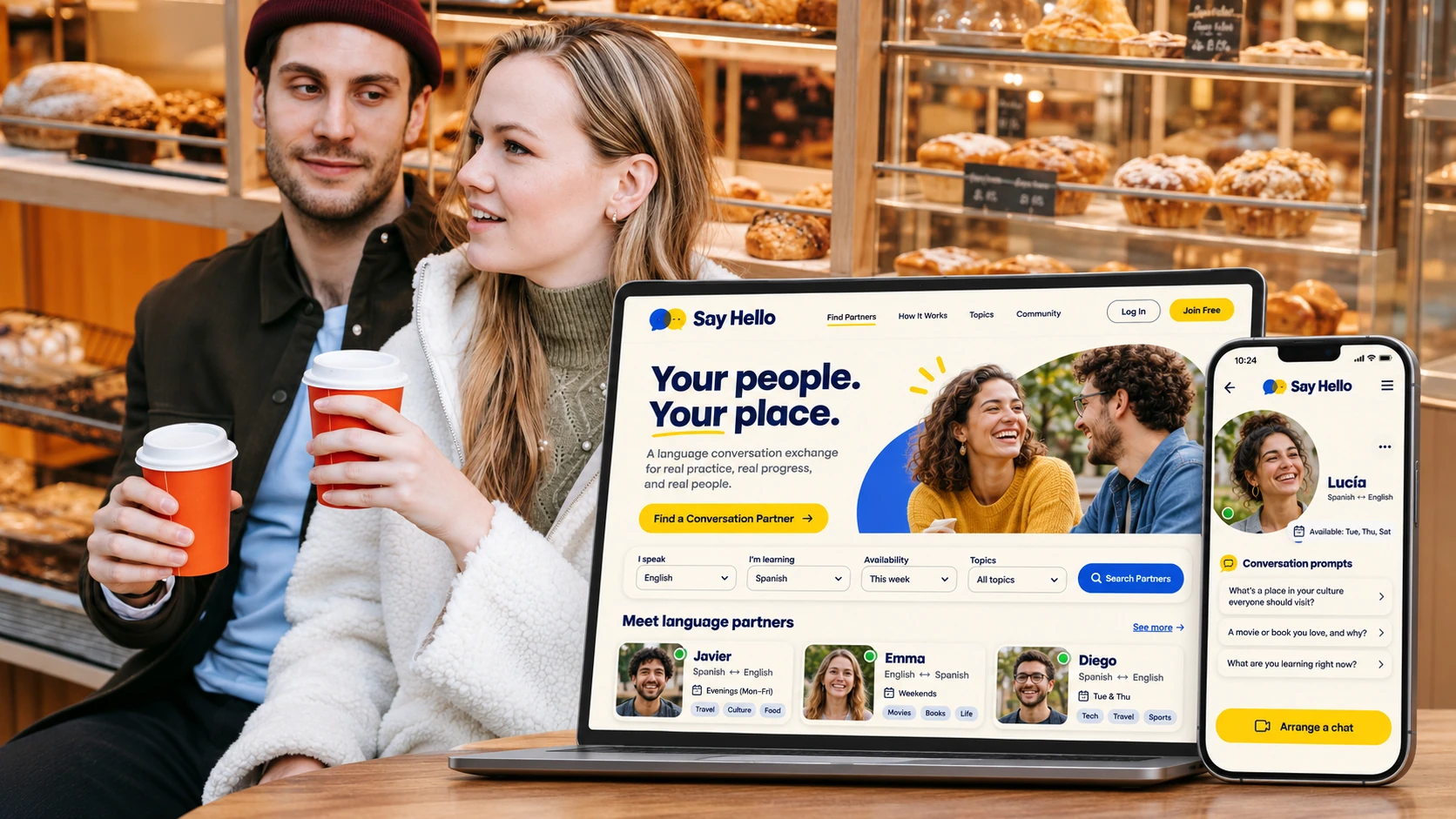
A learner understands a written article but freezes when someone asks a simple question aloud. They need a patient conversation, not another vocabulary list. Your exchange could bring compatible practice partners together around agreed time, language balance and prompts that make the first few minutes less intimidating.
A business you can
picture.
Create a conversation exchange for a clearly defined learner community. Match compatible practice goals and availability, then offer simple prompts that help a first conversation get started.
Who would be glad
you built it?
Adult language learners
Practise speaking in a supportive setting.
Peer conversation partners
Arrange balanced exchanges.
Language clubs
Host structured practice groups.
Where the money
could come from.
Members could pay for a hosted practice club with a defined session schedule. Begin with that service rather than charging vaguely for access to everyone. Hosts, moderation and scheduling support create costs; optional professional lessons can have a separate commercial arrangement if the community later asks for them.
The part you could
make your own.
A thoughtful first conversation could be your difference. Compatible goals, gentle prompts and an agreed language split may help hesitant speakers participate. Test whether members return for that experience rather than merely collecting matches.
An angle to test with the people you want to serve.Start with something
worth using.
Choose one learner community or language pairing. Offer profiles with practice goals, availability, session prompts and controlled introductions. Keep professional paid lessons clearly separate from peer exchange so expectations do not blur.
- Language goals and partner profiles
- Session scheduling and conversation prompts
- Reporting and communication controls
Give the promise
something to stand on.
You need community hosting and a clear approach to respectful interaction. Language goals, time zones and willingness to help each other matter, while reporting and blocking tools support the boundaries members need.
Community moderation, privacy and boundaries around contact are part of the service. Members should control what they share and have an easy way to end an uncomfortable interaction.
Let a small beginning
teach you something.
Recruit a small willing group and host the first practice sessions. Ask participants whether the pairing, speaking balance and prompts helped them continue, then adjust the matching criteria from those experiences.
Do partners complete a balanced conversation and choose to arrange another session without needing constant intervention?
Look for these signs
- Partners agree their practice goals
- Sessions share speaking time fairly
- Members can report unsuitable contact
A little more
clarity.
Why would learners pay for a peer exchange?
The paid value may be hosted clubs, structured practice or thoughtful coordination rather than access to another learner alone. Test the exact offer people value instead of assuming every introduction deserves a subscription.
Can tutors offer lessons too?
They can if the distinction is explicit. Label professional lessons, prices and qualifications separately from reciprocal peer practice so members know whether they are joining an exchange or buying instruction.
Tandem is a reference for language conversation exchange.
Now picture it
with your name on it.
Your people. Your priorities. The version you keep thinking about. Answer a few questions and leave with a starting plan you can keep.
Free to explore. No account or email needed for your starting plan.