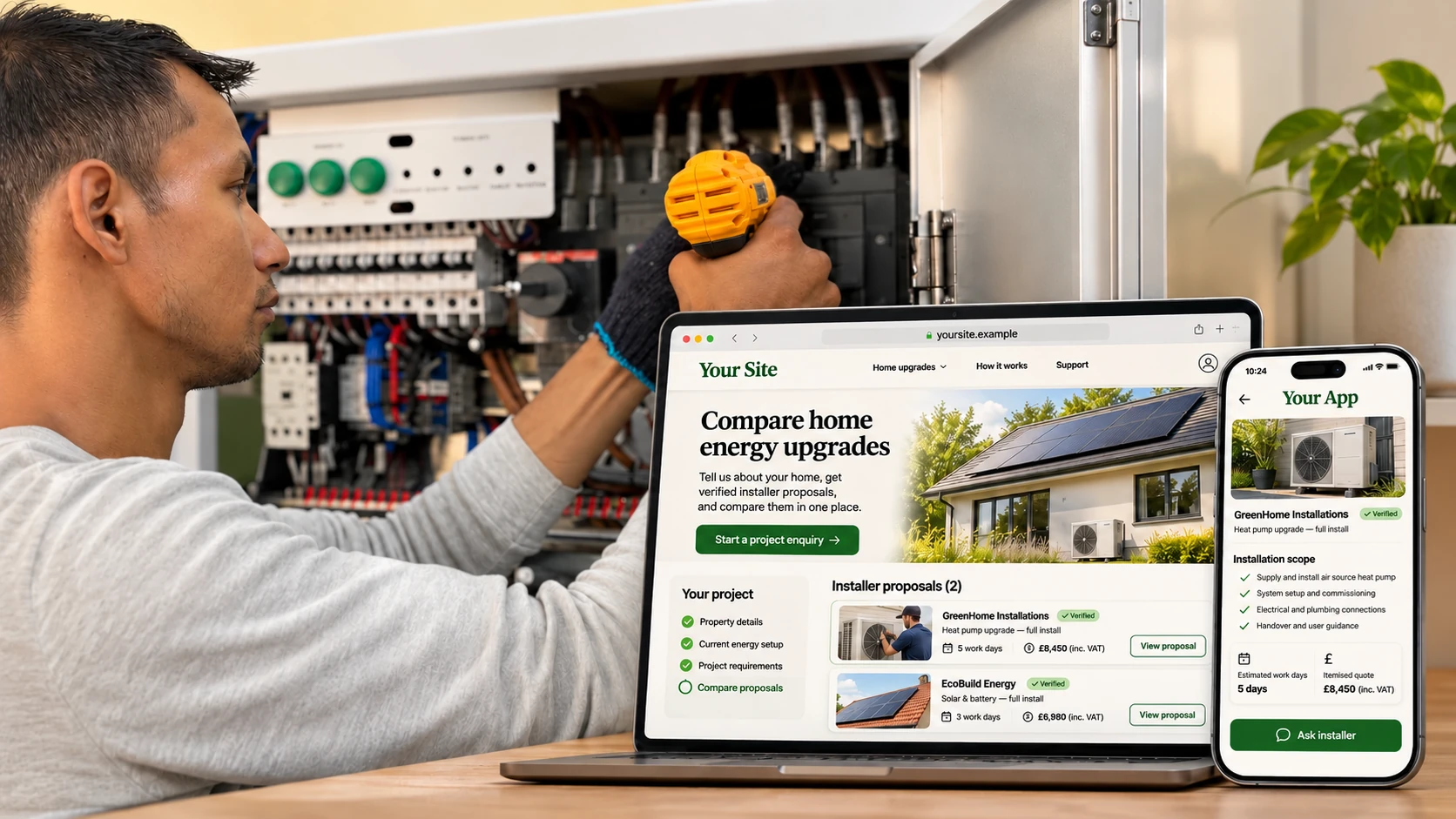
A homeowner receives two solar proposals with different equipment, assumptions and headline savings. They cannot tell what is comparable. Your service could organise the property's needs and the installers' offers into understandable fields, helping the homeowner ask better questions before committing to work.
A business you can
picture.
Create a project enquiry and comparison platform for one home energy category. Gather relevant property information and present installer proposals using consistent, understandable fields.
Who would be glad
you built it?
Homeowners planning an improvement
Compare suitable project proposals.
Qualified installers
Respond to well-defined enquiries.
Property advisers
Help clients organise relevant project information.
Where the money
could come from.
A disclosed installer referral arrangement or a clearly scoped homeowner planning fee could fund the service. Choose the operating role before pricing. Technical review, supplier checks and enquiry support cost time; any commission should be visible and should not silently determine supposedly independent comparisons or recommendations.
The part you could
make your own.
Comparable proposal detail could be your edge. Showing scope, exclusions and assumptions together may help a homeowner more than sorting by an estimated saving. Test whether the service improves the questions they ask qualified installers.
An angle to test with the people you want to serve.Start with something
worth using.
Choose one energy project type and a small installer group. Collect relevant property information, explain quote assumptions and compare scope, equipment, exclusions and support. Keep technical assessment with qualified professionals before suggesting a final choice.
- Property and project briefs
- Installer profiles and quotation requests
- Comparable equipment and scope details
Give the promise
something to stand on.
You need a focused project category and appropriate technical expertise. Installer suitability, property assessment and the assumptions behind performance claims require careful review; the platform should not imply technical approval merely because a provider pays to appear.
Installer qualifications, equipment information and savings assumptions require review. The platform should support qualified assessment rather than inventing site-specific performance from a short form.
Let a small beginning
teach you something.
Review anonymised proposals with a suitable expert and intended homeowners. Test whether the comparison helps them identify important differences and missing questions, then pilot a limited enquiry process with clearly defined provider responsibilities.
Can the homeowner compare equivalent scope and understand the assumptions behind any claimed performance or savings?
Look for these signs
- Proposals identify assumptions and exclusions
- Installer roles and qualifications are clear
- Customers understand which assessment remains necessary
A little more
clarity.
Can the site guarantee energy savings?
Actual results depend on the property, equipment, installation and use. Show the assumptions behind any estimate and obtain appropriate technical review; do not present a sales projection as a guaranteed household outcome.
Does a paid installer listing mean independent approval?
No. Clearly distinguish commercial participation from any checks performed. Explain the selection process and provider responsibilities so homeowners understand what the platform has and has not established.
EnergySage is a reference for home energy comparison services.
Now picture it
with your name on it.
Your people. Your priorities. The version you keep thinking about. Answer a few questions and leave with a starting plan you can keep.
Free to explore. No account or email needed for your starting plan.