Health & wellnessEstablished model
Caregiver discovery and coordination service

Help a family find a more supported next step.

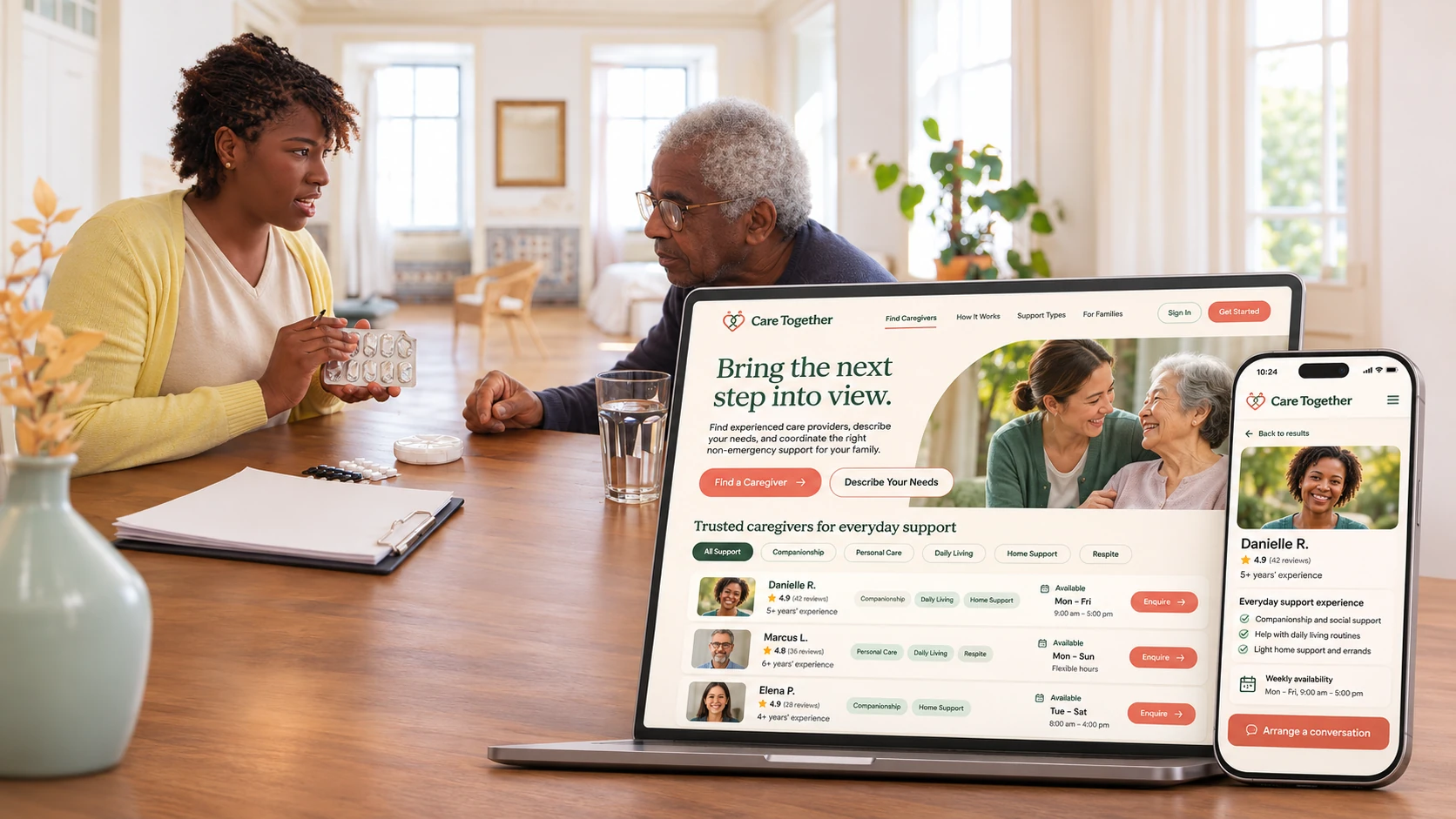
Looking for help with care can involve personal questions and a great deal of uncertainty. Build a service that helps families understand a provider’s role, availability and qualifications before arranging a conversation.

Make this fit me
You could also build this as a mobile app
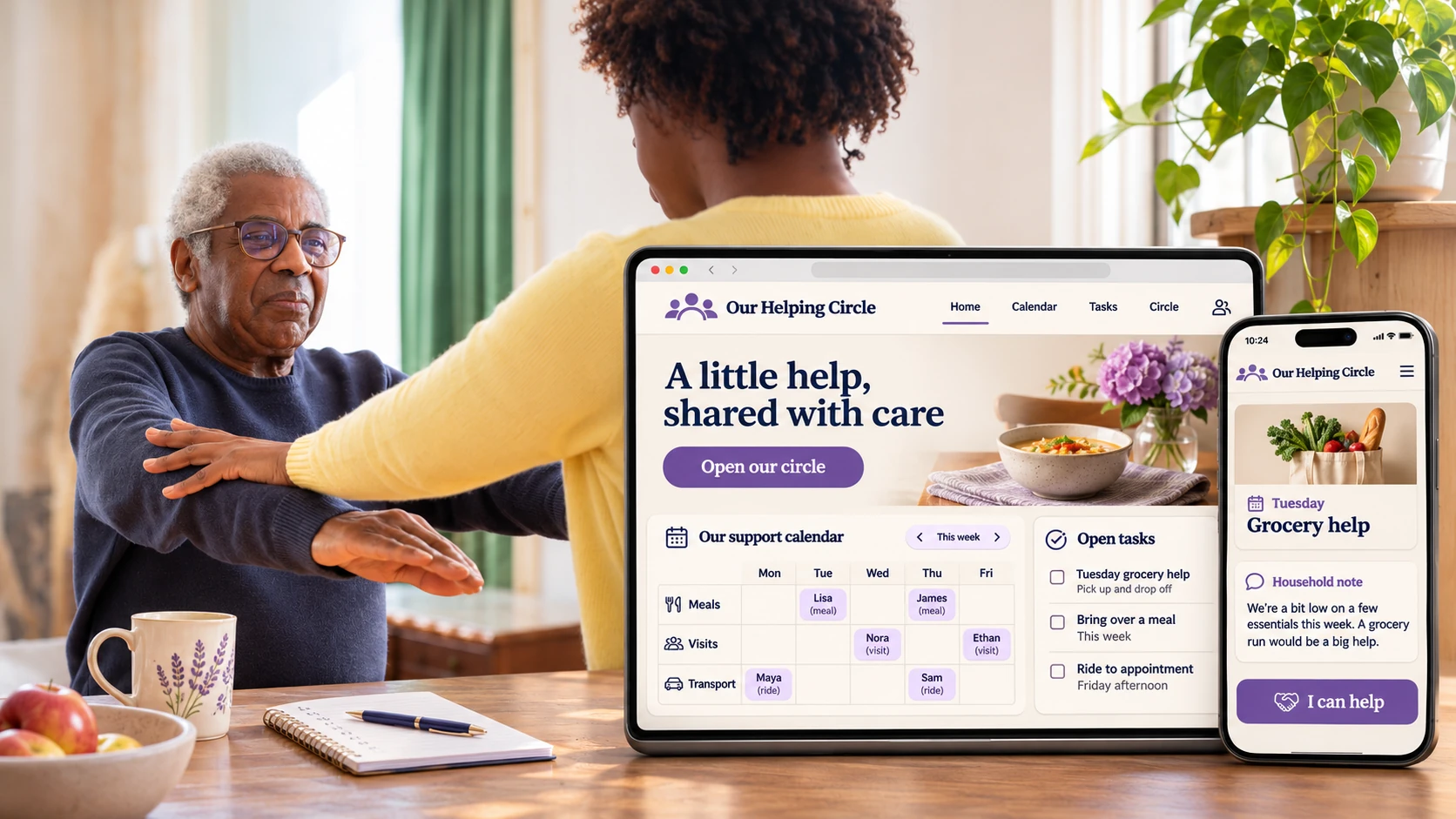
Caregiver discovery and coordination service concept: real human activity with a bespoke website and matching phone interface.Illustrative concept
IMAGINE THIS MOMENT

A family is arranging non-emergency help for a relative and does not know which provider can meet the actual routine. Your service could help them describe tasks, timing and expectations, then approach suitable professionals with a clearer starting point rather than relying on vague profiles and hurried calls.

A business you can
picture.

Create a care-provider directory and coordination service for a defined type of non-emergency support. Help families describe their needs and approach providers with relevant experience.

Who would be glad
you built it?

Families arranging support

Explain needs and compare practical options.

Appropriate care providers

Respond to relevant enquiries.

Authorised care coordinators

Keep agreed arrangements and contacts together.

Where the money
could come from.

Providers could pay for appropriate enquiry-management tools, or families could buy a clearly scoped coordination service where permitted. Choose the model after relevant professional review. Checks, sensitive support and managing changes require resources; do not select a commission structure first and leave care responsibilities unclear afterwards.

The part you could
make your own.

A more understandable first conversation could distinguish your service. Clear task descriptions, provider roles and consent-based information sharing may reduce uncertainty. Test whether families feel better prepared to ask the right questions, without promising a care outcome.

An angle to test with the people you want to serve.

Start with something
worth using.

Start with a reviewed provider group and a structured enquiry for one non-emergency support type. Show roles, stated qualifications, availability and next steps. Keep suitability assessment and service agreements with clearly identified responsible parties.

  • Provider profiles and service boundaries
  • Availability and enquiry requests
  • Family-controlled information sharing

Give the promise
something to stand on.

WHAT YOU BRING

You need a precisely defined care category and appropriate local professional review. Provider checks, consent, safeguarding and the distinction between directory, placement and care delivery should shape the operating model before you charge for introductions.

Caregiver checks, safeguarding and sensitive information need real operational capacity. Explain exactly what has been checked. A directory listing cannot substitute for a family’s assessment or appropriate professional review.

Let a small beginning
teach you something.

Work with suitable professionals and willing family representatives to review sample enquiries. Test whether the questions capture practical needs without demanding unnecessary sensitive detail, then pilot under a carefully agreed service scope.

THE QUESTION TO TEST

Can the family and provider understand the requested support and identify which suitability questions still require professional assessment?

Look for these signs

  • Provider roles are clearly explained
  • Enquiries reach agreed recipients
  • Responsibilities are understood before arrangements begin
WHEN THE FIRST VERSION HAS TAUGHT YOU MORE
Where you could take it next

Add scheduling and ongoing coordination only when the provider network and support process can carry the responsibility.

A little more
clarity.

Does a profile check guarantee a provider is suitable?

No. Explain what was checked and when, while recognising that a particular person's needs may require further assessment. A directory should not convert a basic check into a broad promise about care quality.

Is the platform itself responsible for delivering care?

That depends on the operating model and must be explicit. A directory, coordination service and care provider have different responsibilities; families should know which organisation they are contracting with for each part.

SOMETHING TO LEARN FROM

Care.com is a related reference for caregiver discovery.

WHAT COULD GO INSIDE

A few additions
to explore.

Member profiles and directoryHelp members discover the experience already in their community, with profiles they control and contact choices they understand.Enquiry and quote request formsGive an interested visitor a comfortable way to begin the conversation, with enough detail for your team to respond thoughtfully.Private groups and local chaptersGive people a smaller room for the conversations that fit their location, stage or shared interest, with a host who keeps it useful.
MAKE ROOM FOR YOUR VERSION

Now picture it
with your name on it.

Your people. Your priorities. The version you keep thinking about. Answer a few questions and leave with a starting plan you can keep.

Free to explore. No account or email needed for your starting plan.
PICTURE THE MOBILE APPCare coordination app

Help the people who care stay on the same page.

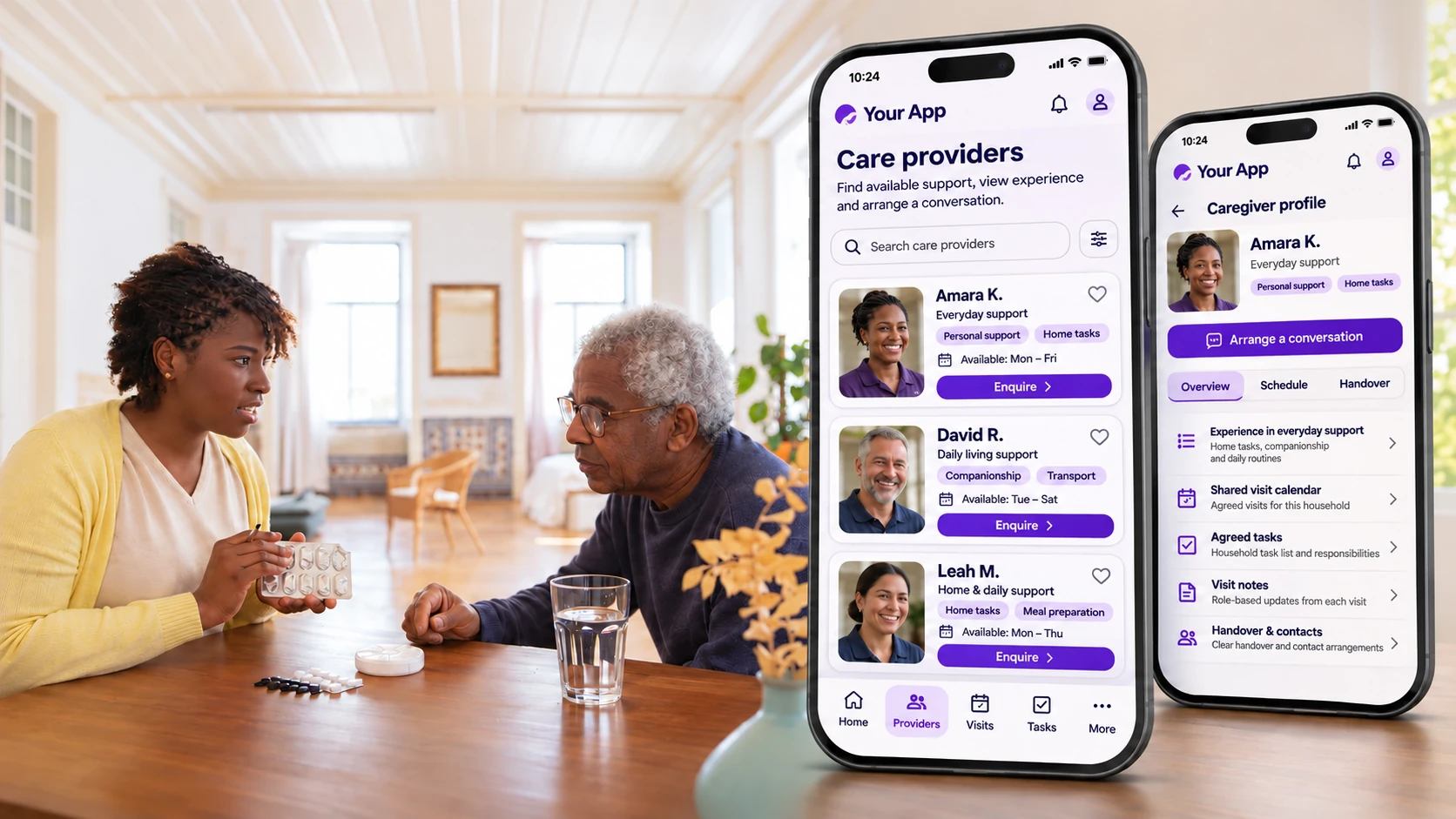
Care often depends on several people remembering small but important things. You could build an app that brings an agreed schedule, practical preferences and updates together for a household and its authorised helpers. Begin with coordination people can understand, with clear permission to see and change each part.

An elderly man sits with a caregiver discussing medication at a table in a bright room. Two phone screens preview the care coordination app, with no desktop view.App concept
IMAGINE THIS MOMENT

A family member arrives for a visit without knowing that another helper has already completed an errand. Someone else is waiting for an update. Your app could give authorised people a shared view of agreed practical tasks and handovers, while respecting the preferences and privacy of the person receiving support.

One useful moment.
A reason to open it.

An authorised helper opens the next visit, sees the agreed tasks and leaves a short completion note for the people permitted to receive it.

Who would be glad
you built it?

Households coordinating support

Know who is doing which practical task.

Authorised helpers

Read the relevant handover before a visit.

Care coordinators

See gaps in an agreed schedule.

A place in their life.
At the right moment.

Why it belongs on a phone

Updates often happen during a visit or while someone is travelling between responsibilities. Quick records and timely notifications help authorised people coordinate without relying on a chain of separate messages.

A reason to come back

Households and helpers return to prepare for the next visit and understand what was recorded. The app should reduce confusion without suggesting that a checkmark proves care was delivered.

On-the-go recordsTimely remindersLive coordination

Where the money
could come from.

A household could pay for a defined coordination workspace with authorised helper access. The fee covers scheduling, records and support, not the care visits themselves. Permission management, account assistance and secure information handling create costs. Organisational licences may follow after the household workflow has been properly evaluated.

The part you could
make your own.

A practical, consent-aware handover for one type of household could be a useful focus. Test whether it reduces repeated explanations while preserving the supported person's control over personal information.

An angle to test with the people you want to serve.

Start with something
worth using.

Begin with visits, agreed practical tasks and role-limited notes. Define who can change the schedule and who receives updates. Keep care-provider discovery and clinical records outside the first coordination pilot.

  • Shared visit calendar and responsibilities
  • Practical task lists agreed by the household
  • Visit notes with role-based access
  • Clear handover and contact arrangements

Give the promise
something to stand on.

WHAT YOU BRING

You need experience with household coordination and a clear permission model. The person receiving support should be involved as appropriate, and clinical responsibilities must remain with the relevant qualified providers.

Caregiver checks, safeguarding and sensitive information need real operational capacity. Explain exactly what has been checked. A directory listing cannot substitute for a family’s assessment or appropriate professional review.

Let a small beginning
teach you something.

Work with a willing household and suitable coordinator using fictional or carefully limited information first. Walk through a missed handover and test whether each person can find only the details they need.

THE QUESTION TO TEST

Can the next authorised helper understand the agreed practical tasks without exposing information unrelated to their role?

Look for these signs

  • Visits have a named responsible person.
  • Handover notes reach authorised readers.
  • Changes to the plan are clearly visible.
WHEN THE FIRST VERSION HAS TAUGHT YOU MORE
Where you could take it next

Add scheduling and ongoing coordination only when the provider network and support process can carry the responsibility.

A little more
clarity.

Does the app provide care itself?

A coordination product organises information; it does not by itself supply or supervise care. Any service involving providers needs clear standards, responsibilities and a separate operating model.

Can every family member see every note?

Not automatically. Access should reflect consent, the person's preferences and the helper's role. Sensitive information should not become visible simply because someone joins a family group.

SOMETHING TO LEARN FROM

Care.com is a related reference for caregiver discovery.

WHAT COULD GO INSIDE

A few additions
to explore.

Member profiles and directoryHelp members discover the experience already in their community, with profiles they control and contact choices they understand.Enquiry and quote request formsGive an interested visitor a comfortable way to begin the conversation, with enough detail for your team to respond thoughtfully.Private groups and local chaptersGive people a smaller room for the conversations that fit their location, stage or shared interest, with a host who keeps it useful.
MAKE ROOM FOR YOUR VERSION

Now picture it
with your name on it.

Your people. Your priorities. The version you keep thinking about. Answer a few questions and leave with a starting plan you can keep.

Free to explore. No account or email needed for your starting plan.
KEEP THE POSSIBILITIES OPEN

Something else
might speak to you.