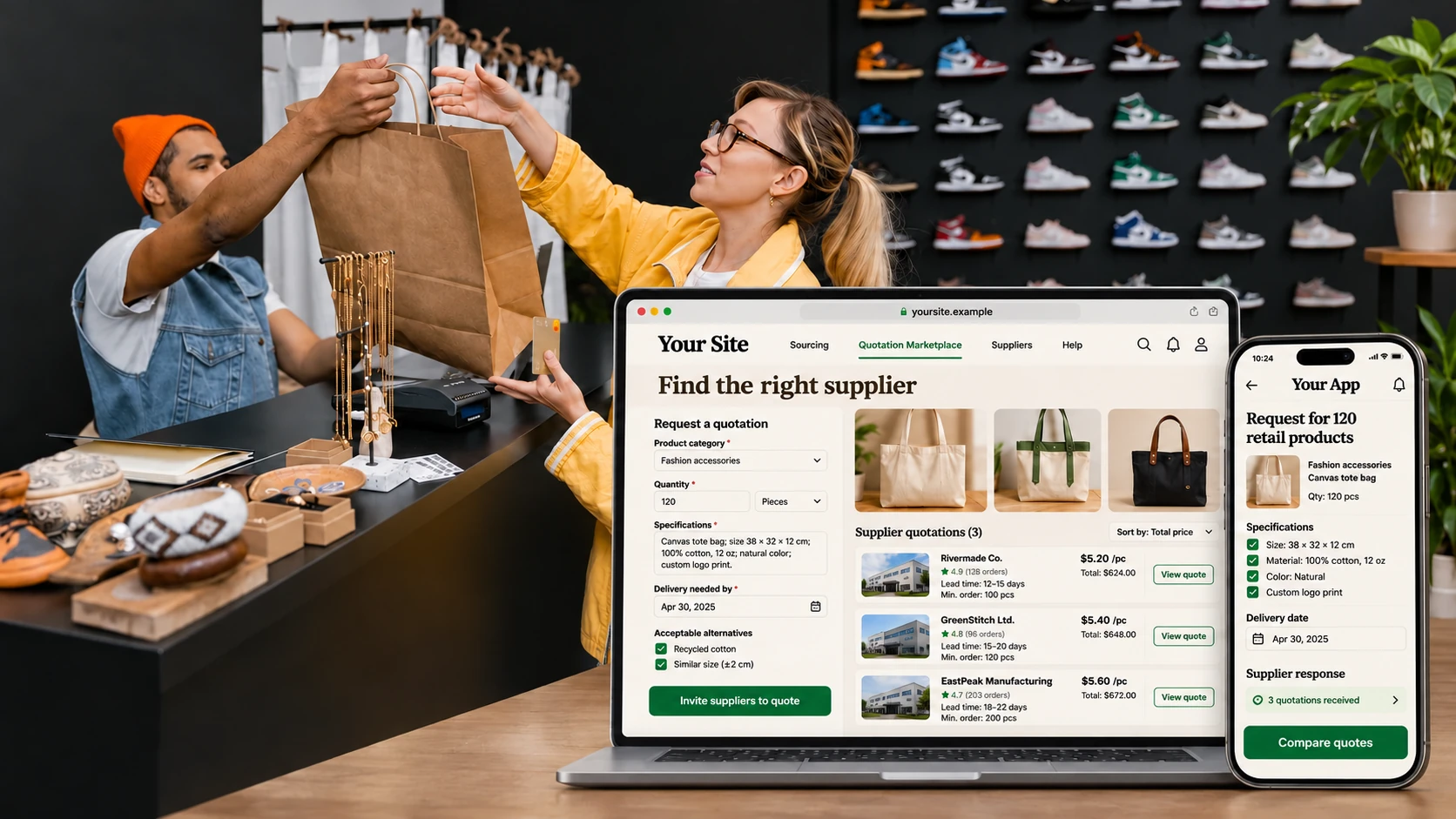
An operations manager requests packaging quotes and receives three prices for three subtly different specifications. Comparing the totals is almost meaningless. Your exchange could help the buyer define quantity, material, dimensions and delivery needs first, giving suitable suppliers a clearer basis for a useful response.
A business you can
picture.
Create a quotation marketplace for a focused product category. Capture quantities, specifications, delivery needs and acceptable alternatives before inviting suitable suppliers to respond.
Who would be glad
you built it?
Business purchasing teams
Prepare consistent quotation requests.
Specialist suppliers
Respond to suitable, defined requirements.
Small operators
Compare offers without a dedicated buying department.
Where the money
could come from.
Suppliers could pay for a defined quotation workspace serving relevant buyers, or a disclosed fee could apply to completed orders. Start with one route. Supplier onboarding, request clarification and buyer support create costs; avoid building revenue on selling the same poorly specified enquiry widely without a clear service promise.
The part you could
make your own.
A strong category-specific brief could be your advantage. Useful dimensions, grades and acceptable alternatives may save both sides repeated clarification. Test whether the exchange improves the quality of offers, not just the number received.
An angle to test with the people you want to serve.Start with something
worth using.
Focus on one supply category. Build a structured request, supplier invitation and comparison view with price, specification, timing and exclusions. Keep introductions supervised until you understand which requests suppliers can realistically fulfil.
- Structured buying requests
- Supplier quotations and clarification questions
- Comparable specifications and offer deadlines
Give the promise
something to stand on.
You need knowledge of the product category and a sensible supplier review process. The value comes from clear requirements and relevant responses, so incomplete or indiscriminately distributed leads can undermine the whole offer.
Check supplier information and keep quotations versioned. Prices, taxes, shipping and validity dates must be explicit. A comparison screen cannot replace technical review where the goods require it.
Let a small beginning
teach you something.
Review recent confusing quotations with buyers, then use their actual requirements to test a small supplier group. Ask both sides whether the brief reduced clarification and whether the resulting offers were comparable.
Can the buyer identify meaningful differences between offers without discovering that each supplier priced a different requirement?
Look for these signs
- Requests contain essential specifications
- Suppliers receive relevant invitations
- Comparisons show exclusions and delivery terms
A little more
clarity.
Should the lowest quotation automatically win?
The buyer may also need to consider specification, timing, support and exclusions. Present comparable information clearly and leave the decision with the buyer rather than treating price alone as proof of suitability.
Can suppliers be charged for every enquiry?
Only if the service and quality criteria are clear. A workflow subscription or completed-order fee may be easier to assess than paying for vague leads; test what suppliers actually find valuable.
Alibaba RFQ is a reference for buyer quotation requests.
Now picture it
with your name on it.
Your people. Your priorities. The version you keep thinking about. Answer a few questions and leave with a starting plan you can keep.
Free to explore. No account or email needed for your starting plan.