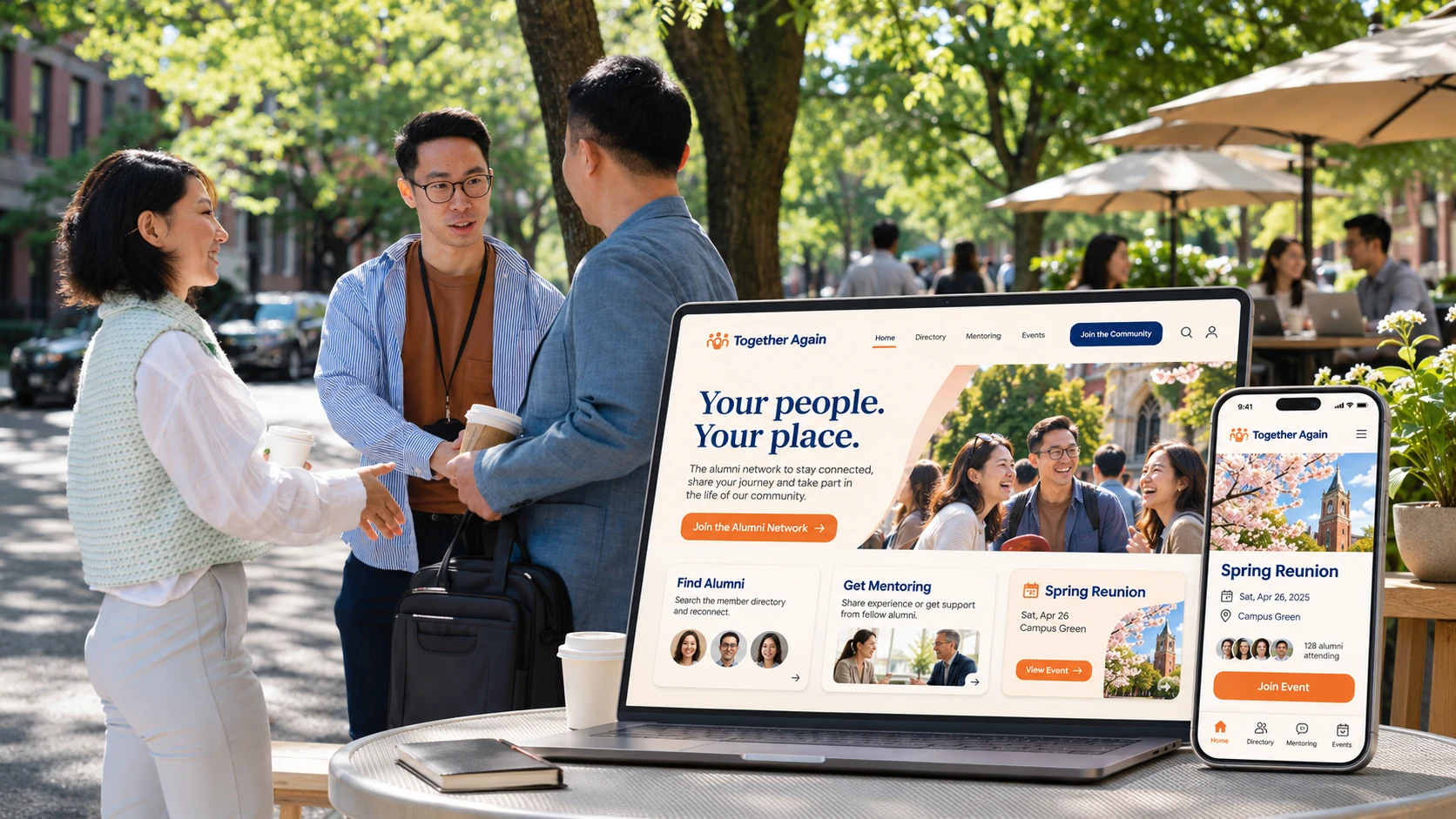
A former student would gladly advise someone entering their profession, but the institution only contacts them for a reunion or donation. Your network could create a more useful relationship: clear ways to contribute, relevant introductions and control over which personal details are shared.
A business you can
picture.
Offer an alumni platform to a school, programme or institution. Help former students choose what to share, find relevant connections and participate in activities organised by their community.
Who would be glad
you built it?
Schools and programmes
Maintain a meaningful alumni relationship.
Recent graduates
Find relevant experience and guidance.
Established alumni
Choose how to contribute and reconnect.
Where the money
could come from.
An institution could pay for the platform, setup and a defined level of community support. That is separate from any donations or alumni dues. Data preparation, onboarding, permissions and event coordination carry costs; a managed programme should clearly state which activities your team runs and which remain with the institution.
The part you could
make your own.
Purposeful introductions could distinguish the network from a static directory. Match a specific mentoring question to someone who has opted to help, then test whether a small, well-framed conversation creates value for both participants.
An angle to test with the people you want to serve.Start with something
worth using.
Pilot with one institution or graduating group. Offer opt-in profiles, a mentoring-interest form and a hosted activity. Let members choose contact visibility and preferences before importing a large directory or enabling open messages.
- Member-controlled alumni profiles
- Mentoring requests and event invitations
- Institution updates and contribution opportunities
Give the promise
something to stand on.
You need institutional relationships and a careful approach to member permissions. Contact records are only a starting point; hosting useful activities and maintaining accurate participation choices are what keep the network alive.
Existing contact lists need permission and careful handling. Give members control over visibility, messages and removal. An institution should understand who manages invitations, updates and member support.
Let a small beginning
teach you something.
Invite a small range of alumni to help define the first useful activity. Test a few voluntary mentoring introductions and ask both sides whether the purpose, time commitment and contact boundaries were clear.
Do alumni choose a useful ongoing role in the community beyond updating a profile once?
Look for these signs
- Members control their contact preferences
- Introductions have an agreed purpose
- Activities attract voluntary repeat participation
A little more
clarity.
Can existing alumni records be published automatically?
Do not assume a contact list is permission for a public directory. Confirm the institution's appropriate use arrangements, give members understandable choices and keep sensitive details out of public views.
Should fundraising be the main experience?
It can be one institutional activity, but the network also needs value for alumni themselves. Keep giving requests transparent and separate from ordinary participation so members can choose their level of involvement.
Almabase is a reference for alumni engagement software.
Now picture it
with your name on it.
Your people. Your priorities. The version you keep thinking about. Answer a few questions and leave with a starting plan you can keep.
Free to explore. No account or email needed for your starting plan.