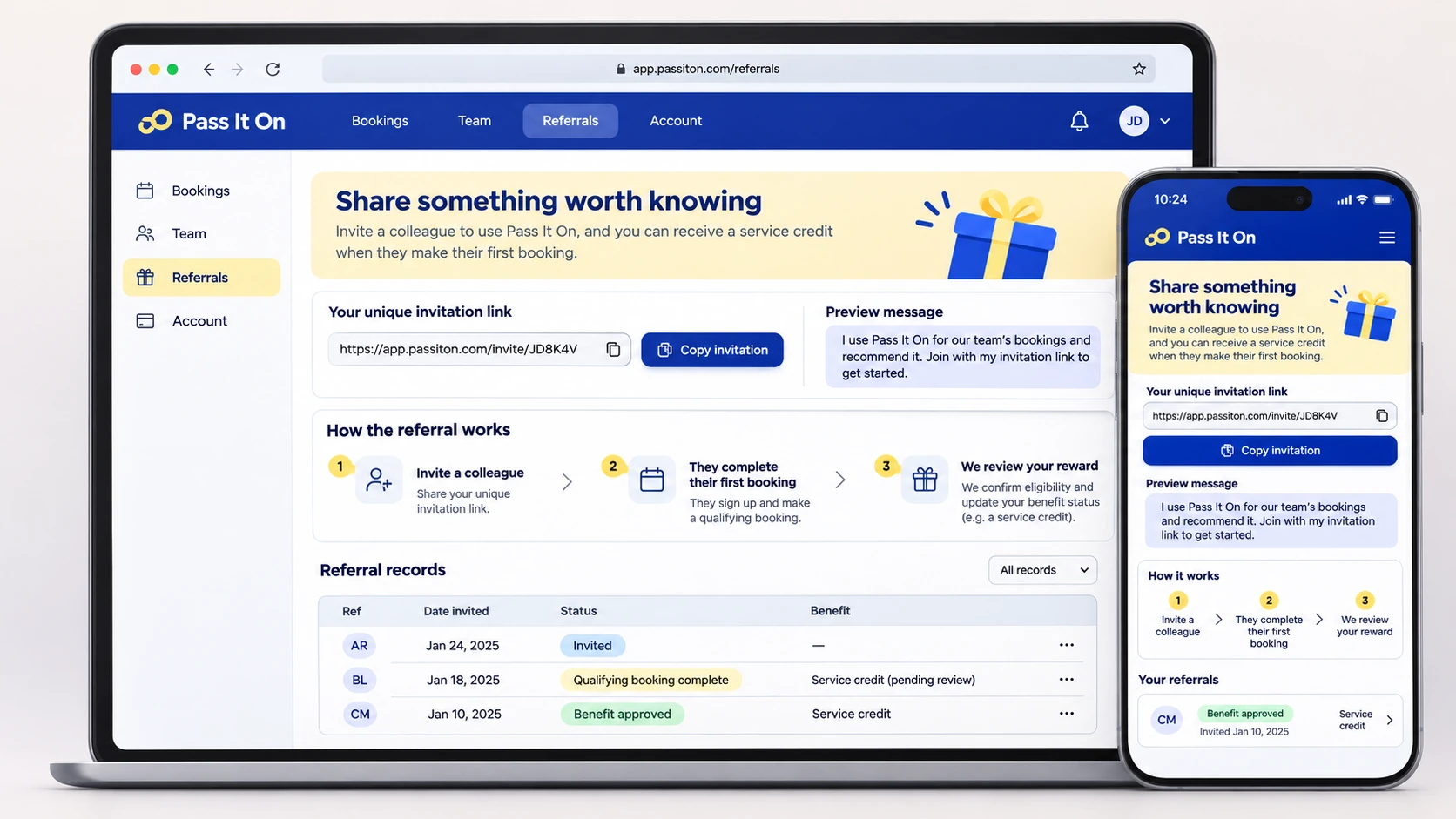
A customer recommends your service to a friend, but the friend lands on a general page and the referral is lost. An invitation feature could carry useful context into the first enquiry and show whether a defined benefit has become eligible. It should make sharing easy without turning goodwill into unsolicited messages.
A customer's recommendation points vaguely to the business, and neither side can tell whether the referral or promised benefit was recorded.
A clear invitation leads to the relevant offer, with eligibility and benefit status shown under understandable programme terms.
Where it could
make a difference.
Service businesses
Connect recommendations to relevant enquiries.
Membership operators
Offer a clear member invitation.
Commerce businesses
Track an agreed referral benefit.
Useful on: Business website, Online store, Membership website.
What this could mean
for your business.
Referrals can support new enquiries when people choose to recommend your work. Rewards, administration and support have costs, so review suitable completed business rather than invitation volume alone. Keep the commercial relationship visible so a recommendation remains understandable to the person receiving it.
Start with something
worth using.
Start with a shareable invitation, clear terms and a visible benefit status. Let customers choose whom to share with themselves. Review disputed or unusual cases before automating rewards broadly.
- A shareable invitation
- Referral and eligibility records
- A clear benefit status
Give the promise
something to stand on.
You need sustainable programme terms and reliable records of the qualifying action. Decide who receives a benefit, when it becomes available and how returns or cancellations affect eligibility.
Explain who qualifies, when a benefit is earned and what happens if the underlying order is reversed. Avoid enrolling the referred person in unwanted messages.
- Sustainable programme rules
- Reliable action tracking
- A review and support owner
How it fits what you already have
Check referral identifiers, customer records and qualifying order or membership events. Define duplicate attribution, cancellations and review access so rewards follow the actual terms rather than the first unverified click.
Let a small beginning
teach you something.
Ask willing customers to review the invitation wording and follow a test referral with a colleague. Check whether both sides understand the benefit and the action required for it to apply.
Can both people understand the referral relationship and qualifying action without mistaking an invitation for a guaranteed reward?
Look for these signs
- Invitations lead to the relevant offer.
- Eligibility reflects the actual qualifying action.
- Disputed referrals have a review owner.
A little more
clarity.
Can we message a customer's contacts automatically?
Keep sharing under the customer's control and respect the recipient's choices. The first version can provide a clear link they choose to send, without uploading an address book.
Should every referral earn a reward immediately?
That depends on your terms. A completed purchase or membership may be the qualifying event, with returns and cancellations handled clearly before a benefit is final.
Could this work with my existing website?
We would check how your current website is built, what it already does and which services need to connect. That helps us choose a suitable addition and avoid paying twice for something you already have.
What would this change
in your business?
Your customers. Your working day. The part you would love to make easier. Answer a few questions and leave with a starting plan you can keep.
Free to explore. No account or email needed for your starting plan.