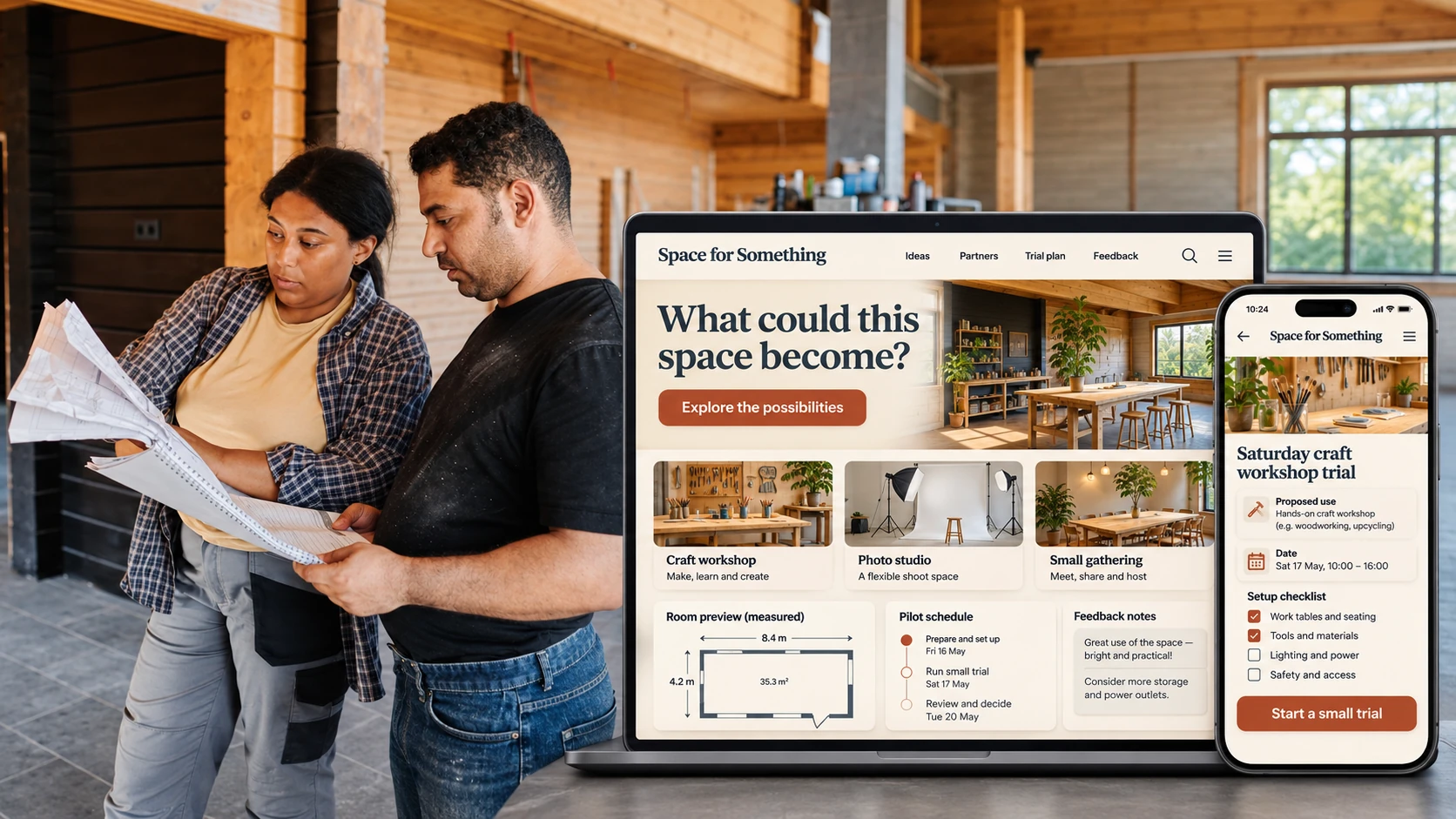
A workshop stands quiet on weekends and its owner wonders whether it could host classes, a studio or a small event. Each possibility sounds attractive until practical questions begin. Your service could turn a few ideas into realistic operating scenarios, helping the owner decide whether a limited trial is worth investigating.
A business you can
picture.
Choose one space category and location. Owners describe the property, a coordinator develops possible uses with suitable specialists and interested operators respond to a clear brief.
Who would be glad
you built it?
Owners of underused rooms or premises
A structured way to explore suitable uses
Small organisations with spare space
Practical scenarios connected to their own goals
Prospective local operators
A clearer brief for a possible operating arrangement
Where the money
could come from.
An owner could pay a fixed fee for the exploration package and review meeting. That fee covers interviews, scenario preparation and coordination, with professional assessments separately commissioned. The product should sell a clearer decision, not speculative rent or income figures. Any later fee for arranging an operator must be disclosed before that recommendation is made.
The part you could
make your own.
Your proposed edge is showing an ordinary operating day for each use: arrivals, setup, noise, cleaning and closing. Those details may help an owner judge fit more honestly than a glamorous rendering alone.
An angle to test with the people you want to serve.Start with something
worth using.
Offer one exploration package for a specific space. Document the owner’s goals and known constraints, outline a few bounded uses and identify unresolved checks. Separate the proposal from permission to host an actual activity.
- Capture dimensions, access and owner preferences.
- Compare proposed uses and their operating needs.
- Plan a limited trial with named responsibilities.
Give the promise
something to stand on.
You need the ability to understand a space and coordinate appropriate specialist questions. Permissions, access, property agreements and safety need qualified local review before an idea becomes an operating plan.
Planning, permissions, safety and property agreements need appropriate local review. The platform should record what has been checked and keep a proposal distinct from permission to operate.
Let a small beginning
teach you something.
Invite an owner with a idle space to explore one or two uses. Review the scenarios with relevant prospective operators and specialists, then ask which assumptions need checking before even a small trial.
Can the owner explain the practical work, unresolved checks and personal fit of a proposed use before pursuing it?
Look for these signs
- Scenarios reflect the space’s actual constraints
- Professional questions are identified clearly
- The owner can choose a reasoned next step
A little more
clarity.
Does the exploration approve a new use?
No. A proposal is a way to think through possibilities. Any required permissions, property consent and specialist assessments must be completed through appropriate channels before operation.
Can we tell an owner what the space will earn?
Only use evidence-based, clearly qualified analysis when appropriate expertise and facts support it. The initial concept can help compare operating requirements without inventing future income.
What should my first version focus on?
Start with the first test described here, then build around the part people actually use and would pay to keep.
Now picture it
with your name on it.
Your people. Your priorities. The version you keep thinking about. Answer a few questions and leave with a starting plan you can keep.
Free to explore. No account or email needed for your starting plan.