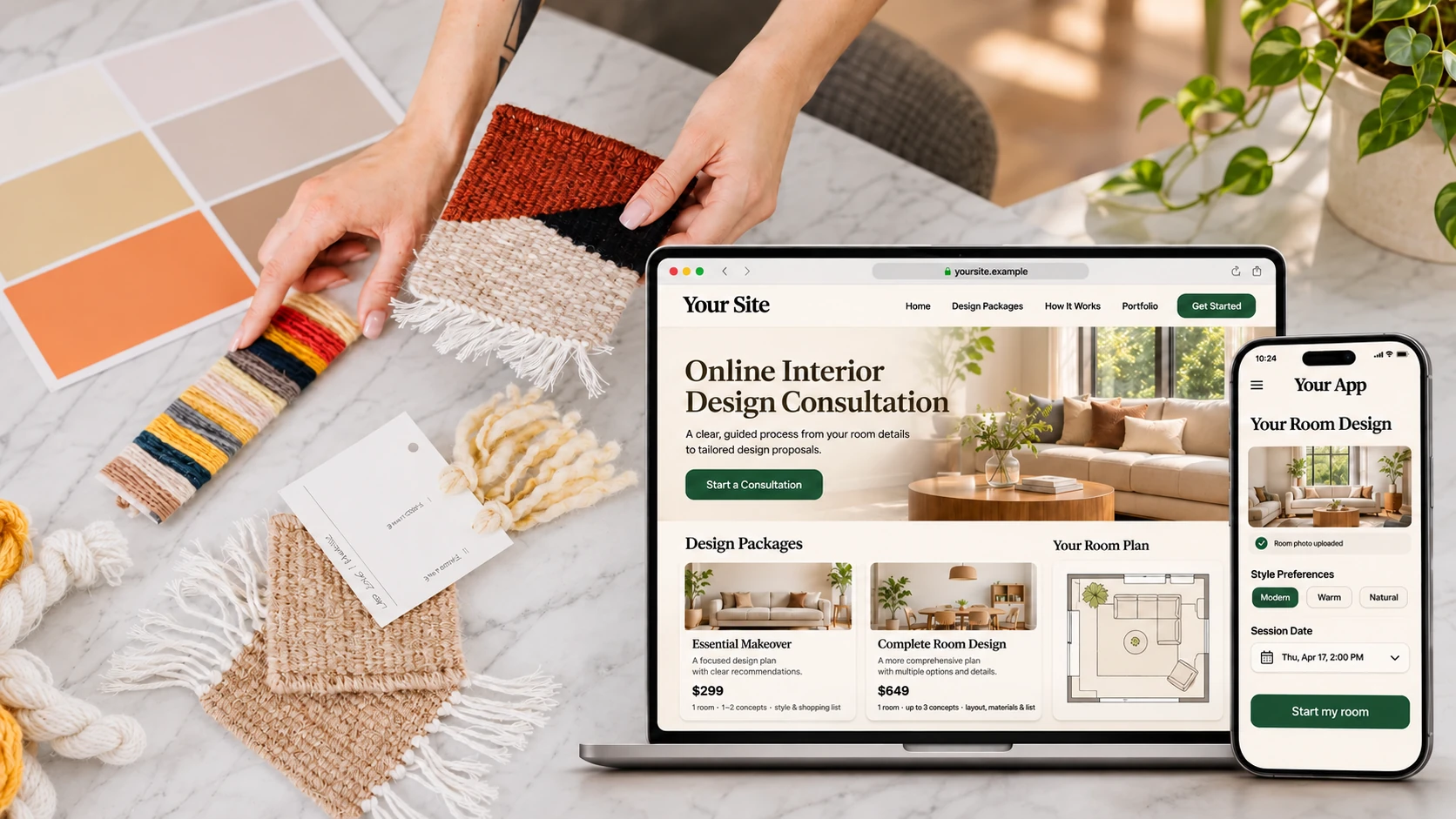
A homeowner has saved dozens of beautiful room images but still cannot choose what fits their own space and budget. Your studio could gather the real measurements and priorities, then present a thoughtful proposal with reasons behind the choices, helping the client move from inspiration to a decision.
A business you can
picture.
Create an online interior design business with clearly scoped packages. Gather room information, understand the customer’s priorities and present a manageable set of proposals with professional explanation.
Who would be glad
you built it?
Homeowners updating one room
Translate preferences into practical choices.
Renters improving a space
Work within permission and budget limits.
Small business owners
Shape a customer-facing interior.
Where the money
could come from.
Clients could pay a fixed fee for a defined consultation or room-design package. That fee covers professional time, preparation and agreed revisions. Purchasing or installation coordination can be separately scoped, with any product referral income disclosed rather than hidden inside supposedly independent recommendations.
The part you could
make your own.
A clear path from mood to decisions could distinguish your studio. Explain why each option suits the client's routine and constraints, then test whether a manageable selection helps them act more confidently than a large inspiration board.
An angle to test with the people you want to serve.Start with something
worth using.
Offer one clearly scoped room package with intake questions, required photographs and measurements, a proposal and a defined revision. Explain which drawings, purchasing support or site visits are included before accepting payment.
- Room briefs and measurements
- Design proposals and customer feedback
- Product selections and agreed deliverables
Give the promise
something to stand on.
You bring design judgement and the ability to work within a clear brief. Measurements, purchasing responsibilities and the limits of remote consultation need attention so attractive concepts remain connected to the client's actual space.
Accurate measurements, scope boundaries and revision limits matter. Structural or technical work needs appropriate professional involvement. Make clear which images are illustrative and which products or quotations are confirmed.
Let a small beginning
teach you something.
Pilot the package with clients who have a specific room and decision to make. Review the intake process and ask whether the proposal helps them choose, then refine missing measurements or unclear deliverables.
Can the client understand and act on the proposal within the package's stated budget assumptions and practical limits?
Look for these signs
- Briefs capture real room constraints
- Clients understand the proposed choices
- Revisions stay within an agreed scope
A little more
clarity.
Can remote design work without a site visit?
Some consultations can use reliable client-supplied information, but explain the limits. Structural, technical or installation decisions may require suitable on-site professionals rather than relying solely on photographs and a remote concept.
Are recommended products included in the fee?
State whether the package covers advice, purchasing or both. Disclose any referral income and explain who checks availability, orders items and handles returns so the client understands the complete arrangement.
Houzz provides a related reference for discovering interior design professionals.
Now picture it
with your name on it.
Your people. Your priorities. The version you keep thinking about. Answer a few questions and leave with a starting plan you can keep.
Free to explore. No account or email needed for your starting plan.