A book goes to a friend and a tool goes next door. Months later, the owner remembers lending both but not the agreed details. Your app could keep a private handover record and an optional shared confirmation, helping known people remember the arrangement without turning a friendly loan into a public debt score.
One useful moment.
A reason to open it.
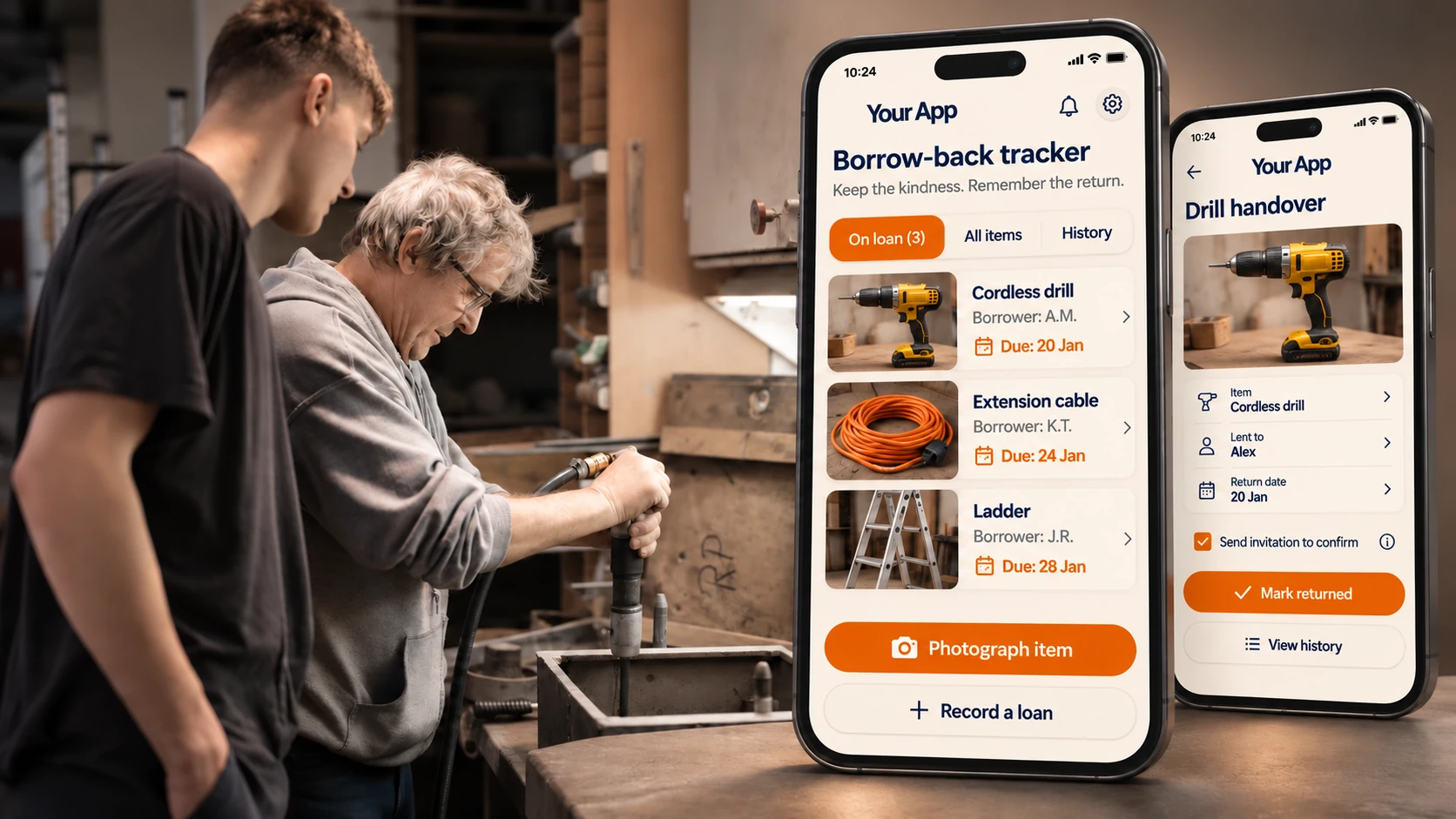
An owner photographs the item at handover, records the agreed borrower and return date, and optionally invites confirmation. Both can understand when the item has been marked returned.
Who would be glad
you built it?
Frequent lenders
Remember who has a particular item.
Families sharing belongings
Keep agreed return details together.
Small clubs
Track ordinary equipment handovers.
A place in their life.
At the right moment.
Why it belongs on a phone
The phone captures the item at handover and keeps the return date nearby. An optional reminder can arrive when both people expect it.
A reason to come back
Each loan and return creates a clear use. The app earns its place when people can share again without searching old messages.
Where the money
could come from.
Individuals could buy a larger private collection and reusable reminders. A club plan could fund authorised shared records. Syncing, access management and support have costs. Test lending frequency and actual return usefulness before assuming a recurring subscription is appropriate for occasional household loans.
The part you could
make your own.
Make changing the agreement as easy as recording it. A respectful reminder and clear returned state could be more useful than aggressive overdue alerts or public reputation scores.
An angle to test with the people you want to serve.Start with something
worth using.
Begin with an item photo, borrower, agreed date and returned state. Offer optional confirmation with consent. Keep reminders under the owner's control and allow the agreement to change.
- Photograph an item at handover
- Record who has it and an agreed date
- Send an optional invitation to confirm
- Mark returned and keep a private history
Give the promise
something to stand on.
You need a low-friction record and respectful reminder choices. Keep personal contacts private, and distinguish this item-tracking idea from money lending, deposits or a public reputation service.
Obtain consent before messaging another person and allow reminders to be declined. Record stated condition without presenting the app as proof of ownership or a dispute authority.
Let a small beginning
teach you something.
Ask willing friends or club members to record a few appropriate handovers. Follow through to return and ask whether the record helped without making the interaction feel unnecessarily formal.
Can both people recall the agreed item and return arrangement without the reminder creating confusion or unwanted pressure?
Look for these signs
- Records identify the correct item.
- Agreed dates can be updated.
- Returned items leave the outstanding list clearly.
A little more
clarity.
Should the borrower need an account?
Not necessarily. A private owner record may be enough. Optional shared confirmation should be explained clearly and should not expose a person's details to a wider group.
Can overdue items trigger automatic public warnings?
That would undermine the private handover purpose. Keep reminders proportionate and controlled, with room for the people involved to change their agreement.
Is this a public equipment rental marketplace?
No. It is a private record between people who already know each other. Listings, rental payments and public matchmaking are outside the first version.
Now picture it
with your name on it.
Your people. Your priorities. The version you keep thinking about. Answer a few questions and leave with a starting plan you can keep.
Free to explore. No account or email needed for your starting plan.